The total cost for a 14-18 day Manaslu Circuit trek in 2026 ranges from $1,200-$2,800 per person. This includes permits ($125-$150), licensed guide ($350-$500), accommodation/food ($25-$45/day), and transport. Solo trekkers pay 30-50% more. Luxury guided tours cost $3,000-$4,500.
The Manaslu Circuit Trek remains Nepal's last great restricted trek, protected by strict permit regulations that have preserved the Tibetan Buddhist culture of the Nubri Valley and limited environmental impact since 1992. Unlike the open trails of Annapurna or Everest Base Camp, you cannot simply arrive in Kathmandu and start walking.
For 2026, the Nepal Department of Immigration maintains the mandatory guide requirement introduced in 2015. This means every foreign trekker must hire a licensed guide through a registered agency and trek in groups of at least two people. Based on our agency's 2025 season bookings and confirmed 2026 permit fee schedules, here's what you need to budget.
The regulations exist for good reason. The remote Nubri and Tsum Valleys see limited infrastructure development, and the Tibetan communities here maintain traditional lifestyles largely unchanged for centuries. The Manaslu Conservation Area Project (MCAP) uses permit fees to fund trail maintenance, waste management, and community development projects. In the 2023 season, we saw more than 6 trekkers turn back at the Jagat check point for improper permits - do not let it be you.
Trekking the Manaslu Circuit
2026 Manaslu Trek Cost Summary
Category
Budget Trekker
Standard Trekker
Full-Service Tour
Total Cost
$1,200-$1,800
$1,800-$2,800
$3,000-$4,500
Accommodation
Basic teahouses
Better rooms
Best available lodges
Transport
Local bus
Private jeep one-way
All private transport
Guide Ratio
1 guide for 6 people
1 guide for 4 people
1 guide for 4 people
Porter Service
Shared porter
Personal porter optional
Personal porter included
Tsum Valley
Not included
Optional add-on
All inclusive option
The 2026 Manaslu Restricted Area Permit: Step-by-Step
The Manaslu Restricted Area Permit (RAP) is the official permission required for trekking beyond the Jagat (1,340m) check point, the first check point where trekkers' documentation is checked. It is not possible to obtain the Manaslu RAP by yourself; it is only obtainable through a trekking agency that is registered with the Trekking Agencies' Association of Nepal (TAAN).
Exact 2026 Permit Fees
Manaslu Restricted Area Permit (RAP):
September-November (Peak): $100 USD per person per week + $15 per additional day
December-August (Off-Peak): $75 USD per person per week + $10 per additional day
Manaslu Conservation Area Permit (MCAP): NPR 3,000 ($23 USD)
Annapurna Conservation Area Permit (ACAP): NPR 3,000 ($23 USD)
Total Permit Cost: $125-$150 depending on season
Important: TIMS (Trekkers' Information Management System) cards are NOT required for Manaslu Circuit as of 2024-2026. Agencies claiming you need TIMS are either uninformed or padding costs.
Required Documents for Permit Application
Your agency will need the following from you 2-3 weeks before your trek start date:
Scan of your passport photo page (color, full page, valid for 6+ months)
2 passport photos (digital photos acceptable)
Travel insurance documents showing insurance up to 6,000m
Itinerary showing entry/exit dates
Emergency contact information
Processing Timeline
Permits need to be processed by the Nepal Department of Immigration in Kathmandu. The process takes 1-2 business days in the normal season, but can take 3-4 days in October when the offices are overwhelmed by the sheer number of trekkers. Your agency should sort out the permits, but it's worth noting that it can take a little longer in the peak season.
We recommend arriving in Kathmandu at least 3 days before your scheduled start date for rest and preparation.
Checkpoint Locations
You'll present your permits at four main checkpoints along the circuit:
Jagat (1,340m): First checkpoint - permits verified thoroughly here
Deng (1,804m): Secondary check, usually quick inspection
Samagaun (3,530m): Important check before acclimatization zone
Dharapani (1,860m): Exit checkpoint when joining Annapurna Circuit trail
Pro Tip: Keep your permits in a waterproof pouch with passport copies. Teahouse owners may also ask to see permits when registering - this is normal procedure.
Why Solo Trekking Is Impossible
The 2015 regulation requires all foreign trekkers to hire a licensed guide and trek in groups of minimum two people. This rule is strictly enforced at Jagat checkpoint. If you arrive solo, you have three options: join another trekker's group at the checkpoint (rare), pay for permits of a second person as a "fake trekker" (unethical and expensive), or turn back.
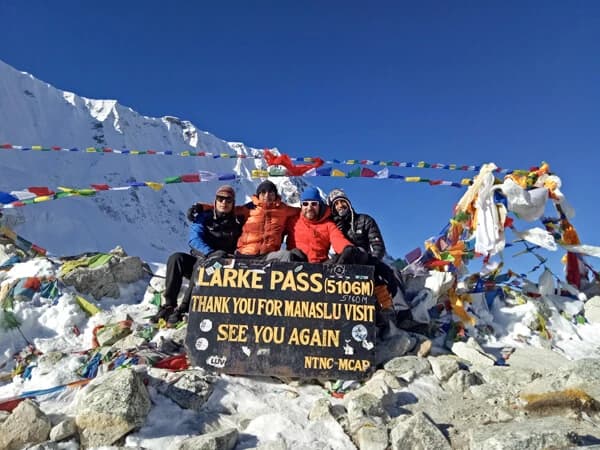
The regulation exists primarily for safety - the Larkya La Pass (5,106m) sees genuine emergencies every season, and solo trekkers without guide support have required expensive helicopter evacuations. The guide requirement has dramatically reduced rescue incidents.
Manaslu Circuit Trek Detailed Cost Breakdown
Detailed Cost Breakdown for 2026
Permits: $125-$150 Total
As detailed above, you'll pay approximately $125 in off-peak season (December-August) or $150 in peak season (September-November). This is a fixed cost regardless of group size - two people pay the same per-person permit fee as six people.
The Manaslu Restricted Area Permit specifically funds MCAP conservation projects. In 2024, MCAP used these funds to install 15 new waste collection points between Jagat and Samdo, build emergency shelters at Larkya La, and support traditional Tibetan Buddhist monastery restoration in Lho and Samagaun.
Why It Varies: Season determines RAP cost. If you trek for exactly 14 days, you'll pay for 2 weeks. A 16-day trek with Tsum Valley extension requires 3 weeks at peak rates ($300 vs $225 off-peak).
Insider Advice: Book your trek for mid-September or early March to get off-peak permit rates while still enjoying relatively stable weather. Late September jumps to peak pricing even though conditions are nearly identical.
Licensed Guide Fees: $350-$500
Licensed guides charge between $25 and $35 per day depending on their experience, linguistic ability, and season demands. For a 14-day trek, it would cost you between $350 to $500. This amount includes the daily wage, meals, lodging, and insurance for the guide.
What You Get for This Price
Government-licensed guide (mandatory for permit)
Daily route planning and navigation
Monitoring for Altitude Sickness and advice
Negotiation for rooms and meals at tea houses
Interpretation of culture at Buddhist villages
Coordination for emergency response
Why This Price Varies
Senior guides with 10+ years of experience on Manaslu Circuit and good English skills charge $35/day
Newer guides with basic English skills charge $25/day
In peak season (October), there is a scarcity of guides; hence, they charge more
In spring (March to April), there is good availability of guides at standard rates
Your agency provides meals and lodging for your guide within your daily lodging charges but expect to tip at trek end. Standard tip rate is $8 to 12/day for excellent service.
Insider Advice: Request your guide's experience level when booking. Ask specifically: "How many times has this guide crossed Larkya La?" Experienced guides know exactly which teahouses have the warmest rooms in Dharmasala (4,460m) before the pass - crucial for summit day success.
Porter Costs: $280-$392
Porters carry your main duffel bag (max 25kg per trekker) and earn $20-$28 per day. For 14 days, it will cost $280-$392 per person if you want to hire personal porters.
Ethical Consideration: Make sure that the trekking agency is hiring porters according to International Porter Protection Group guidelines: equipment, insurance, and weight limits strictly adhered to. Porters die in Nepal each year due to improper equipment on the high-altitude treks.
Why It Varies: Porters from the Manaslu trekking region (from Nubri Valley locals) charge more per day ($28) as they don't get altitude sickness as easily. Lowland porters from the Kathmandu area charge less per day ($20) but may get altitude sickness at 4,000m and need to be replaced mid-trek.
Accommodations on the Manaslu Circuit Trail
Accommodation: $42-$350 Total
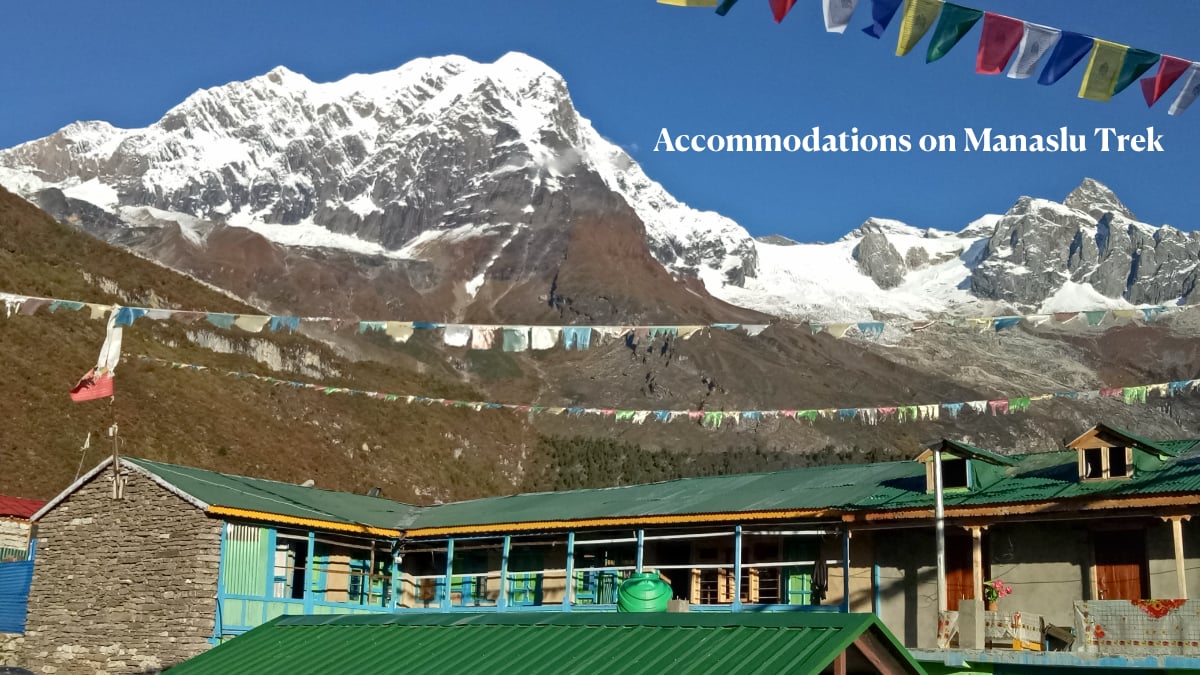
Teahouse rooms cost $3-$25 per night. Basic rooms below 3,000m run $3-$5. Above 3,500m, rooms cost $8-$15. At Dharmasala (4,460m) before Larkya La Pass, expect $15-$25 per bed in peak season.
Altitude Zone
Location Example
Cost Per Night
Low (1,200-2,500m)
Soti Khola, Machha Khola, Jagat
$3-$5
Mid (2,500-3,500m)
Namrung, Lho, Samagaun
$5-$10
High (3,500-4,500m)
Samdo, Dharmasala
$10-$25
For a 14-day trek, total accommodation cost ranges from $42 (ultra-budget, sharing rooms) to $350 (private rooms, peak season, best available lodges). Most trekkers spend $100-$180.
Why It Varies: Prices vary by season. Prices are 40-60% higher in October than in March. Better rooms have better amenities. Basic rooms have thin foam mattresses and shared squat toilets. Better rooms cost $15 to $25 more and have better mattresses and bathrooms with cold water. They may also have electric blankets.
Insider Advice: In Samagaun, stay at the teahouse near Pungyen Gompa. The view of Manaslu is fantastic. In Dharmasala, stay in the room that is farthest away from the kitchen. It is quieter and warmer due to the chimney. This advice is based on over 20 seasons of experience.
Food & Water: $280-$720
Cost of meals and bottled water per day: $20 to $40. The cost of meals is higher at higher elevations because of the cost of carrying food to higher elevations. A traditional dish called dal bhat costs NPR 500 (about $4) in Soti Khola but NPR 1,200 (about $9) in Dharmasala.
Meal
Low Altitude
High Altitude (3,500m+)
Dal Bhat
NPR 500-600 ($4-5)
NPR 1,000-1,200 ($8-9)
Fried Rice/Noodles
NPR 600-700 ($5-6)
NPR 900-1,100 ($7-9)
Breakfast (porridge/eggs)
NPR 400-500 ($3-4)
NPR 600-800 ($5-6)
Hot drinks (tea/coffee)
NPR 100-150 ($1-1.5)
NPR 200-300 ($2-3)
Bottled water (1L)
NPR 100-150 ($1-1.5)
NPR 300-400 ($3-4)
Why It Varies: Everything above Samagaun arrives by mule or porter. A single bottle of beer in Samdo costs $8 because it's carried 70km uphill from the road. Budget trekkers eat dal bhat twice daily ($16/day). Comfort trekkers vary their diet with pasta, pizza, and snacks ($35-40/day).
Insider Advice: Bring water purification tablets or a SteriPEN. Buying 18 days of bottled water costs $30-$70 depending on altitude. Purifying from tap sources costs $15 total and reduces plastic waste - Manaslu's waste management is limited despite MCAP efforts.
Bus transportations on Manaslu Circuit Trek
Transportation: $50-$300
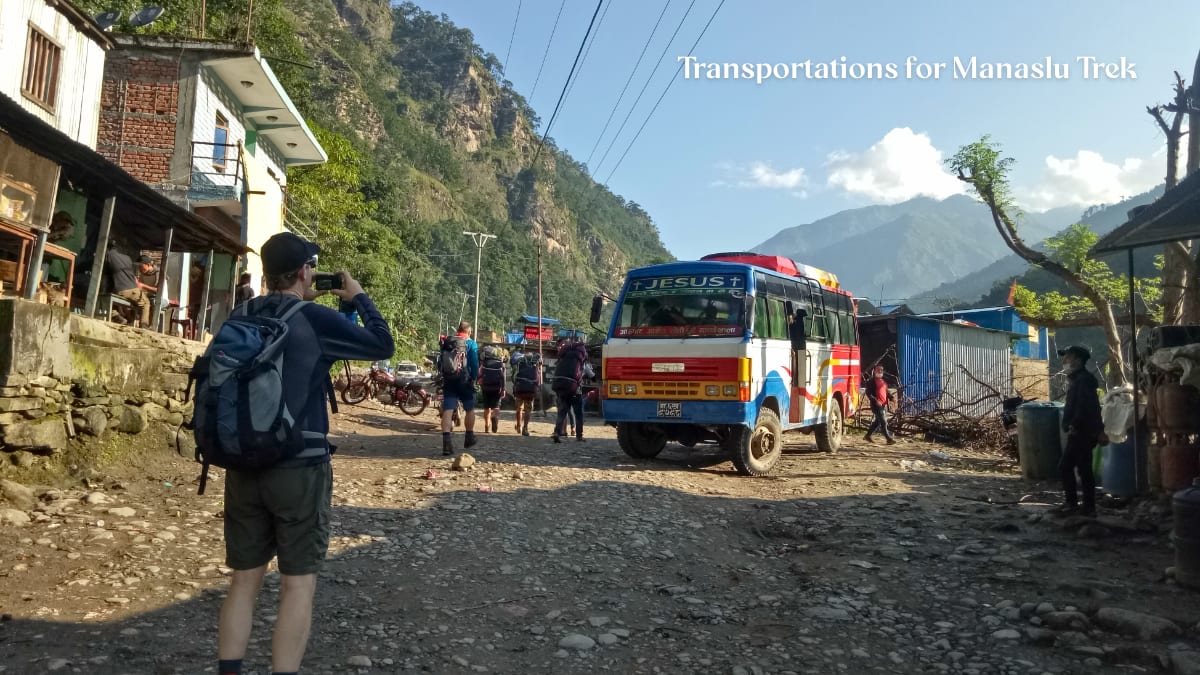
Getting from Kathmandu to Soti Khola (trek start) and returning from Besisahar/Dharapani (trek end) involves either local buses or private jeeps.
Route
Local Bus
Private Jeep (4-6 people)
Kathmandu to Soti Khola
$10-15 (7-9 hours)
$150-200 total ($25-33/person)
Dharapani to Kathmandu
$10-12 (8-10 hours)
$120-150 total ($20-25/person)
The road now extends to Machha Khola (beyond Soti Khola), cutting 4-5 hours of walking from the traditional route. Some agencies start treks at Machha Khola to save time, though you'll miss the subtropical forest section.
Why It Varies: The local buses are the cheapest option, but they are not comfortable (hard seats, packed, many stops). The private jeeps cost 3-4 times as much, save 2-3 hours, and let you control the schedule. For groups of 4-6, it's always worth it to hire private transport, as the cost per person is reasonable, and comfort is important before/after the strenuous hike.
Hidden Costs: $60-$200
These costs tend to surprise many trekkers, so it's worth budgeting for them:
Hot showers: $3-$8 per shower, as they need to be solar or gas-heated. There will be 4-6 showers in the 14 days, so $24-$48
Device charging: $2-$5 per charge when over 3,000m. Budget $30-$60 for the entire trip
Wi-Fi: $2-$5 per day where available, although it's patchy after Namrung. Budget $20-$40
Snacks and extras: Chocolate bars ($2-$5 each at high altitude), energy bars, candy... Budget $30-$50
Contingency for flight delays: Additional days in Kathmandu in case of bad weather on the flight back = $30-$60
Insider Advice: It's worth investing in a high-capacity power bank (20,000+ mAh) and charging it in the lower villages where electricity is cheaper. Charging in Dharmasala costs $5/hour, while your power bank will save you money and make sure you have batteries left over for the summit photos!
Emergency Fund & Insurance: $300-$500
Travel insurance covering helicopter evacuation from 6,000m altitude is a must for every trekker. The cost of the insurance is $100-$200, depending on the level of insurance and the duration of the trip. Also, it's worth having an emergency fund of $200-$300 for:
Unexpected extra days in case of bad weather (Larkya La closes in bad weather)
Medical supplies from the pharmacies in the villages
Emergency satellite phone rental, should it be needed ($10-$15/day)
Helicopter evacuation deposits
Critical Insurance Requirement: Standard insurance policies do not cover trekking over 5,000m. You MUST get special trekking insurance. There are many companies that offer Manaslu-specific insurance, including World Nomads, IMG Global, and True Traveller. Ensure that your insurance policy covers "trekking to 6,000m in Nepal" before departing.
Helicopter evacuation from Manaslu region is $4,000-$8,000, depending on the weather and pick-up location. In 2023, we coordinated three evacuations: two due to severe altitude sickness (HAPE) from Samagaun and one due to a knee injury at Dharmasala. All trekkers have proper insurance and get full reimbursement within 30 days.
Group vs Solo Manaslu Circuit Trekking
Group vs. Solo: The Real Cost Comparison
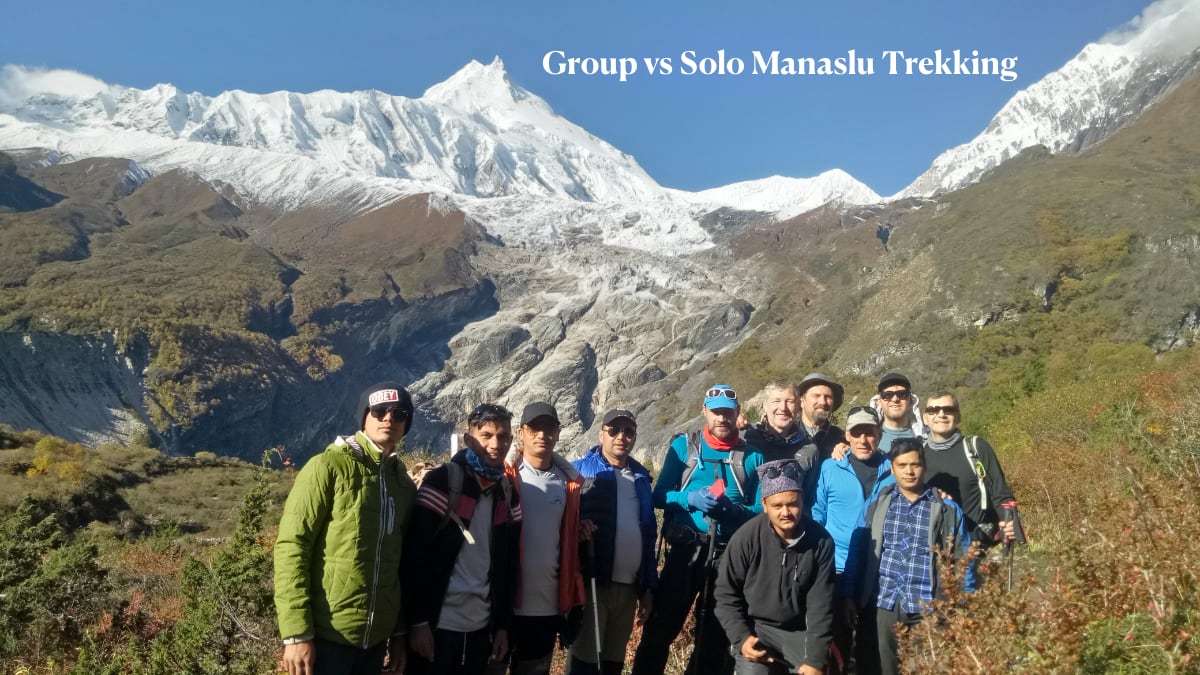
The need for guides makes "solo" treks much more expensive as the cost of the guide is entirely on the trekker. The cost increases as the group size decreases:
Group Size
Cost Per Person
Why
1 Person (Solo)
$2,200-$3,200
You pay 100% of guide cost ($500), 100% of guide food/lodging ($200), and often premium rates for single-occupancy rooms
2 People
$1,800-$2,500
Guide and porter costs split between two. Most cost-effective configuration
4 People
$1,500-$2,200
Guide cost split four ways. May need 2 porters but still economical
6+ People
$1,400-$2,000
Maximum efficiency but requires 2 guides for safety. Groups larger than 8 become unwieldy for teahouse accommodation
How Agencies Create "Groups" for Solo Travelers
If you book as a solo traveler, reputable agencies will try to match you with other solo trekkers starting on similar dates. This creates a small group where costs are shared. In peak season (October-November), this matching works well. In shoulder seasons, you may wait 1-2 weeks for matches or pay a "solo supplement" of $400-$800.
The True Cost of "Solo" Trekking: Budget $1,800-$2,500 if you truly want to trek alone with a dedicated guide. This includes the $400-$800 solo supplement and your standard trek costs. For this price, you'll receive the private guide attention and the ability to customize your daily itinerary.
Seasonal Price Differences 2026
Manaslu costs vary greatly depending on the season due to the reliability of the weather, the availability of guides, and teahouse demand.
Season
Months
Price Adjustment
Booking Timeline
Peak
October-November
+20-30% above baseline
Book 6-8 months ahead
Shoulder
September, December, March-April
+10-15% above baseline
Book 3-4 months ahead
Off-Season
January-February, June-August
-20-30% below baseline
Book 1-2 months ahead
Peak Season: October-November
The sky is clear, and the mountain scenery is breathtaking, with perfect autumn weather, making it the peak season. All teahouses are booked, and the demand for guides is higher than supply, with prices to match. Prices peak in October, when it will cost you $2,500-$3,000 for the standard trek route.
Festival Alert
Tibetan New Year, Losar, usually takes place in February or March. If you're trekking through Samagaun during this time, you'll experience the best cultural festival, but food might be scarce at teahouses as locals will be celebrating.
Shoulder Season: September, December, March-April
September brings perfect trekking conditions with occasional rain showers in the afternoons, while March and April provide pleasant temperatures with slightly higher winds on the Larkya La Pass.
December is another good time to trek, with crystal-clear skies, fewer trekkers, and 15-20% discounts, provided you're willing to brave the cold.
Off-Season: January-February, June-August
In January and February, it will be cold, with temperatures as low as -20°C at Dharmasala, and sometimes the Larkya La Pass will be closed due to storms. The monsoon season, June to August, brings torrential rain, leeches at elevations as high as 3,000m, and landslides, with discounts as high as 30%. These seasons should be attempted by experienced trekkers only.
Insider Advice
The best time to trek Manaslu is late September, between Sept 20-30, when the skies are clear and the weather is perfect, and the trekking permit fees are lower, at $75/week, compared to $100/week at other times. This is when we would recommend our own family members to trek Manaslu.
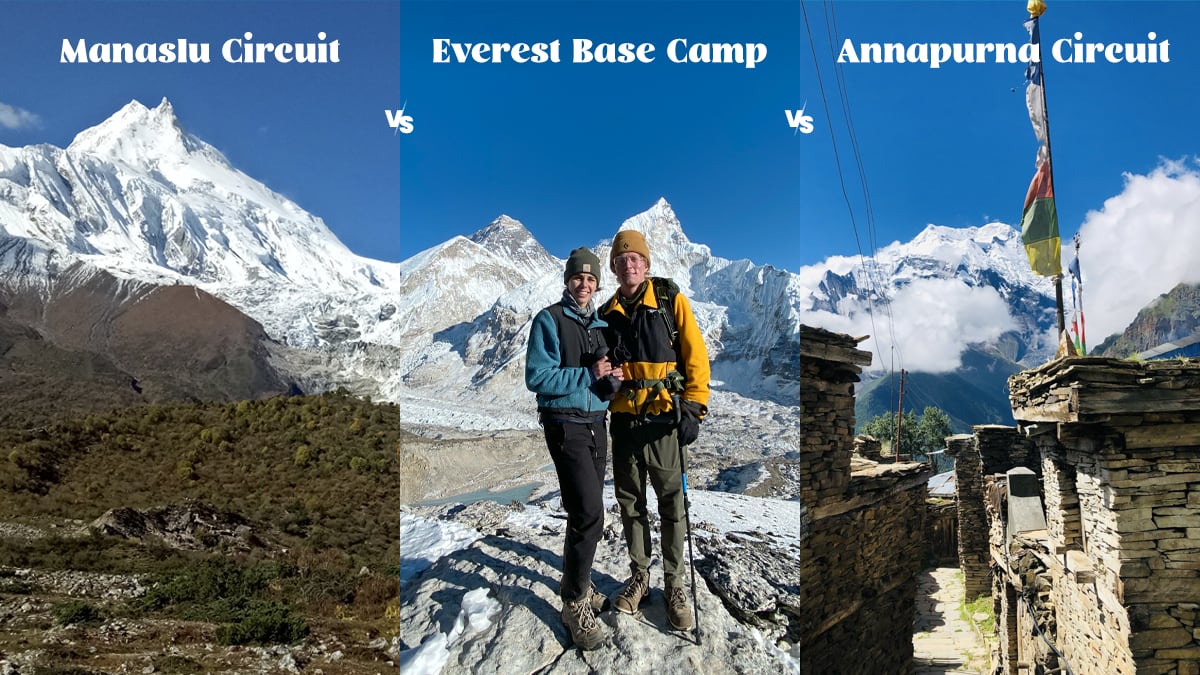
Manaslu, Annapurna and Everest Trek Comparison
Manaslu vs. Annapurna vs. Everest: Cost Comparison
Trek
Permit Cost
Guide Required?
Total Cost Range
Manaslu Circuit
$125-$150
Yes (mandatory)
$1,200-$2,800
Annapurna Circuit
$23 (ACAP only)
No
$800-$1,500
Everest Base Camp
$54 (Sagarmatha NP + Khumbu Pasang Lhamu)
No
$1,000-$2,200
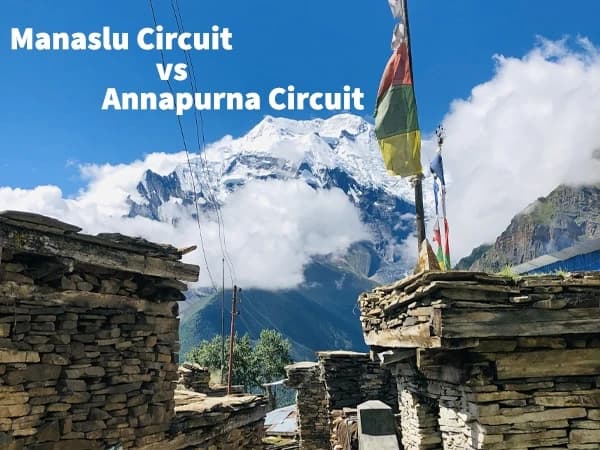
What Makes Manaslu More Expensive than Annapurna
A guide is mandatory, which costs $350-$500. The route has significantly fewer trekkers (8,000 per year) compared to Annapurna (150,000 per year), which means teahouses cannot spread costs as thinly. Food and lodging costs 15 to 25% more than in similar villages in Annapurna.
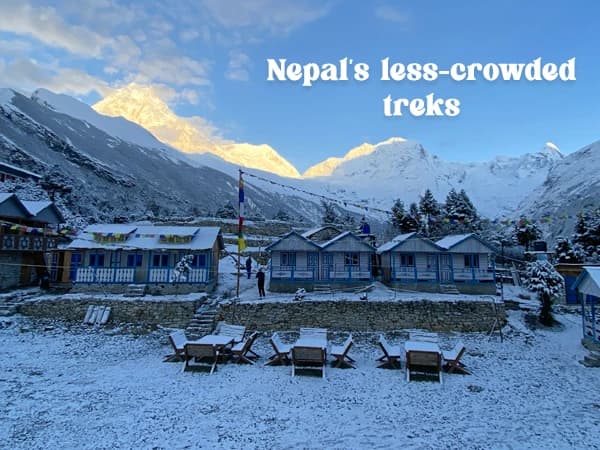
However, this is exactly why Manaslu remains spectacular. You'll trek for days seeing only 5-10 other groups. The Nubri Valley's Tibetan culture remains authentic because mass tourism hasn't arrived. The higher cost purchases a dramatically different experience.
Why Manaslu Costs Less Than Everest
Everest Base Camp requires a flight to Lukla ($400-$450 roundtrip, frequently delayed), and Khumbu region accommodation and food cost 30-40% more than Manaslu due to higher tourism demand. However, you can trek independently on Everest, saving the guide cost if desired.
For trekkers seeking high-altitude experience without Everest crowds and costs, Manaslu offers the best value among Nepal's 8,000m peaks.
How to Budget Realistically for 2026
Minimum Safe Budget: $1,200
This will cover the basic Teahouse Trek with shared accommodation, local transport, and a small amount left over for emergencies. This is only advisable if you are joining an existing group and splitting the guide costs, traveling in the off-season, and are comfortable with uncertainty.
Minimum Budget Breakdown:
Permits: $125
Guide (split costs): $200-$250
Food: $280 (Dal Bhat twice a day)
Accommodation: $60-$100
Transport: $25 (local bus both ways)
Hidden Costs: $60
Emergency/Insurance: $300
Total Cost: $1,000-$1,200
Recommended Budget: $2,000-$2,500
This will allow you to have a comfortable amount left over in case of unexpected expenses and not have to stress too much about money.
Recommended Budget Breakdown:
Permits: $150
Guide (shared, 2-4 people): $250-$350 per guide
Porter (shared): $200-$250 per porter
Food: $400-$500
Accommodation: $150-$200
Transport: $60-$80 (jeep to be shared)
Hidden Costs: $120-$150
Emergency/Insurance: $400
Total Cost: $1,680-$2,430
Payment Breakdown: When and How
Most companies require you to pay 20% deposit to book the guide and permits, and the remaining 80% in cash when you arrive in Kathmandu.
USD vs Nepali Rupees
Please bring USD cash in clean, new notes (no tears, stamps, or marks, as the Nepalese banks will not accept torn money). You should exchange this money in Kathmandu at a better exchange rate. ATMs exist in Kathmandu but become unavailable once you start trekking - the last ATM is in Arughat, hours before Soti Khola.
Recommended cash to carry on trek: $300-$400 USD equivalent in Nepali Rupees. Keep it distributed across multiple pockets and bags. Teahouses accept rupees only - no credit cards anywhere on the circuit.
Frequently asked Manaslu Circuit Trek questions
Frequently Asked Questions (FAQs)
Can I get a Manaslu permit without a guide in 2026?
No. The Nepal Department of Immigration requires all foreign trekkers to hire a licensed guide and now you can trek solo with guide as well as of 2026. This regulation has been strictly enforced since 2015 and shows no signs of changing. At Jagat checkpoint, authorities verify your guide's license and group composition. Solo trekkers are turned back.
How far in advance should I apply for the permit?
Apply 2-3 weeks before your trek start date. This gives your agency time to process permits (1-2 business days normally, 3-4 days in peak October) with buffer for any issues. However, book your trek with the agency 6-8 months ahead for peak season (October-November) to secure guide availability - permits can be processed last-minute but good guides cannot.
What happens if I lose my permit on the trail?
Your guide will have copies of all permits. However, losing your original permit creates problems at checkpoints. Keep permits in a waterproof document pouch with passport copies. If truly lost, your agency will send the copies to your guide.
Is $2,000 sufficient for the Manaslu Circuit in 2026?
The answer is yes, provided you join an existing group, travel during the shoulder or off-season, and do not mind staying in basic teahouse accommodations. The $2,000 will cover the cost of the permit, the shared cost of the guide, the cost of the meals, the cost of the accommodations, the cost of the transport, the cost of the hidden expenses, and the contingency fund, leaving $870 for the insurance. However, it is recommended that individuals who want to travel solo or in luxury should consider an amount of $2,500 to $3,000.
Do I need to carry all the money in cash, or will ATMs be available?
Carry all cash needed for the trek. The last ATM is in Arughat, several hours before the trek starts. No ATMs exist beyond this point until you exit at Besisahar. Bring $300-$400 USD equivalent in Nepali Rupees. Teahouses accept only cash - no credit cards, no digital payments. Your guide and porter expect cash tips at trek end.
How much should I tip my guide and porter?
Standard tipping is $10-$15 per day per person for the guide, $8-$10 per day for porters, paid as a lump sum at trek end. For a 14-day trek with excellent service, tip your guide $150-$180 and porter $80-$120. Adjust based on service quality and group size - larger groups can tip at the higher end since the guide managed more people. Tips are given in private, usually in Kathmandu after returning.
Has the road reached Samagaun yet?
No. The road extends to Machha Khola (slightly beyond Soti Khola), cutting about 5 hours of walking from the traditional start. There are plans to extend the road to Philim, but as of 2026, Samagaun remains 5-6 days of walking from the road head. This is actually beneficial - road construction destroys trail character, as seen on Annapurna Circuit. Manaslu remains a walking trek.
Can I charge devices every night?
Below 3,000m, yes - most teahouses have reliable electricity for $2-$3 per charge. Above 3,500m, charging becomes expensive ($4-$5/charge) and less reliable as electricity comes from small solar or micro-hydro systems. At Dharmasala (4,460m), charging costs $5/charge and may not be available if the system is down. Bring a high-capacity power bank (20,000+ mAh) and charge it fully in lower villages.
What's the Wi-Fi situation in 2026?
Sporadic at best. Stronger Wi-Fi exists in Soti Khola, Jagat, and Namrung ($2-$3 per day). From Lho onward, Wi-Fi becomes unreliable and expensive ($3-$5/day when available). At Samagaun and higher, expect no Wi-Fi or very slow connections that barely load text messages. Budget $30-$50 total if you need connectivity, but plan to be offline most of the trek. This is part of the Manaslu experience.
What insurance covers Manaslu helicopter evacuation?
You need specialized trekking insurance that explicitly covers "trekking/mountaineering to 6,000m in Nepal." World Nomads (Adventure Plan), IMG Global (iTravelInsured), True Traveller, and Austrian Alpine Club offer suitable coverage. Standard travel insurance excludes high-altitude trekking. Verify your policy specifically states coverage for helicopter evacuation from 6,000m altitude. Costs range $100-$200 for 2-3 week coverage.
How cold does Larkya La get in October?
October temperatures at Larkya La Pass (5,106m) range from -5°C to -15°C at night, warming to 0°C to 5°C during the day. You'll cross the pass early morning (starting at 4-5 AM from Dharmasala) when temperatures are coldest. Wind chill can drop perceived temperatures to -20°C or lower. You need 4-season sleeping bag rated to -15°C, down jacket, insulated pants, winter gloves, and balaclava. November is colder with night temperatures ranging from -10 to -20 degrees C.
Can I trek Manaslu during the monsoon season (June to August)?
Theoretically yes. Practically no. Heavy rain, leeches up to 3,000 meters, and reduced visibility will be a hindrance. The pass will be treacherous with snow. On the flip side, the cost will be 25-30 percent less, and the trails will be empty. The valleys will be a lovely shade of green. Only experienced trekkers who enjoy uncertainty and are prepared to risk the trek being aborted should attempt the Manaslu Trek during the monsoon season.
Do I need a sleeping bag, and if so, can I rent one?
The teahouses will have blankets, but they will be thin and not sufficient for the higher altitudes. A sleeping bag rated between -10 and -15 degrees C is necessary. It will cost between $18 and $28 to rent one in Kathmandu. A good sleeping bag will cost between $100 and $200 locally. If you have plans to trek in Nepal several times, then buying is the way to go. If this is the only high-altitude trek you have planned in Nepal, then renting is the way to go. Your guide will be able to tell you if the sleeping bag you rent is sufficient.
If you book your Manaslu trek with us, we provide sleeping bags for each trekkers rated -10 degrees C.
What's the best time to cross Larkya La Pass?
Cross from mid-September to mid-November for best weather stability. Within your trek, start from Dharmasala at 4-5 AM to cross the pass by 10-11 AM, before afternoon winds pick up. Most groups complete the crossing in 3-4 hours from Dharmasala to the pass summit, then 2-3 hours descending to Bimthang. Starting early also avoids possible afternoon weather deterioration.
Can I drink water from streams or do I need to buy bottles?
Stream water is generally clean below 3,500m but requires purification (tablets, filter, or SteriPEN). Above 3,500m, water sources become scarcer and more likely contaminated by yak herds. The cost of bottled water varies from $1 to $4 per liter depending on the altitude. A purification system can save money and reduce the amount of garbage, as Manaslu's waste management is not great, despite MCAP's efforts. Try not to make more garbage.
Should I visit Tsum Valley on the Manaslu Circuit?
Tsum Valley takes an additional 7-8 days, and the cost is an additional $500 to $800 (permits, guide time, food, accommodation). It's absolutely worth it if you have time - Tsum Valley is even more remote and culturally pristine than the main circuit. You'll need a separate Tsum Valley permit ($40/week). Total trek becomes 21-24 days. Best for trekkers with 4+ weeks in Nepal who want deep cultural immersion.
How difficult is Manaslu compared to Everest Base Camp?
Manaslu is harder. Larkya La Pass (5,106m) is higher than EBC (5,364m) and involves actual pass crossing with steep ascent and descent, not just walking to a camp. Daily walking distances are longer (6-8 hours vs 4-6 hours on EBC). Accommodation is more basic. However, if you can complete EBC comfortably, you can complete Manaslu with proper acclimatization and preparation.
What happens if I get altitude sickness?
Your guide monitors you daily for symptoms (headache, nausea, dizziness, sleep issues). Mild symptoms are managed by rest days, slower pace, and altitude medication (Diamox). Moderate to severe symptoms (HAPE or HACE) require immediate descent - sometimes 1,000-2,000m down in the same day. In serious cases, helicopter evacuation is arranged from Samagaun or Samdo. This is why proper insurance covering 6,000m evacuation is mandatory.
Can I charge my camera and drone on the trek?
Cameras yes, drones are complicated. Charging works as described in FAQ #8 - expensive and unreliable above 3,500m. For drones, Nepal requires permits, has very complicated procsss and many areas restrict flights. More importantly, flying drones near Buddhist monasteries is culturally insensitive and may result in confiscation by locals. If you must bring a drone, consult your agency about regulations and cultural sensitivity. Most importantly, never fly near Pungyen Gompa or Mu Gompa.
Are there any age restrictions for Manaslu Circuit?
There are no official age restrictions. We have guided 65-year-olds on the trek. We have turned back 25-year-olds because they were not fit. It's your fitness level that matters. Children under 12 years are unlikely to succeed on the trek because of the altitude. If you are over 60 years of age, it's recommended to get a doctor's note before embarking on the trek. It's recommended to hire your own personal porters if you are over 60 years of age to minimize your load-carrying responsibilities.
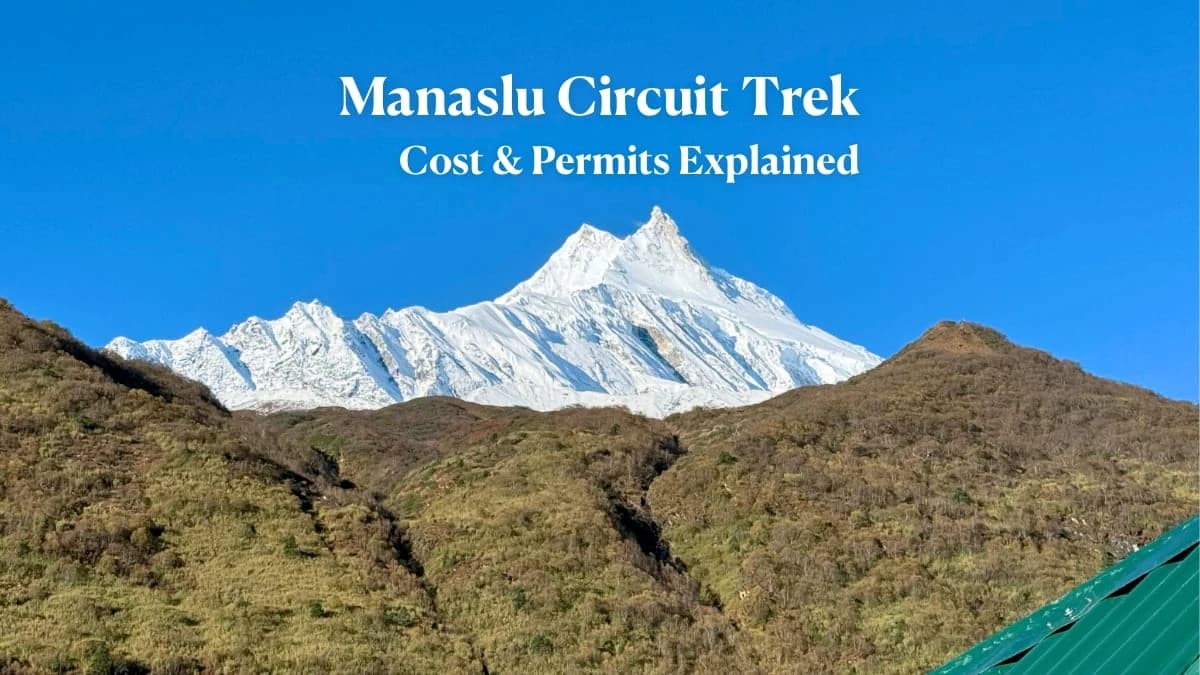
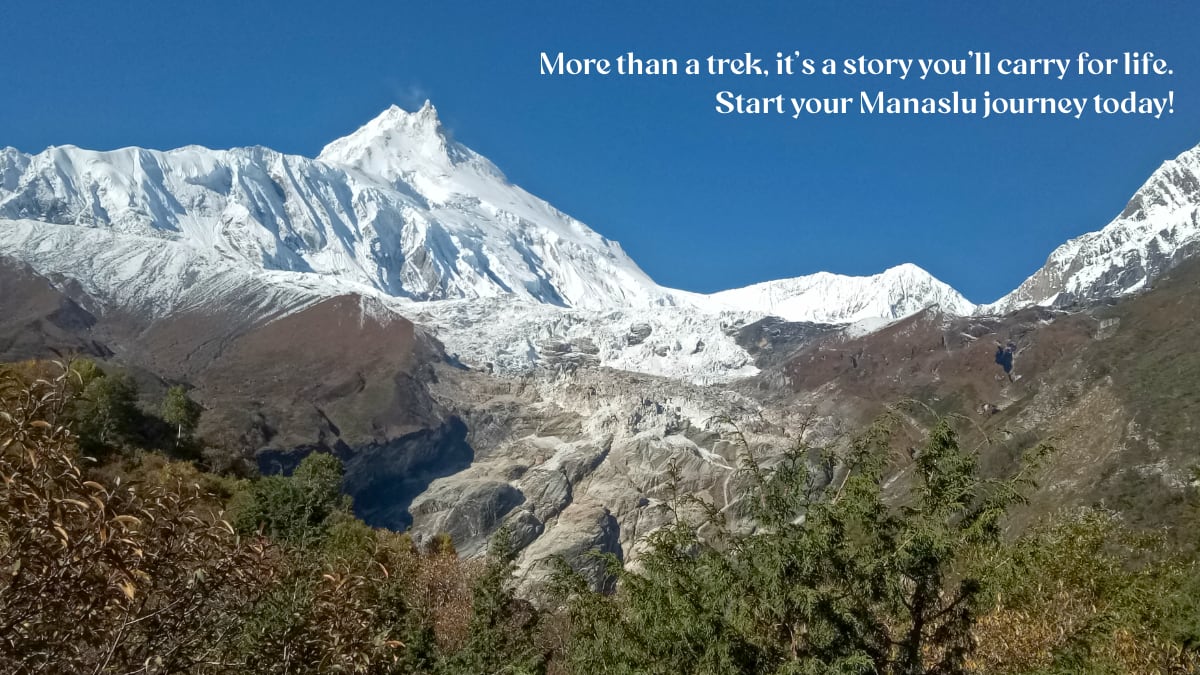
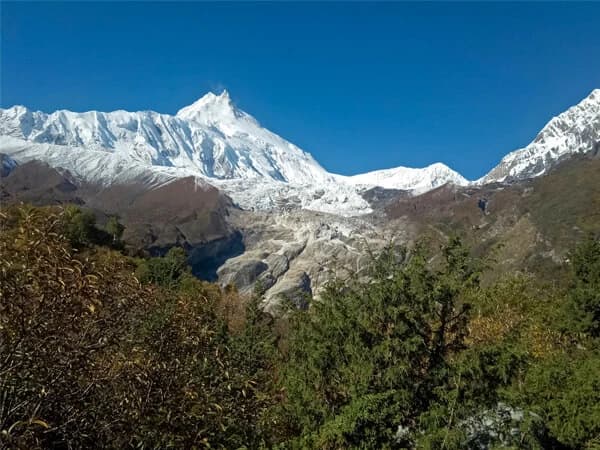
Mount Manaslu standing tall as trekkers follow one of Nepal’s most remote and rewarding Himalayan trails.
Conclusion: Trek Responsibly in 2026
The cost for the Manaslu Circuit ranges between $1,200 and $2,800 as of 2026. This depends on your group size, chosen season, and desired comfort. You need to have a permit and a guide. This ensures the conservation of the pristine Nubri Valley and its people who maintain the infrastructure.
Trekking to Manaslu does not simply provide you with an experience; it preserves one of Nepal's cleanest and untouched regions. The fees you pay for your permit are used to maintain this region by the MCAP. Employing a guide and porter ensures that you support people from villages where tourism infrastructure provides livelihood for locals.
Ethical Trekking Principles
Support Local Teahouses:
It is recommended to stay in local family-run lodges instead of agency-run camping treks. The local community will benefit through the infrastructure that your trekking agency uses.
Porter Welfare:
Make sure your agency is certified by the International Porter Protection Group. They provide equipment, insurance, a maximum load of 15kg per porter, and pay them a decent wage. Underpaid, under-equipped porters suffer injuries and deaths that are entirely preventable.
Cultural Respect: Remove shoes before entering Buddhist monasteries. Walk clockwise around mani walls and chortens. Ask permission before photographing locals. Learn basic Tibetan greetings - "Tashi delek" goes far in Nubri Valley villages.
Leave No Trace: Pack out all trash you pack in. Don't buy bottled water unnecessarily - purify from tap sources. Burn your toilet paper or pack it out. The valleys above Samagaun have limited waste infrastructure. What you leave behind stays for years.
Ready to Trek Manaslu in 2026?
To get exact 2026 pricing for your dates and group size, request a quote from a licensed Nepali agency 6-8 months ahead. This helps you avoid any last-minute permit issues and ensures the availability of a guide in the season of your choice.
Selecting Agencies
Selecting the agencies that are registered with the Trekking Agencies' Association of Nepal (TAAN) and have guides who hold valid licenses from the Nepal Tourism Board is of utmost importance. Your safety, as well as the conservation of the valley, relies on the expertise of the guides who have knowledge of the region and the people who inhabit it.
About the Author
The author of the guide has over 20 years of experience running treks in Nepal and the Manaslu region, including running over 100 trekkers over the Larkya La Pass, as well as handling hundreds of Restricted Area Permits with the Nepal Department of Immigration. The costs and fees have been based on the official fees of the 2025-2026 permit fees schedule, as well as the actual fees from the current work of the agency.