

The Everest Base Camp Trek is one of the world's most iconic trekking journeys. It combines breathtaking mountain views, rich Sherpa culture, and the experience of standing at the foot of Mount Everest.
Everest Base Camp Trek

Quick Facts
Duration14 Days
Trip GradeStrenuous
Maximum Altitude5,545 m / 18,192 ft
ActivitiesFlight/Trekking
Group Size1-12
StartsKathmandu
EndsKathmandu
Best TimeMarch – May & September – November
Key Highlights of the EBC Trek
- Fly into Lukla (2,860 m / 9,383 ft), the gateway to the Everest region, on one of the world's most scenic short mountain flights
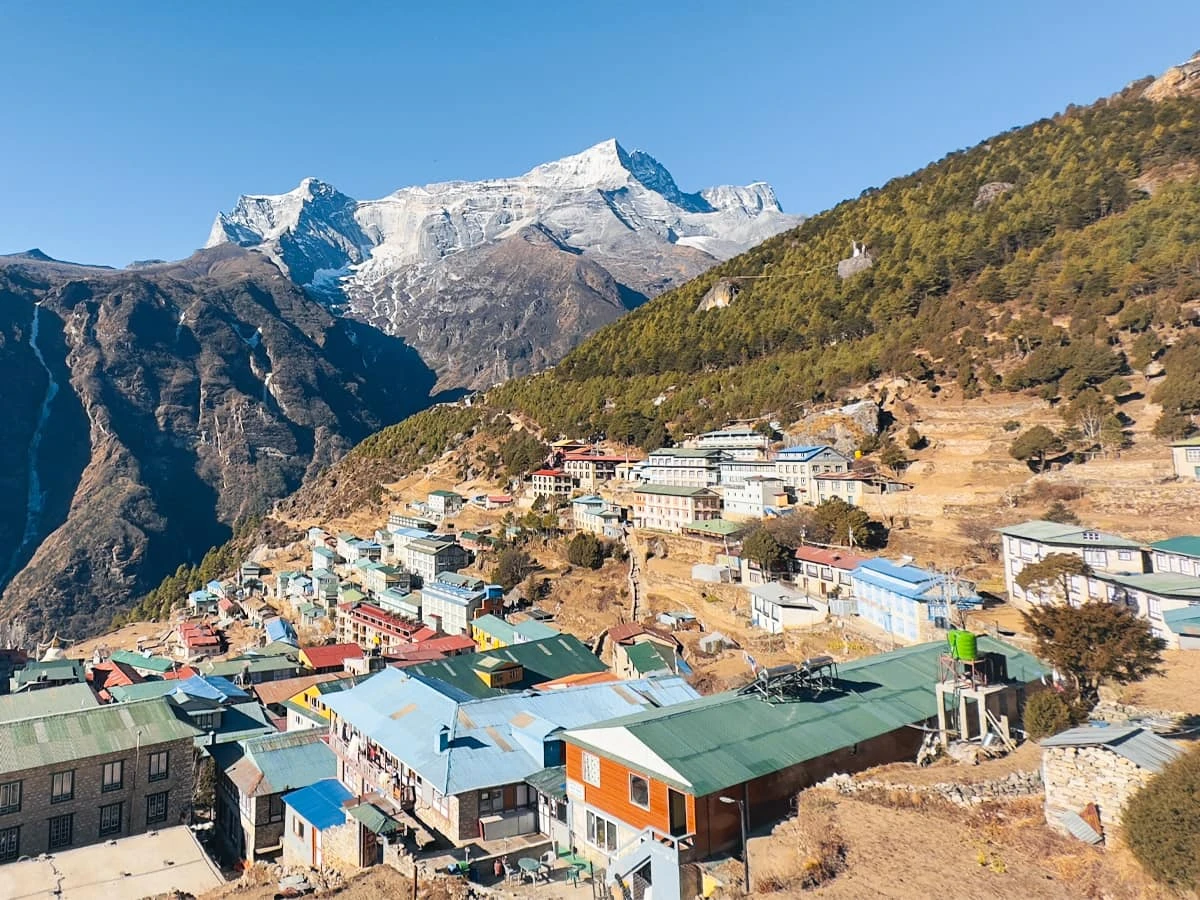
- Acclimatize in Namche Bazaar (3,440 m / 11,286 ft), the Sherpa capital and trading hub of the Khumbu
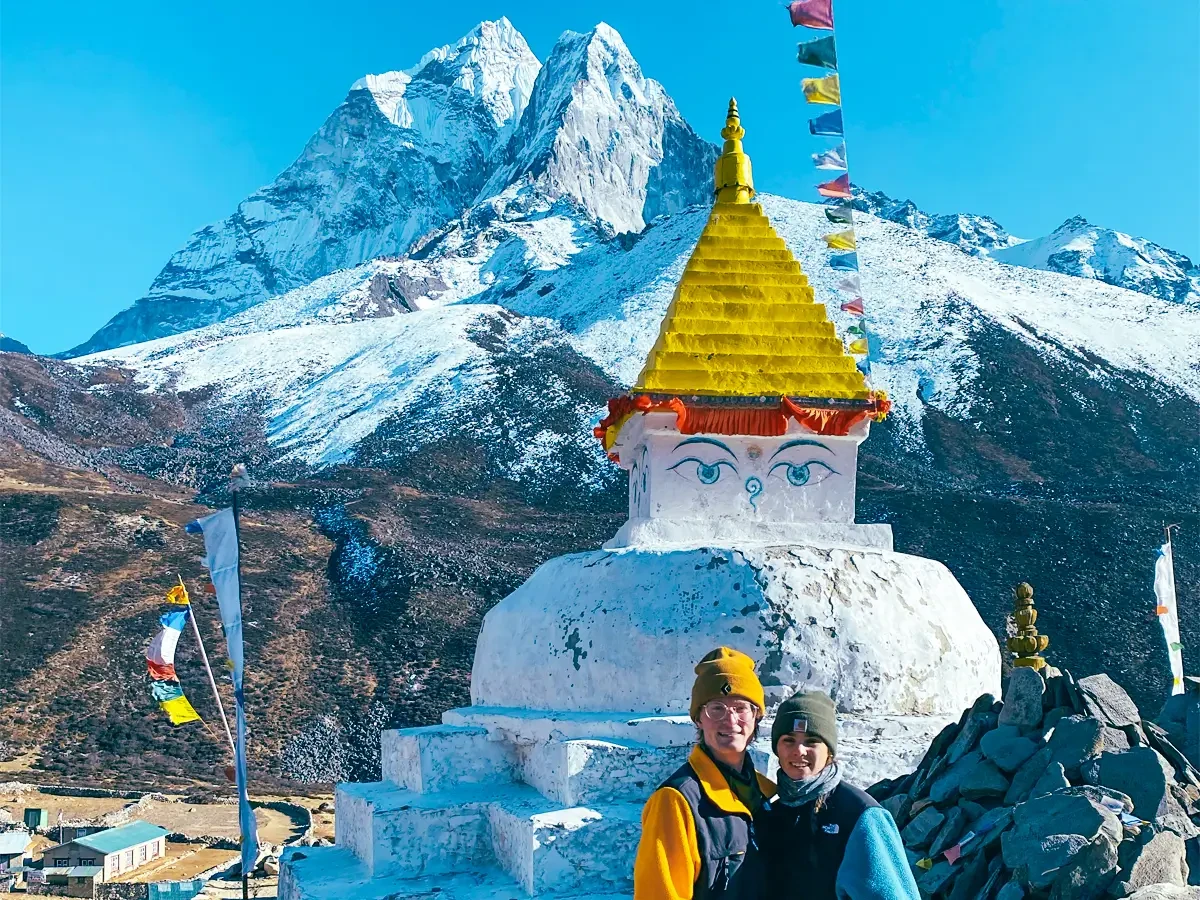
- Visit Tengboche Monastery (3,867 m / 12,687 ft), the largest gompa in the Everest region
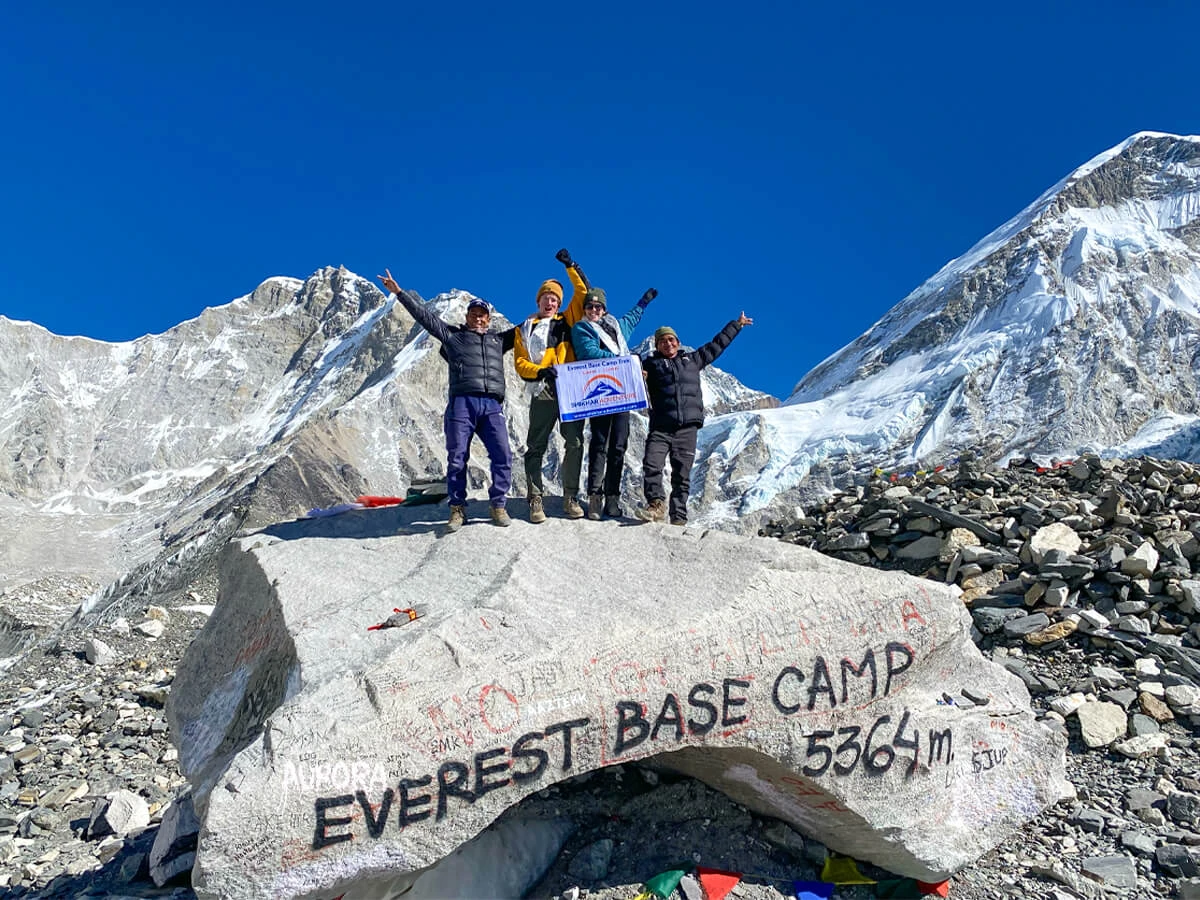
- Reach Everest Base Camp itself (5,364 m / 17,598 ft), the goal of the trek
- Climb Kala Patthar (5,545 m / 18,192 ft) before dawn for the clearest view of the Everest summit on the entire route
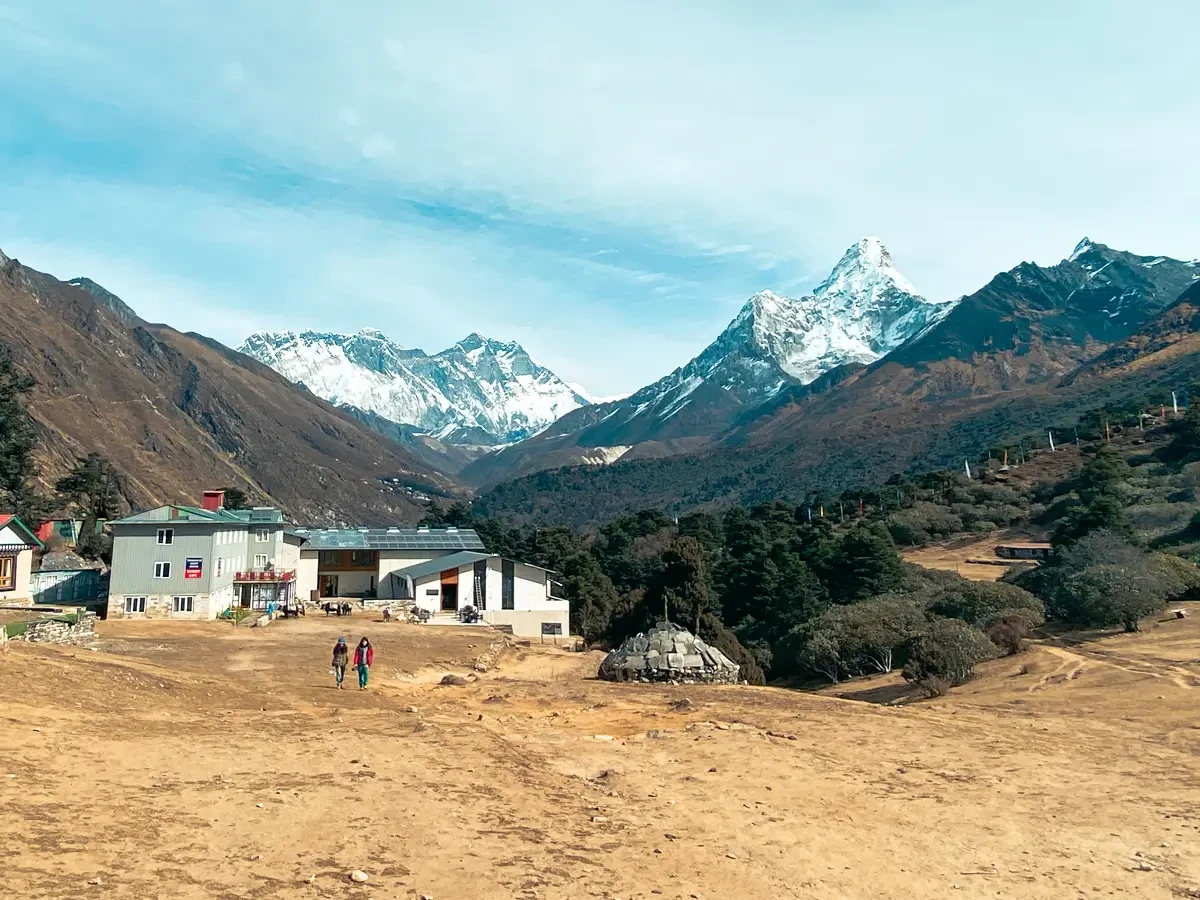
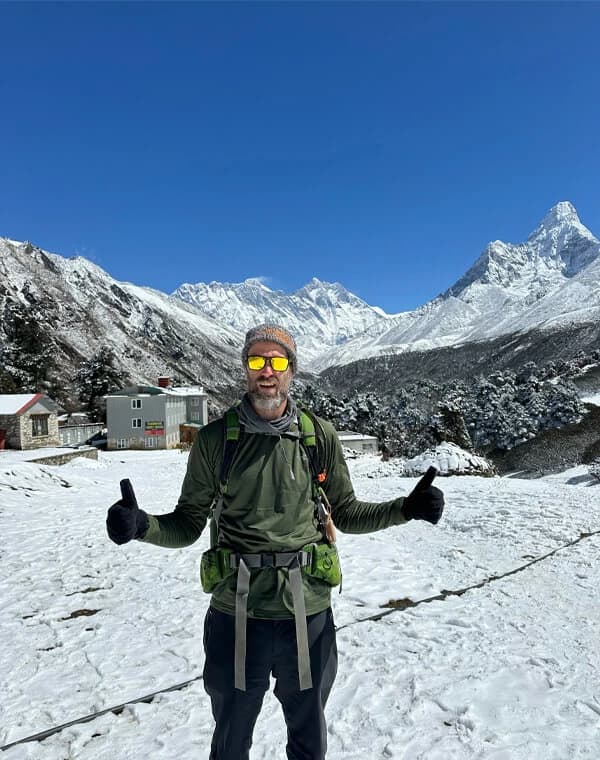
- Walk through Sagarmatha National Park, a UNESCO World Heritage Site, past Ama Dablam, Lhotse, and Nuptse
- Cross the Dudh Koshi River on high suspension bridges and pass through Sherpa villages including Phakding and Pangboche
Trip Overview
The Everest Base Camp Trek takes you to 5,364 m (17,598 ft), the base of the world’s highest mountain, over 14 days through the Khumbu region of Nepal.
The trek begins with a 35 minutes flight from Kathmandu to Lukla (2,860 m / 9,383 ft), the starting point for every Everest base Camp Itinerary. From there, the route follows the Dudh Koshi valley up through Namche Bazaar, the main Sherpa town and trading hub of the region.
The trail continues through Tengboche, Dingboche, and Lobuche, then reaches Everest Base Camp and the Kala Patthar viewpoint at 5,545 m (18,192 ft).
This is not a technical climb. There are no ropes or climbing skills involved. The real challenge is altitude. The trail spends five nights above 4,000 m (13,123 ft). Two acclimatization days are built into this itinerary, at Namche Bazaar and Dingboche. These are not optional extras. Skipping them is the single most common reason trekkers fail to reach Base Camp.
The trek passes through Sagarmatha National Park, a UNESCO World Heritage Site, and through Sherpa villages along the way. Daily life, monasteries, and mountain hospitality shape the experience as much as the mountain views do.
You'll cross the edge of the Khumbu Glacier and walk beneath Ama Dablam and Nuptse. Climbers have prepared for Everest summit attempts from this same ground since 1953.
The full round trip covers roughly 130 km (81 miles), with a net elevation gain of about 2,500 m (8,200 ft) from Lukla to Kala Patthar. Daily walking distances range from 4 km (2.5 mi) on acclimatization days to 19 km (11.8 mi) on the longest descent day.
Since April 2023, a licensed guide is legally required for all trekking in the Khumbu region. This is included in every Shikhar Adventure Everest Base Camp package, along with both permits needed for the route.
Lukla Flight Information
During peak season (March to May and late September to November), Lukla flights operate from Manthali Airport instead of Kathmandu. Tribhuvan International Airport's air traffic gets too congested to handle the volume safely during these months.
Manthali is roughly 130 km (81 miles) from Kathmandu, a drive of 4 to 5 hours on a winding mountain road. We leave Kathmandu around 2:00 AM to reach Manthali in time for the first flights of the day. Weather conditions over the mountains are most stable early in the morning.
Lukla flights are weather-dependent regardless of which airport you fly from. Delays of a day or more are common. This itinerary should never be booked back-to-back with an international departure. We recommend building in at least 2 extra buffer days beyond this 14-day plan.
In an emergency or time-critical delay, we can arrange a helicopter to or from Lukla at an additional cost of USD 500-700 per person. This is the fastest way to resolve a delay that threatens an international flight connection, and Shikhar Adventure can coordinate this directly on the ground when needed.
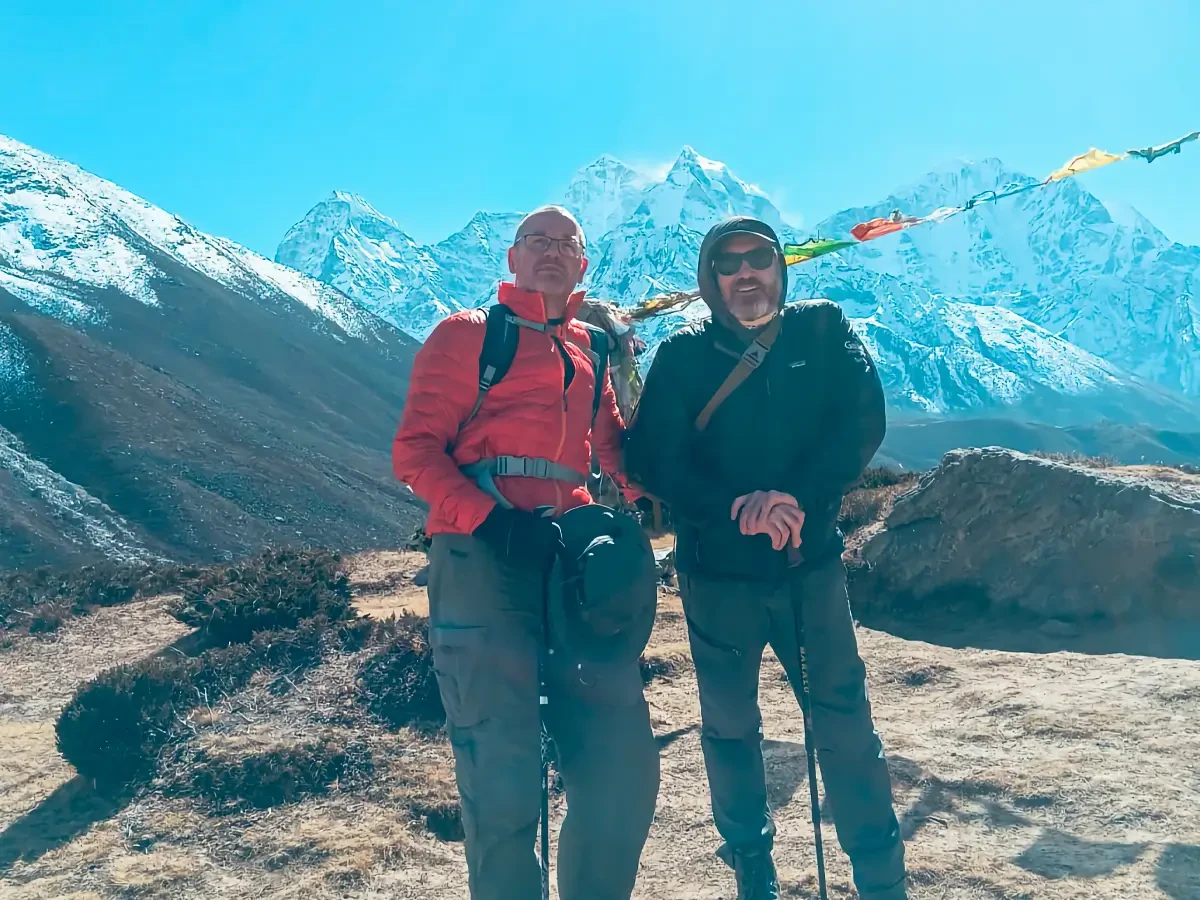
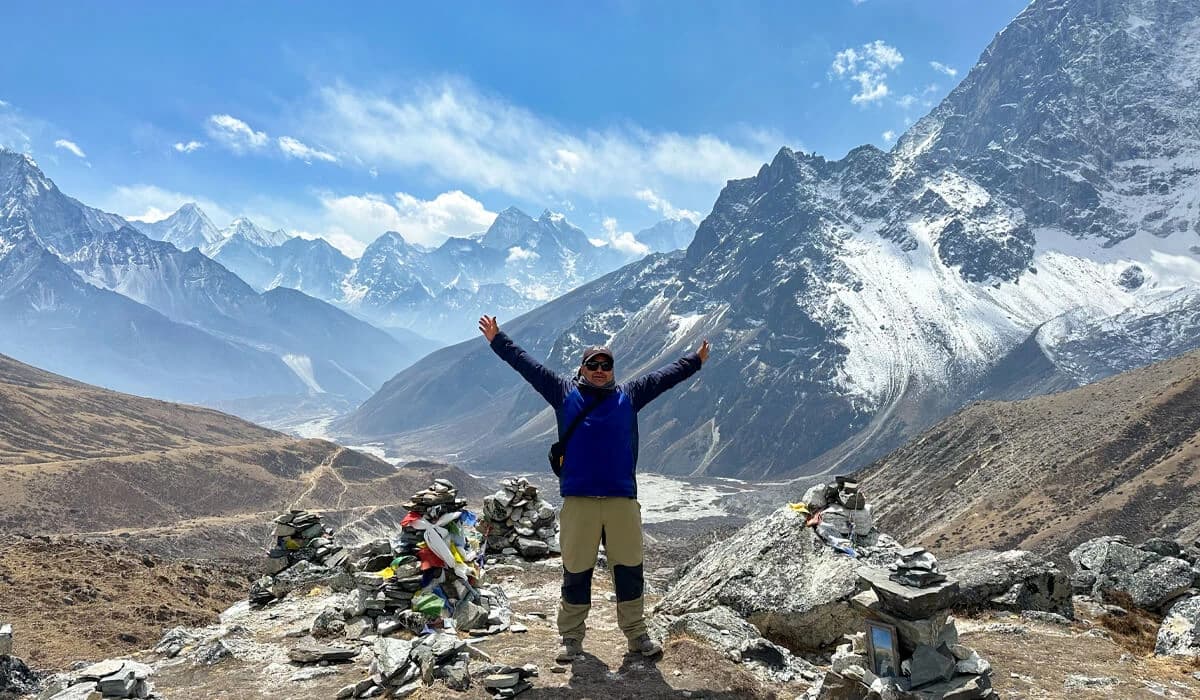
Everest Base Camp Trek Gallery


Itinerary Note
This is Shikhar Adventure's standard 14-day itinerary. If you'd like a different pace, extra days, or a custom route, just tell us what you need. Hit the "Customize Trip" button and our team will help you plan it.
Note: We strongly recommend building in at least 2 extra days before your international flight home. Weather-related delays on Lukla flights are common, and they can shift your whole schedule if you don't leave room for them.
Detailed Trip Itinerary
Expand AllA Shikhar representative meets you at the airport, welcomes you traditionally with marigold garlands and transfers you to your hotel.
We brief you on the trek that evening, and perform the final gear check. The rest of the day is free to rest or explore Kathmandu.
Fly from Kathmandu to Lukla (2,860 m / 9,383 ft), roughly 30-35 minutes. Lukla flights typically operate between 6 AM and 11 AM, when the weather window in the mountains is most stable.
During peak season, flights operate from Manthali Airport instead, meaning we leave Kathmandu around 2 AM for a 4-5 hour drive. This transfer is included in your EBC package at no extra cost, unless you specifically request a private transfer.
Your trek begins here in Lukla. Your guide collects your permits at the nearby checkpoint, and you continue on to the small town of Phakding (2,610 m / 8,563 ft), 6 km (3.7 mi), 3-4 hours, a net descent of about 250 m.
The trail follows the Dudh Koshi river through Chaurikharka and Cheplung, both Sherpa farming villages. This is the gentlest walking day of the trek, intentionally paced to let you adjust before the climb into Namche begins.
You'll cross the Dudh Koshi several times today, including the high Hillary Suspension Bridge near Jorsalle. The final climb into Namche is steep and sustained, the toughest single ascent of the whole trek, gaining 830 m over the day.
On a clear morning, you'll catch your first glimpse of Everest itself from a viewpoint just before town. Namche has shops, ATMs, and cafes, worth using for any last-minute gear you need
You'll sleep at the same altitude as the night before, but you won't be resting all day. We recommend the hike up to Everest View Hotel (3,880 m / 12,730 ft) and the Sherpa Museum, since climbing higher and sleeping lower is what actually helps your body adjust.
On a clear day, this viewpoint lines up Everest, Lhotse, Ama Dablam, and Thamserku in one frame. This rest day isn't optional in this itinerary; it's built in for your safety.
You'll descend first, down to Phunki Tenga, before a steady climb back up to Tengboche, gaining 420 m over the day. Tengboche Monastery, the largest in the Khumbu region, sits right here against the backdrop of Ama Dablam.
Clear afternoons at this stop offer some of the best mountain views of the entire trek.
You'll drop down to Deboche and cross the Imja Khola, then climb through Pangboche, one of the oldest Sherpa villages in the Khumbu, directly beneath Ama Dablam.
You'll pass Pangboche Monastery on the way, home to a relic locals believe is the scalp and hand of a yeti. Scientific testing has found the hand contains human bone, and the scalp is likely fashioned from animal hide, though the legend still draws plenty of curious trekkers. The day ends with a 550 m gain into Dingboche, the highest permanent settlement on this route.
You'll get a second mandatory rest day here, and we'd recommend using it actively rather than sitting still. The hike up to Nangkartshang Peak (5,083 m / 16,677 ft) opens up clear views of Makalu and Ama Dablam while helping your body adjust before the final push toward Base Camp.
Skipping this day is one of the most common reasons trekkers turn back before reaching their goal
You'll climb through increasingly barren, rocky terrain to Thukla Pass (4,830 m / 15,846 ft), marked by stone memorials to climbers who lost their lives on Everest expeditions.
It's a quiet, reflective stop. Above 4,500 m, noticeably harder breathing is completely normal; just tell your guide right away if you feel unusually short of breath or unwell.
You'll reach Gorak Shep (5,164 m / 16,942 ft) after a short 2-2.5 hour walk, then continue on to Everest Base Camp itself, a round trip of 4-5 hours from Gorak Shep. The final stretch crosses the Khumbu Glacier's moraine, loose rock with no formal trail for much of it, so the pace slows right down.
In spring, you'll find Base Camp busy with expedition teams preparing for Everest summit attempts. One thing worth knowing ahead of time: the summit itself isn't visible from Base Camp. That view comes tomorrow morning, from Kala Patthar.
You'll start before dawn for the climb to Kala Patthar, a steep but short 2.5-3.5 hour round trip. This is the highest point of the whole trek, and it's where you finally get the clear, open view of Everest's summit that Base Camp doesn't offer.
After breakfast back in Gorak Shep, you'll descend 14 km down to Pheriche, a long day but a welcome one, since the air keeps getting easier to breathe with every step down.
You'll retrace your steps today, back through Pangboche, Tengboche, and Phunki Tenga. Going downhill is easier on your lungs but harder on your knees, so this is a good day to lean on your trekking poles.
You'll cover the longest single-day distance of the entire trek today, retracing Day 2 and Day 3 back through Jorsalle, Monjo, and Phakding. Most trekkers arrive tired but in high spirits, since the goal of the trek is already well behind you by now.
You'll take the morning flight from Lukla back to Kathmandu, weather permitting, and transfer to your hotel on arrival. The rest of the day is yours to rest, shop, or celebrate
You'll be transferred to Kathmandu airport around 3 hours before your scheduled departure flight, though this can be adjusted to fit your specific schedule.
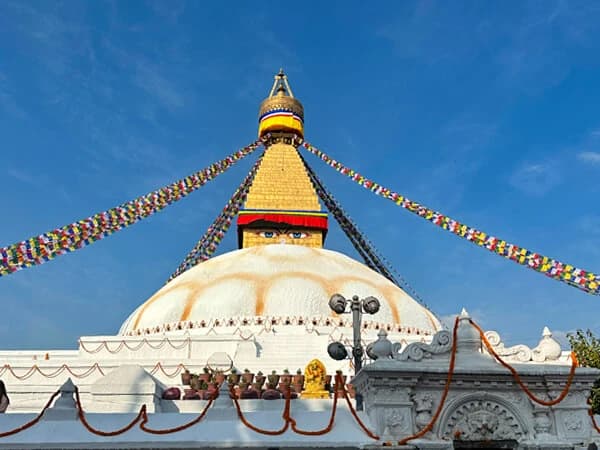
If you have time to spare before you fly out, we can arrange a short Kathmandu sightseeing add-on, covering spots like Swayambhunath or Boudhanath, or simply extend your stay for a few extra days to explore the city properly. Just let us know in advance so we can plan around your flight
Couldn't find what you're after?Reach out to our travel experts, who are eager to plan your trip according to your personal travel preferences.
Cost Includes
- Airport arrival and departure transfers (private vehicle)
- Two nights in a 3 - star hotel in Kathmandu, breakfast included (Hotel Nirvana Garden or Similar).
- All ground transportations.
- Kathmandu - Lukla - Kathmandu flights
- Teahouse accommodation for all 12 nights on the trail.
- 3 meals a day (breakfast, lunch, dinner) while trekking
- Sagarmatha National Park entry permit and Khumbu Pasang Lhamu Rural Municipality permit
- Licensed experienced local English-speaking guide.
- Porter (one porter per two trekkers)
- Guide and porter wages, food, accommodation, and insurance
- Sleeping bag, and duffel bag for the duration of the trek
- First aid kit and pulse oximeter carried by your guide
- Government taxes and service charges
Cost Excludes
- International airfare to and from Kathmandu
- Nepal visa fees (USD 30 for 15 Days, USD 50 for 30 Days for foreigners)
- Travel insurance, including emergency helicopter evacuation cover - this is essential, not optional, and should be arranged before departure
- Meals in Kathmandu other than breakfast
- Personal expenses (WiFi, hot showers, charging, snacks — these rise with altitude on the trail)
- Alcoholic drinks and bottled beverages
- Tips for guide and porter
- Extra nights or meals caused by flight delays or itinerary changes
- Costs arising from cancellations, weather disruption, illness, or other unforeseen events
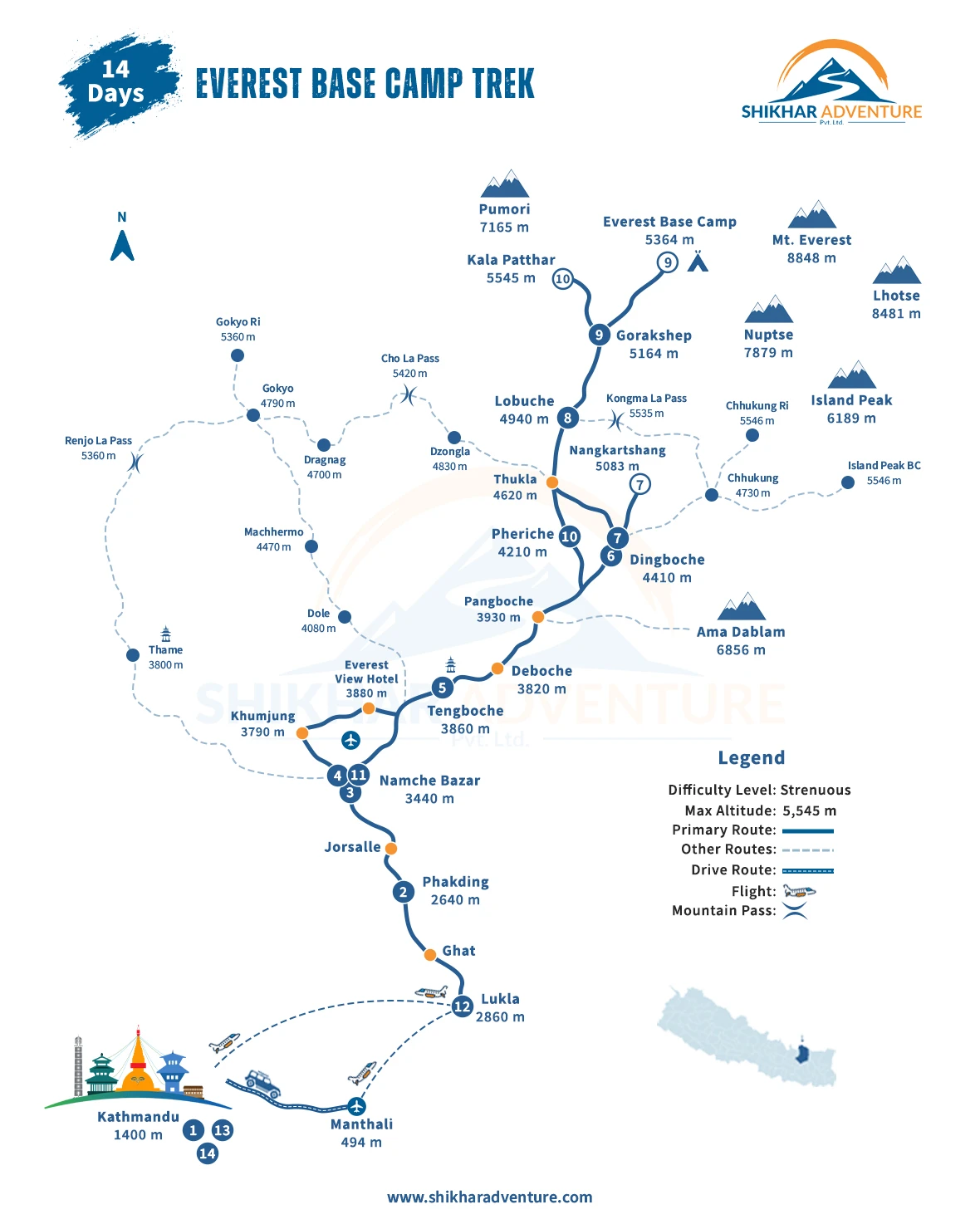
Everest Base Camp Trek Route Map
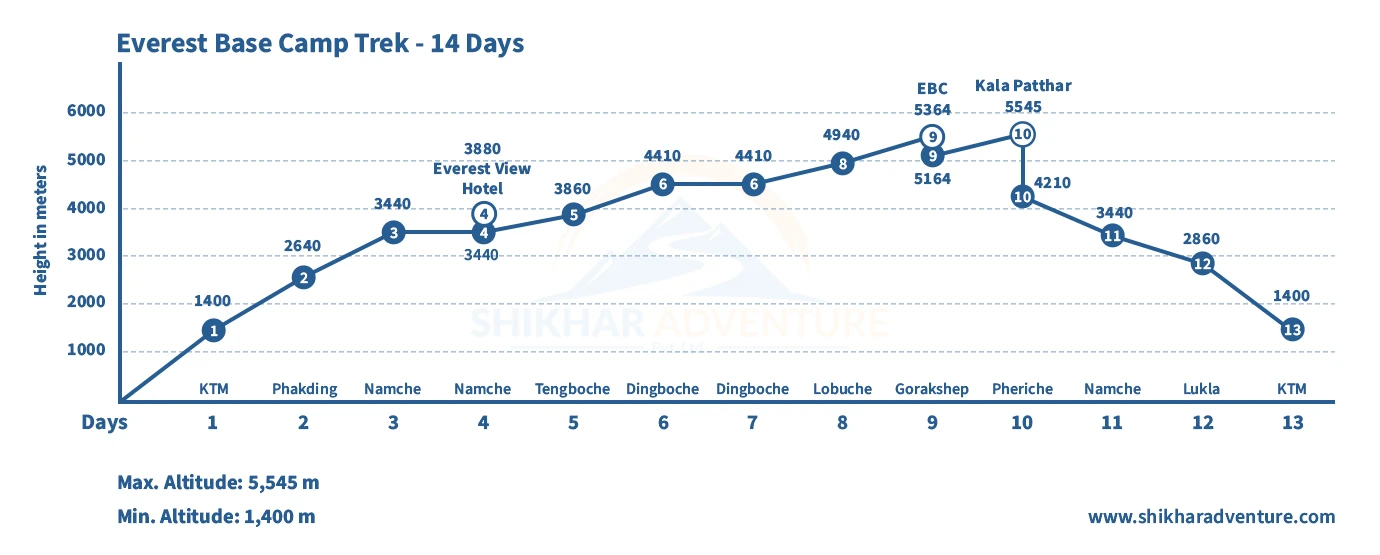
Altitude Chart
Dates & Availability
Unexpected factors such as politics, weather, and natural disasters can impact your trip. This may cause changes or modifications to your itinerary. In such instances, our guides or leaders will attempt to arrange the best alternative itineraries. We will do our utmost to minimize the impact, but we will not be liable for any delays, changes, or annoyance caused by it.
Essential Information
Is the Everest Base Camp Trek Right for You?
Yes, if you have reasonable cardiovascular fitness and can walk 5-7 hours a day for multiple consecutive days.
No technical climbing skill or equipment is required. Prior high-altitude experience helps but isn't necessary. Age alone isn't a barrier; what matters most is pacing, honest communication with your guide, and respecting the acclimatization schedule rather than rushing it.
Cost of the Everest Base Camp Trek
This package starts from USD 1,325-1,525 per person, depending on group size. It covers 2 night in Kathmandu, permits, Lukla flights, experienced local guide, porter, teahouse accommodation, and meals on the trail.
It doesn't cover international flights, visa fees, travel insurance, tips, or personal spending on the trail (WiFi, hot showers, extra snacks). Budget a realistic total of USD 2,000-2,800 once everything is added in. See our full cost breakdown guide for an itemized total
How Long the Trek to Everest Base Camp Takes?
This standard itinerary is 14 days: 2 nights in Kathmandu and 12 days on the trail, including 2 mandatory acclimatization days. Shorter (8-12 day) and longer (16-21 day, including the classic Jiri route) versions exist as separate packages if you want a different pace.
How Difficult It Really Is?
Terrain-wise, it's moderate: well-marked trails, stone steps, and river crossings, no technical climbing involved. Altitude is the real challenge. You'll spend multiple nights above 4,000 m (13,123 ft), where oxygen levels drop to roughly 50% of sea level by the time you reach Base Camp. The two acclimatization days in this itinerary exist specifically to manage that, not as scheduling padding.
For real insight, read our Everest Base Camp Trek Difficulty guide, written by a Himalayan guide with 25+ years of experience.
Best Time to Trek
Spring (March-May) and autumn (September-November) are the two main seasons. Autumn generally has the most stable weather and clearest mountain views. Spring brings milder daytime temperatures, blooming rhododendron forests, and active Everest expedition teams at Base Camp. Winter and monsoon treks are possible with the right preparation, but expect significantly more cold, snow, or rain depending on the month
Altitude and Safety
Mild symptoms (headache, fatigue, loss of appetite) are common above 3,500 m and usually resolve with rest and hydration. Worsening headache, vomiting, confusion, or shortness of breath at rest are signs to descend and tell your guide immediately.
Every Shikhar guide carries a pulse oximeter and basic first aid kit and monitors the group daily above 3,000 m. In a time-critical emergency, we can arrange a helicopter evacuation to Kathmandu.
How It Compares to Other Treks?
Everest Base Camp reaches slightly higher, at Kala Patthar (5,545 m / 18,192 ft), while the Annapurna Circuit's highest point, Thorong La Pass (5,416 m / 17,769 ft), comes close behind. Both are non-technical and guide-accompanied, but the Annapurna Circuit crosses a high mountain pass rather than ending at a base camp, and passes through more varied terrain and villages along the way.
If you want a true circuit experience with a dramatic pass crossing instead of a there-and-back trek, the Annapurna Circuit is worth considering instead. See our full EBC vs Annapurna Circuit comparison for a detailed breakdown.
What to Pack
A sleeping bag, and duffel bag are included in your package. Everything else, from layers to trekking pole to a water filter, is your responsibility to bring or rent in Kathmandu. See our full packing list guide for the complete checklist.
Permits and Regulations
Since April 2023, a licensed guide is legally required for all trekking in the Khumbu region, included in every Shikhar Adventure package. Though few trekkers still doesn't follow this, we highly recommend hiring a guide, it enhances your experience while maintaining safety as well.
Two permits are also required, both handled for you: the Sagarmatha National Park entry permit and the Khumbu Pasang Lhamu Rural Municipality entrance permit, which replaced the old TIMS card system in 2020.
Is It Worth It?
For most trekkers, yes. Standing at 5,364 m (17,598 ft) beneath Everest, having walked there through Sherpa villages and Sagarmatha National Park, is the kind of achievement that stays with you well after the blisters heal.
It isn't a casual weekend trip, and it asks real commitment in training and patience with the acclimatization schedule. But it doesn't require technical skill, just the willingness to go slow, listen to your body, and trust the process built into this itinerary
FAQs
This standard itinerary is 14 days, including 2 nights in Kathmandu and 12 days on the trail. Shorter (8-12 day) and longer (16-21 day, including the classic Jiri route) versions are available as separate packages
It is a strenuous, non-technical trek. No climbing skills or equipment are needed. The main challenge is altitude, not terrain, which is why this itinerary includes two dedicated acclimatization days
Yes, with proper physical preparation and a well-paced itinerary. Prior trekking experience helps but is not required.
Yes, by Nepalese law since April 2023. Every Shikhar Adventure package includes a licensed guide.
This package starts from USD 1,325-1,525 per person depending on group size, as shown in the pricing table above. This covers permits, flights, guide, porter, accommodation, and meals on the trail. It does not cover international flights, visa, insurance, or personal spending; see our full cost breakdown for a realistic total budget.
This is common enough that we build buffer time into trip planning. We recommend adding at least 2 extra days beyond this itinerary before booking your international flight home.
In critical-emergency situations, we can organize helicopter transfers at additional cost.
No. The summit is not visible from Base Camp because of the surrounding ridgeline. The clear summit view comes from Kala Patthar (5,545 m / 18,192 ft), reached before dawn on Day 10 of this itinerary
Kala Patthar at 5,545 m (18,192 ft) is the highest point reached. Everest Base Camp itself sits slightly lower at 5,364 m (17,598 ft)
Between 4 km (2.5 mi) on acclimatization days and 18 km (11.2 mi) on the longest descent day, averaging 10-15 km (6-9 mi) on active trekking days. The full round trip covers about 130 km (81 miles).
Net gain from Lukla to Kala Patthar is roughly 2,500 m (8,200 ft). The cumulative gain across all the ups and downs of the full round trip is significantly higher, closer to 4,500-5,000 m (14,760-16,400 ft) one way
A Wonderful Solo Travel Experience
As a solo traveller, I had a wonderful experience with Shikkhar Adventure. Dampar and his guide provided excellent support throughout my journey in Nepal. I truly appreciated Dampar’s thoughtfulness, dedication,...
B
Bu Xuan- Vietnam
October 25, 2026Fantastic Everest Base Camp Experience with Shikhar Adventure
We completed the Everest Base Camp Trek with Shikhar Adventure from 19 May to 1 June 2026 and had an excellent experience from beginning to end.
Our guide, Jite...

Abhimanyu Singh- India
June 02, 2026Life-Changing Experience Trekking Through the Himalayas with the Highly Skilled Team at Shikhar Adventure!
I completed the 16-day Everest Base Camp Trek from Jiri, and booking through Shikhar Adventure was one of the best decisions I made. As a solo female traveler, my guide,...

Kaitlyn- Australia
May 22, 2026You May Also Like
Need Help? Call Us.+977 9841869254