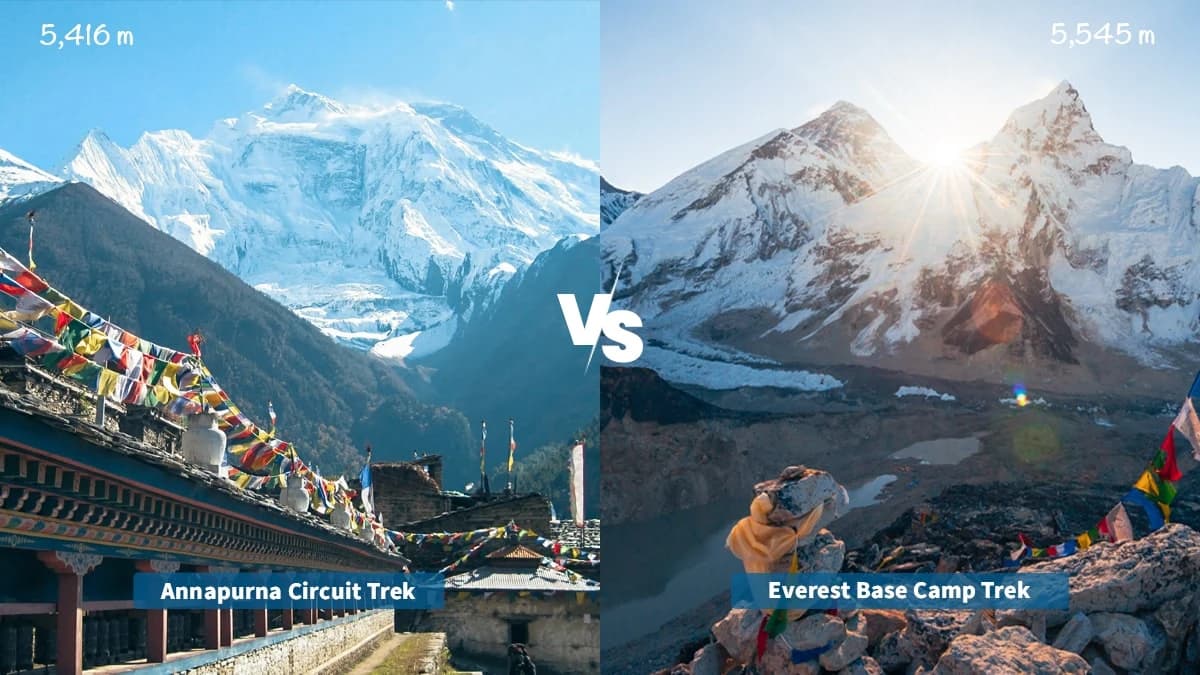
The Annapurna Circuit offers more scenic variety, lower costs, and flexible road access — ideal for first-timers. Everest Base Camp delivers iconic Himalayan drama and deep Sherpa culture but demands higher altitude fitness. Both peak in Oct–Nov and Mar–May. Your choice depends on fitness, budget, and personal goals.
Annapurna Circuit vs Everest Base Camp: which Nepal trek is right for you?
After more than 20 years leading treks across Nepal, numbers of treks into the Khumbu Valley and countless circuits around the Annapurna massif, one question reaches my inbox every single week: which is better, the Annapurna Circuit or Everest Base Camp?
My honest answer? There is no universally correct answer. But there is a right answer for you — and this guide will help you find it.
I remember a guest named Sarah from Melbourne who arrived convinced she wanted EBC. We talked for an hour about her love of diverse landscapes, forest trails, and village culture. She chose the Annapurna Circuit instead. She later told me it was the best decision of her life. I've also sent seasoned photographers straight to Kala Patthar, and they never looked back. Both treks are extraordinary. They are just not the same trek.
Quick answer: The Annapurna Circuit wins on scenic variety, lower cost, and beginner-friendliness. Everest Base Camp wins on iconic status, Sherpa culture, and raw Himalayan drama. This guide covers everything you need to decide with confidence.
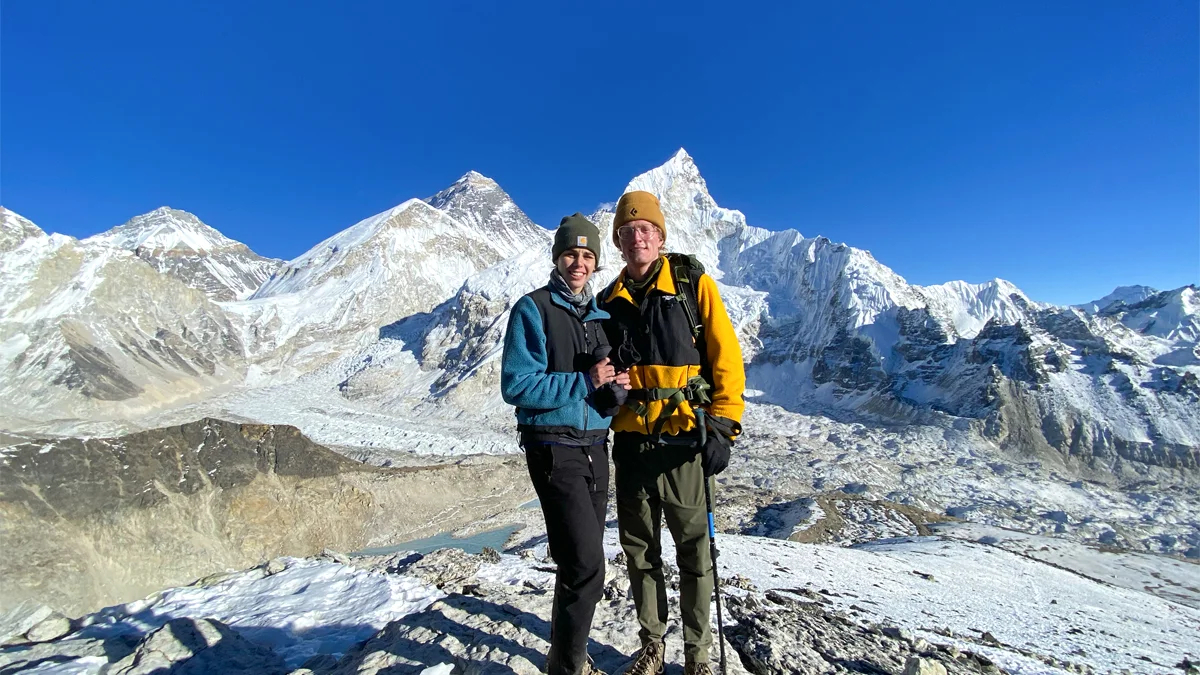
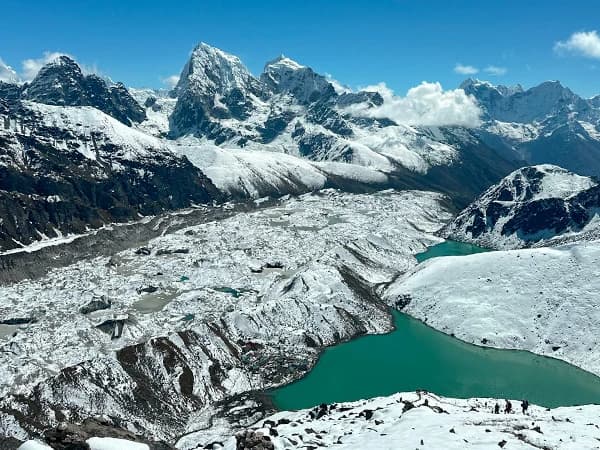
View from Kala Patthar on the Everest Base Camp Trek
At-a-glance comparison - Annapurna Circuit vs the Everest Base Camp Trek (2026)
Category
Annapurna Circuit
Everest Base Camp
Difficulty
Moderate–strenuous
Strenuous
Max altitude
5,416m (Thorong La)
5,644m (Kala Patthar)
Duration
12–18 days
12–16 days
Budget cost
USD 800–1,200
USD 1,000–1,500
Mid-range cost
USD 1,500–2,500
USD 2,000–3,000
Crowd levels
Moderate
High (peak season)
Road access
Bus/jeep from Pokhara
Flight to Lukla required
Scenery type
Exceptional diversity
Epic Everest panorama
Cultural focus
Gurung & Thakali villages
Sherpa & Buddhist heritage
Beginner friendly
Yes (with guide)
Less so (altitude risk)
Best season
Oct–Nov / Mar–May
Oct–Nov / Mar–May
Photography
Incredible diversity
World-class iconic shots
The Annapurna Circuit offers more scenic variety, lower costs, and flexible road access — ideal for first-timers. Everest Base Camp delivers iconic Himalayan drama and deep Sherpa culture but demands higher altitude fitness. Both peak in Oct–Nov and Mar–May. Your choice depends on fitness, budget, and personal goals.
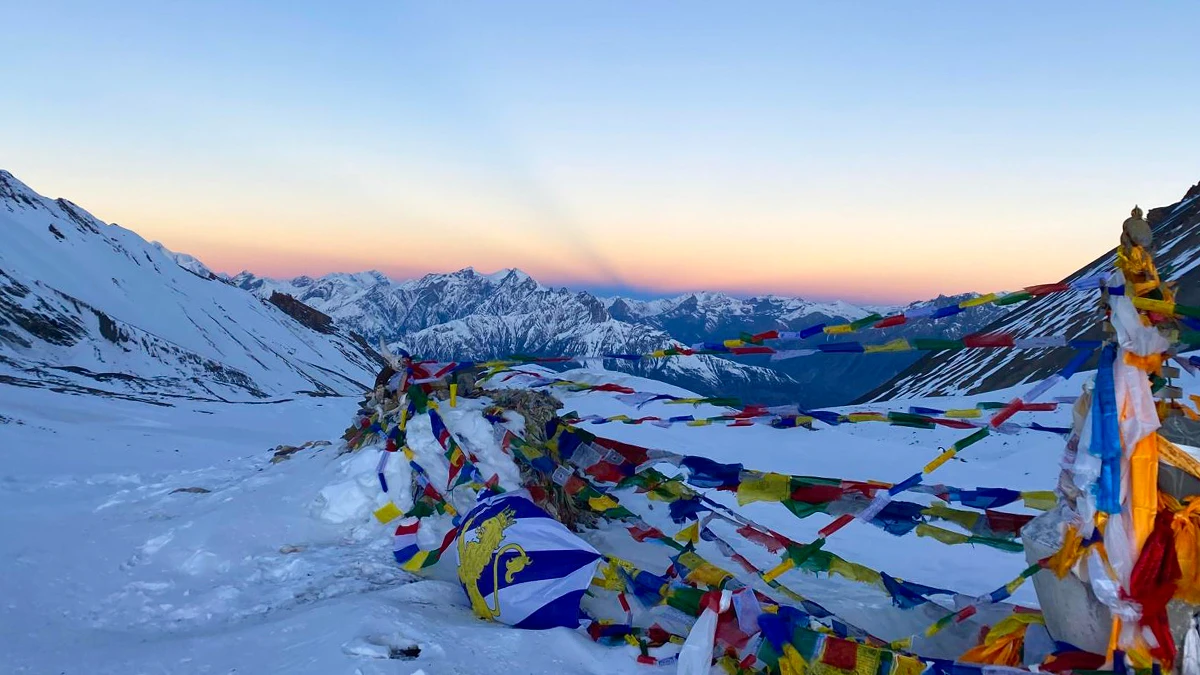
View from Thorong La Pass
1. Difficulty and physical challenge
Annapurna Circuit
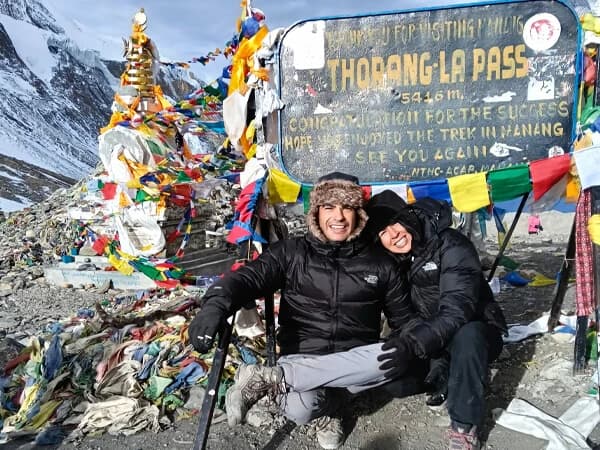
The circuit covers roughly 160-230 km depending on your route variation, typically completed in 12-18 days. Daily walking runs 5-8 hours on well-maintained trails through forests, river valleys, and high-altitude terrain. The defining challenge is Thorong La Pass at 5,416m, crossed early morning before winds pick up. Most trekkers reach the summit with solid acclimatisation and reasonable base fitness.
What makes the circuit more forgiving than EBC is the steady elevation gain, warm lower valleys that ease you into high terrain, and the option to exit by jeep from Manang or Jomsom if needed. If you want to add Tilicho Lake, check our Annapurna Circuit with Tilicho Lake - 17 Days package.
Everest Base Camp
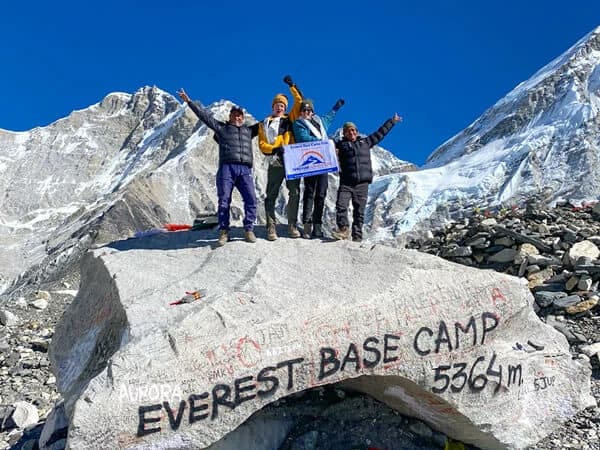
EBC covers approximately 130 km over 12–16 days, but the shorter distance is deceptive. You spend most of the route between 3,440m and 5,364m, and that sustained high altitude creates cumulative fatigue that surprises even experienced hikers. The acclimatisation days at Namche and Dingboche are not optional, skipping them is the most common cause of helicopter evacuations.
Guide's note: In my experience, AMS incidents are more frequent on the EBC route simply because the altitude is higher and sustained for longer. The Annapurna Circuit gives you more room to breathe, literally and figuratively. Our full altitude sickness guide covers prevention, symptoms, and what to do if things go wrong.
Verdict: Annapurna Circuit is moderately easier overall, though Thorong La Pass demands respect. EBC's challenge lies in sustained high altitude rather than a single dramatic pass.
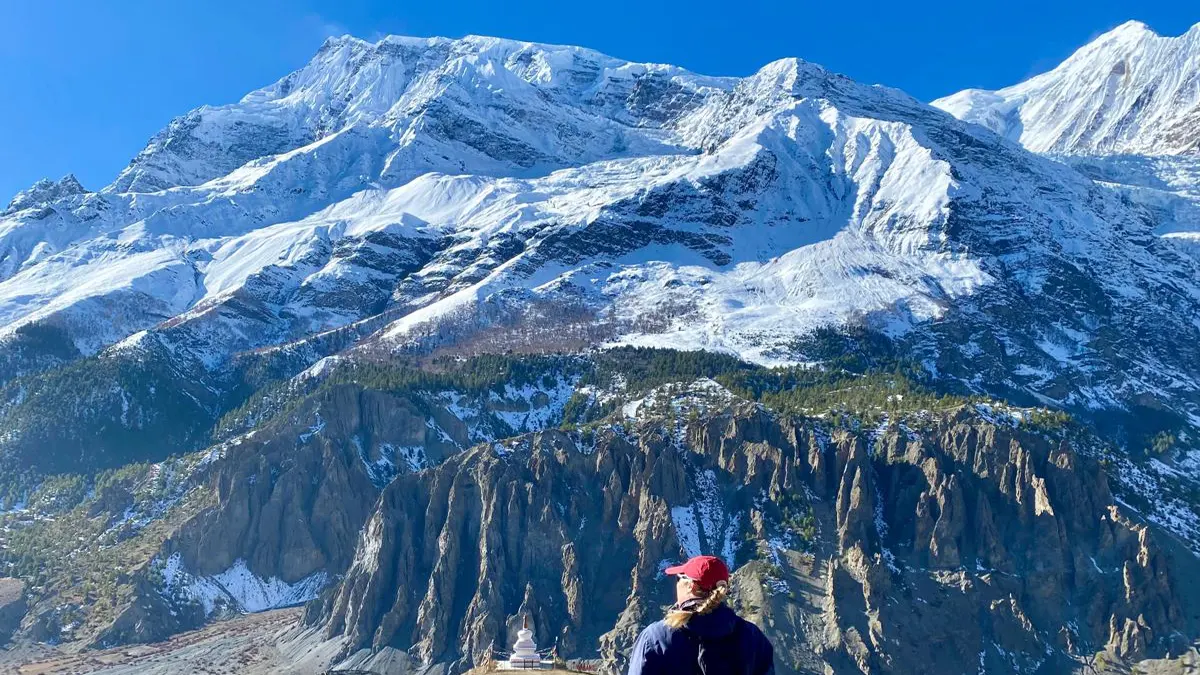
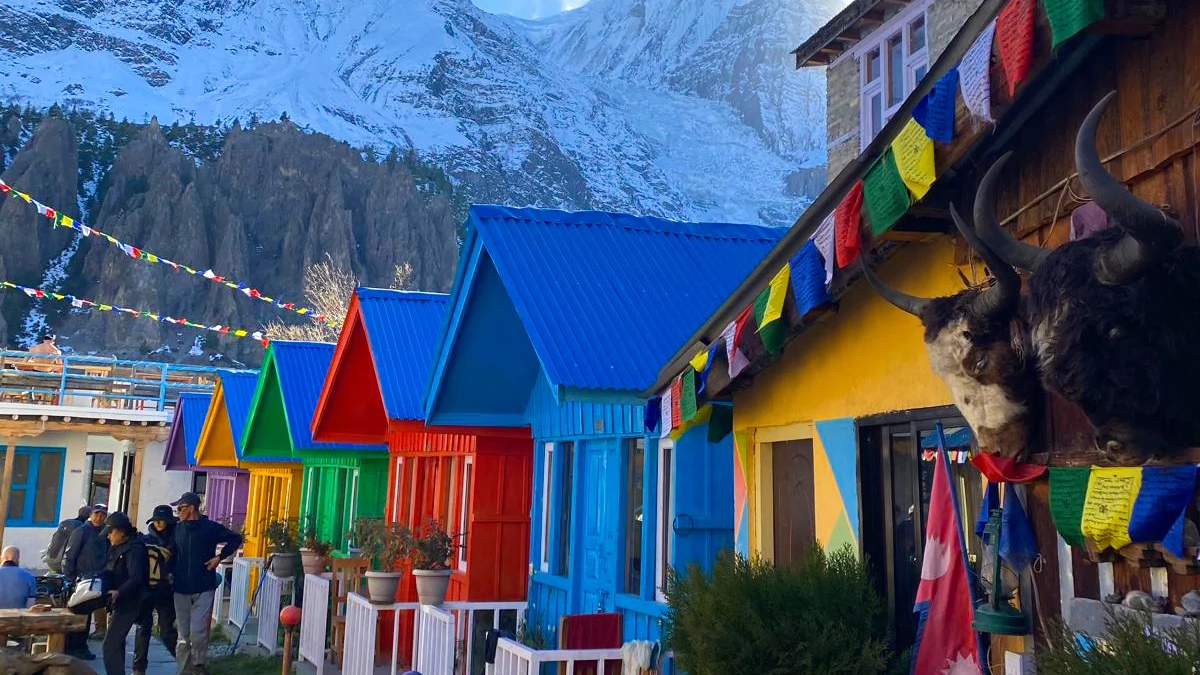
Walking the Annapurna Circuit trail
2. Scenery and landscape
Annapurna Circuit
The Annapurna Circuit is the most scenically diverse trek in the world, I'll stand by that claim. In one trip you walk through subtropical forests, terraced rice paddies, rhododendron stands, high-altitude Mustang desert, glaciated passes, and the lush Pokhara valley. You see eight of the world's 14 peaks above 8,000m in a single panoramic sweep from viewpoints above Manang.
Hidden gems include Tilicho Lake at 4,919m and the wind-carved canyons of Mustang. For more on those, read our hidden gems of the Annapurna Circuit guide. Best photography spots: Pisang village, Gangapurna Lake, Thorong La summit, and Poon Hill at dawn, easily added via our Ghorepani Poon Hill Trek.
Everest Base Camp
EBC scenery is more singular, but singular in the most powerful way. Nothing prepares you for looking up at Everest's black pyramid rising above the Khumbu Glacier. The route passes enormous seracs, icefall views, and the prayer-flag-draped ridges of Kala Patthar. Ama Dablam's near-perfect shape is one of the most photographed peaks on earth.
Verdict: For landscape variety, the Annapurna Circuit wins clearly. For sheer Himalayan drama and Everest's iconic silhouette, EBC is unmatched.
Meal during the Annapurna Circuit Trek
3. Cultural experience
Annapurna Circuit - Gurung and Thakali culture
The lower Annapurna region is Gurung country — warm, proud communities with a strong Gurkha military heritage. As you gain altitude into Manang district and cross Thorong La, you enter Thakali and Mustangi territory. The walled village of Lo Manthang in Upper Mustang (accessible via our Upper Mustang Trek — 16 Days) feels like stepping into medieval Tibet.
Everest Base Camp - Sherpa culture
The Khumbu region is the homeland of the Sherpa people, and cultural immersion here is tied deeply to Tibetan Buddhism. Tengboche Monastery at 3,867m — with Everest framed behind it — is one of the most spiritually powerful places I have ever visited. Mani walls, prayer wheels, and yak caravans line the trail. If you trek in November, ask about the Manirimdu Festival at Tengboche — we run a dedicated Manirimdu Festival with EBC Trek — 16 Days package for it.
Verdict: Both treks offer profound cultural depth. The AC delivers more ethnic diversity. EBC delivers deeper Buddhist heritage. Monastery lovers should choose EBC.
4. Cost breakdown (2026)
Cost item
Annapurna Circuit
Everest Base Camp
TIMS permit
USD 20
USD 20
ACAP permit
USD 30
-
Sagarmatha Park permit
-
USD 30
Kathmandu–Lukla flight
-
USD 150-200 (return)
Bus/jeep to trailhead
USD 10-20
-
Guide fee (per day)
USD 25-35
USD 30-40
Porter fee (per day)
USD 15-20
USD 18-25
Tea house (per night)
USD 5-25
USD 5-30
Meals (per day)
USD 15-30
USD 20-40
Total budget trek
USD 800-1,200
USD 1,000-1,500
Total mid-range trek
USD 1,500-2,500
USD 2,000-3,000
Hidden costs to budget for: travel insurance with helicopter evacuation coverage (USD 80-150), gear rental (USD 50-100), tips for guide and porter (USD 50-100 customary). See our travel insurance guidance for Nepal trekking.
Verdict: The AC is cheaper by USD 200-400 for most trekkers, primarily because it avoids the Lukla flight. Best value trek overall: Annapurna Circuit.
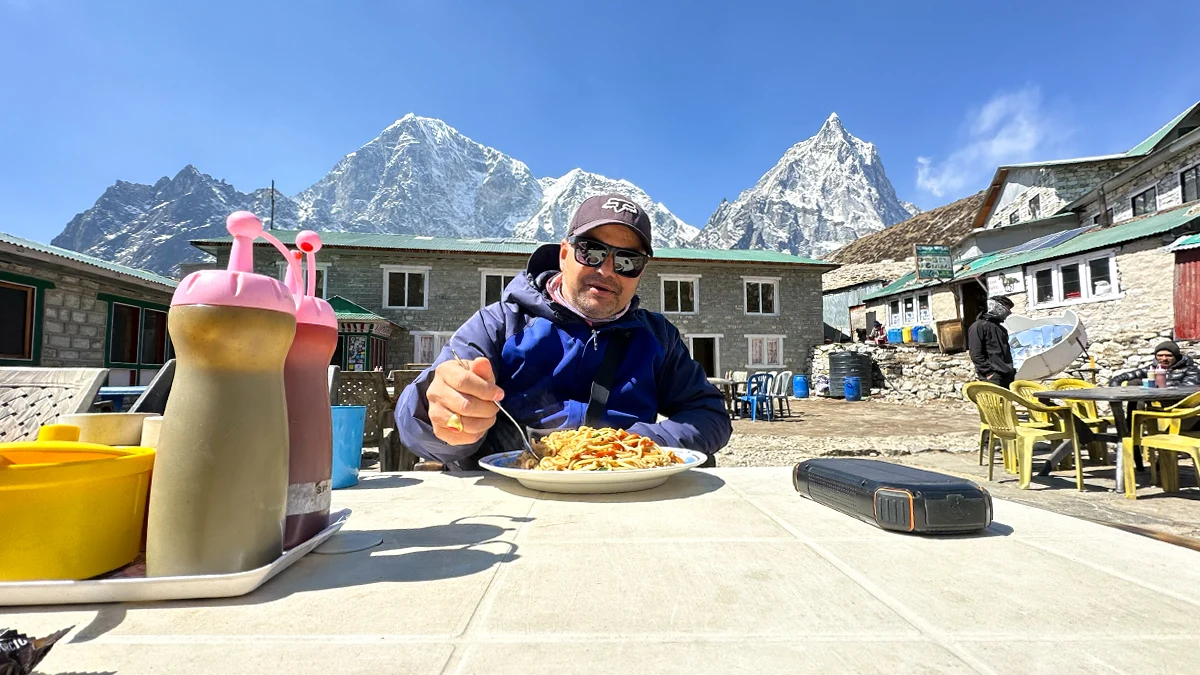
Lunch break during the Everest Base Camp Trek
5. Accessibility and logistics
Annapurna Circuit
The trek begins in Besisahar or Jagat, reached by 4 -6 hour bus or jeep from Pokhara. Pokhara is a 25-minute flight or 7-hour drive from Kathmandu. No mountain flight required — a major advantage for managing weather delays. Permits (TIMS + ACAP) are issued in Pokhara or Kathmandu the same day. Road access also means you can customise your itinerary more flexibly than on EBC.
Everest Base Camp
EBC begins with a Kathmandu -Lukla flight — 35 minutes, dramatic, and notoriously weather-dependent. Delays of 1 -3 days in Kathmandu or Lukla are common in October and November. Always build buffer days into your itinerary. We offer an alternative start via our Everest Base Camp Trek by Road — 16 Days if you want to avoid Lukla entirely. For the best of both worlds, consider our EBC Helicopter Return Trek — you trek in and fly back.
Practical tip: Always book at least 2 buffer days beyond your planned EBC descent. Lukla fog has stranded trekkers for up to a week. A helicopter exit from Lukla during delays is expensive and stressful — avoidable with good planning.
6. Safety and altitude sickness
Altitude sickness (AMS) is the primary safety concern on both treks above 3,000m. Symptoms include headache, nausea, and fatigue — and in severe cases, HAPE or HACE, which are life-threatening. The golden rule is never ascend with symptoms. Our 2026 altitude sickness guide covers prevention, recognition, and emergency response in full.
Never gain more than 300 -500m per day above 3,000m
Use mandatory acclimatisation days at Namche (EBC) and Manang (AC)
Carry a pulse oximeter to monitor blood oxygen levels
Headache + nausea + confusion = descend immediately, no exceptions
Ensure your travel insurance covers helicopter evacuation
As of 2023, Nepal law requires all trekkers in designated national park areas — including both the Annapurna and Everest regions — to trek with a licensed guide. This rule exists for safety and applies to both routes. Our travel guides section covers permits, visa requirements, and practical logistics in detail.
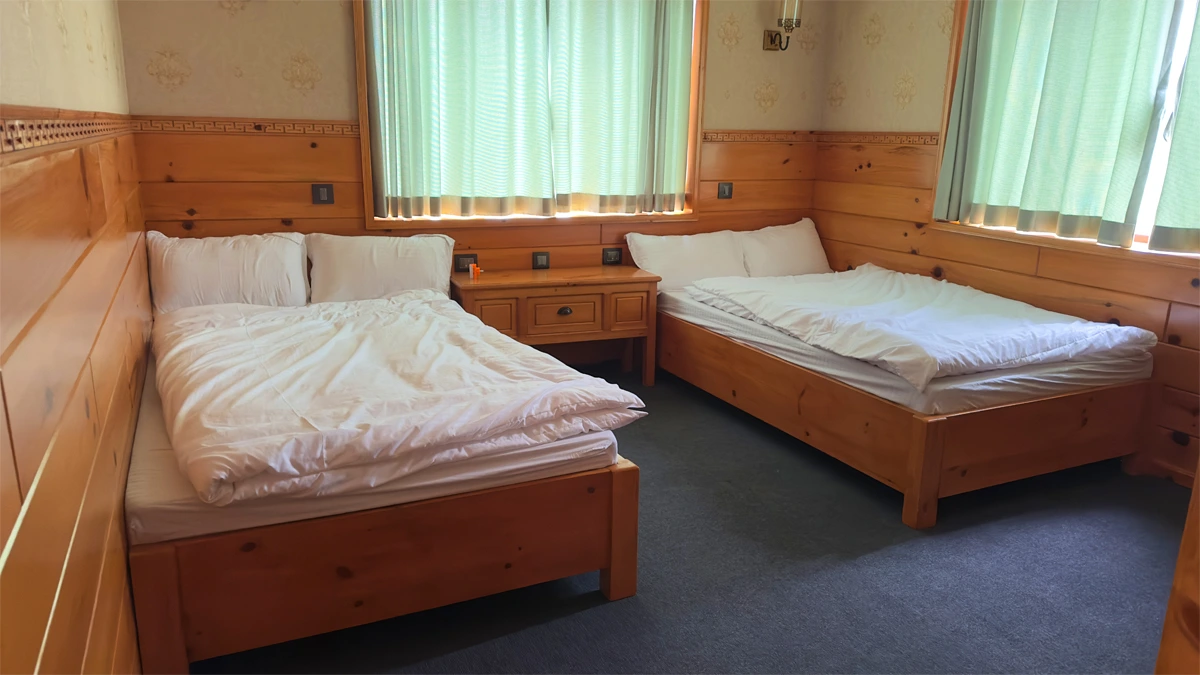
Teahouse accommodation on the Everest Base Camp Trek
Frequently asked questions
Is Annapurna Circuit harder than Everest Base Camp?
Not significantly. Thorong La Pass (5,416m) is a demanding single day, but the overall altitude is lower than EBC's sustained terrain. Most experienced trekkers find EBC harder due to prolonged time above 4,000m. Both require solid base fitness and proper acclimatisation.
Which trek is safer, Annapurna Circuit or EBC?
Both are safe when trekked with proper acclimatisation and a licensed guide. AMS incidents occur on both routes. EBC sees slightly more evacuations due to higher sustained altitude. Read our full altitude sickness guide before you go.
Can beginners do Everest Base Camp?
Yes - but with important caveats. You need prior hiking experience, good cardiovascular fitness, and a minimum 14-day itinerary for proper acclimatisation. A licensed guide is legally required and essential for safety. For most beginners, the Annapurna Circuit or Annapurna Base Camp are better first Himalayan treks.
Which trek has better scenery?
It depends on what you value. The Annapurna Circuit offers unmatched landscape variety - forest, desert, glaciers, river valleys. EBC delivers singular Himalayan drama centred on Everest. Photographers often prefer the AC for diversity; bucket-listers prefer EBC for iconic impact.
Which Nepal trek is cheaper in 2026?
The Annapurna Circuit is generally USD 200-400 cheaper. The biggest difference is transport: EBC requires a Kathmandu-Lukla flight (USD 150-200 return) while the AC uses road transport. Our EBC by Road option eliminates that cost if Everest is your goal.
What is the best month to trek in Nepal?
October-November and March-May are the prime seasons for both treks. October-November offers the clearest skies and most stable weather. March-May brings warmer temperatures and blooming rhododendrons on lower trails. See our travel guides-for month-by-month detail.
Do I need a guide for trekking in Nepal in 2026?
Yes. Nepal law requires all trekkers in designated national park and restricted areas - including both Annapurna and Everest regions - to hire a licensed guide. Beyond legal compliance, a knowledgeable local guide significantly improves your safety, cultural experience, and logistics. Talk to our team about the right guide for your trek.
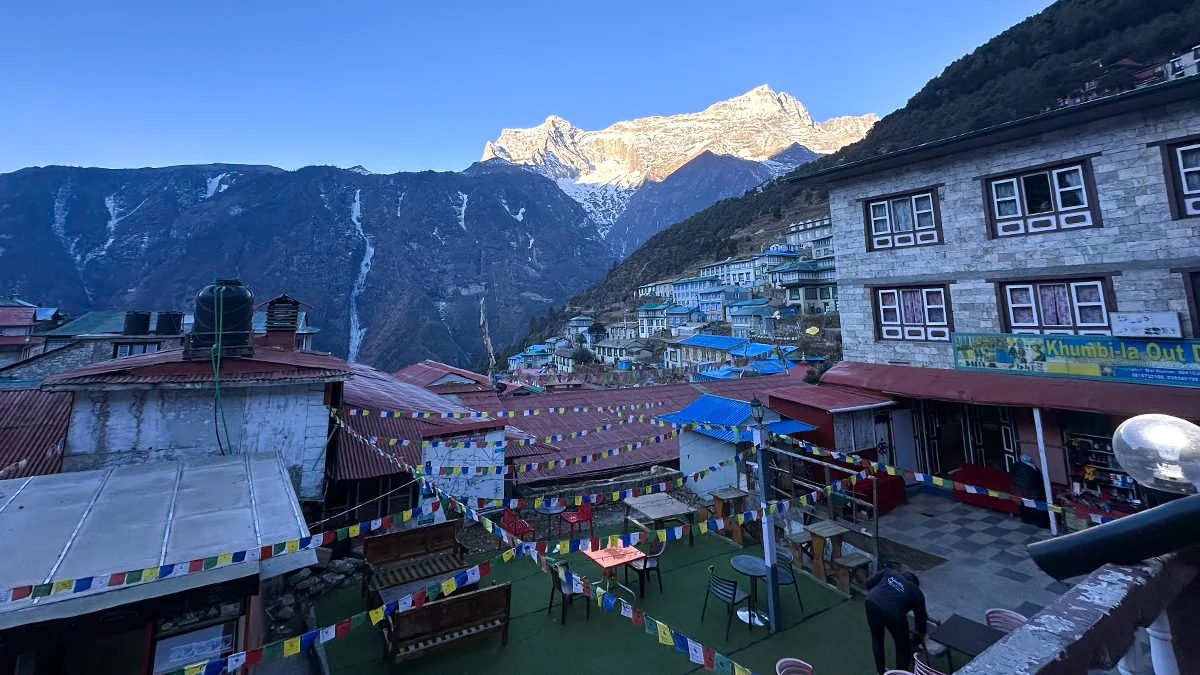
Sunrise over Namche Bazaar
Still deciding? Here's the honest truth.
Both the Annapurna Circuit and Everest Base Camp are treks that change people. I have guided clients in their 20s and their 70s on both routes. I have seen solo travelers find themselves and couples rediscover each other on these trails. The mountains do not care which route you chose — they will give you everything you bring to them.
Choose the Annapurna Circuit if you want variety, value, and a slightly gentler introduction to Himalayan trekking. Choose Everest Base Camp if you want to stand in the shadow of the world's highest peak and absorb one of the most powerful landscapes on earth. Choose both if you have the time — an increasing number of our clients do exactly that over 28–30 days.
If you are still unsure, the best thing you can do is talk to someone who has done both — hundreds of times, across every season and budget level. That is us.
Contact our team for honest, no-pressure advice. We will ask you the right questions, tell you what the trail actually looks like in your target month, and build an itinerary that fits your fitness, budget, and goals - not ours.