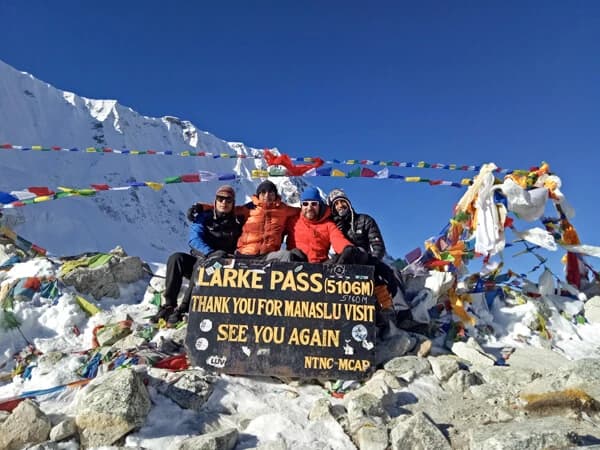
5,160 metres. Darkness. Frozen ground under your boots at 3 AM. You will question everything on this trail. But when the sun finally rises over Manaslu and lights up those prayer flags, you will understand exactly why trekkers cross this pass and never forget it.
Is Larkya La Pass Really That Hard?
Yes. No other day on the Manaslu Circuit trek comes close. You are walking above 5,000 metres for most of the crossing. You start before sunrise in temperatures that can drop to minus 15. The day runs 8 to 10 hours with very little flat ground and almost no margin for slow starts.
But here is the other side of it. Fit, well-acclimatised trekkers complete this crossing every single season. I have guided hundreds of people across Larkya La. First-timers. Experienced mountaineers. A 62-year-old retired school principal from the UK. Most people who fail do not fail because the pass is too hard. They fail because of poor preparation or bad timing.
Who can do this? Anyone who is physically fit, has properly acclimatised on the lower sections of the circuit, and is trekking with a guide who knows this route. No technical climbing skills are needed in normal season. No ropes. What it demands is fitness, patience, and genuine respect for altitude.
Real guide moment: In October 2023, I was leading a group of four when we hit unexpected wind at around 4,900m. One trekker, a 52-year-old teacher from Germany, had been one of our strongest walkers all week. At that elevation, in that cold, she hit a wall. We slowed to her pace. We kept her fed. We kept her talking. She crossed the pass. Pace management and early starts save crossings. Remember that.
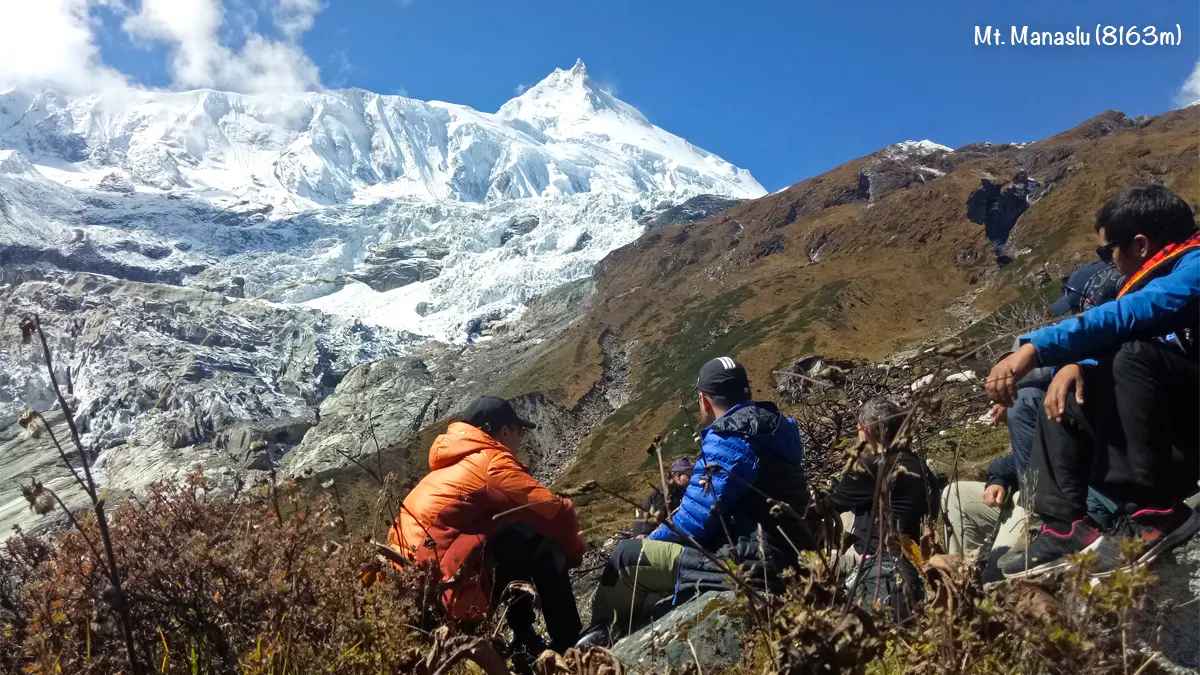
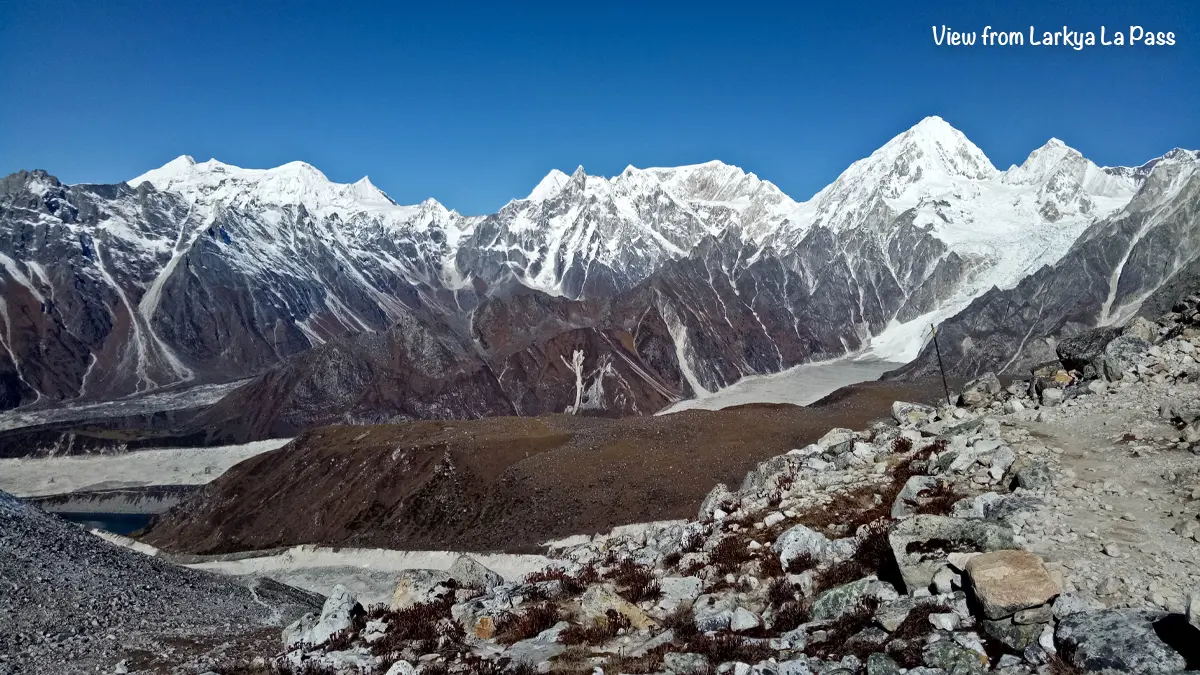
Looking at the majestic Mount Manaslu
Larkya La Pass: Quick Facts
Altitude: 5,160 metres
Duration: 8 to 10 hours
Difficulty: Challenging
Start time: 3:00 AM to 5:00 AM
Start point: Dharmasala (4,460m)
End point: Bimthang (3,590m)
Distance: Approximately 24 km
Key risks: Altitude, wind, cold, snow, remoteness
Best seasons: March to May, October to November
Guide required: Yes, legally mandatory
Why Larkya La Is the Toughest Day on the Manaslu Circuit
The Manaslu Circuit has hard days. Long valley climbs, high ridgeline sections, exposed river crossings. None of them prepare you for what Larkya La stacks together in a single stretch.
It is not one difficult thing. It is six difficult things happening in sequence, each one pressing on the last.
Distance: Roughly 24 km with a 700m climb and a 1,400m descent, all in one day
Altitude: Hours above 4,800m where oxygen is around 50% of what you breathe at sea level
Cold: Summit temperatures can sit between minus 10 and minus 20, depending on wind
Darkness: The first two hours of climbing happen before sunrise on frozen trail
Descent length: By the time you start going down to Bimthang, your legs have already worked hard for six hours
Mental fatigue: The pass seems to disappear around corners. You think you have arrived. You have not. This happens twice.
Add these together and you have a day that tests more than your legs.
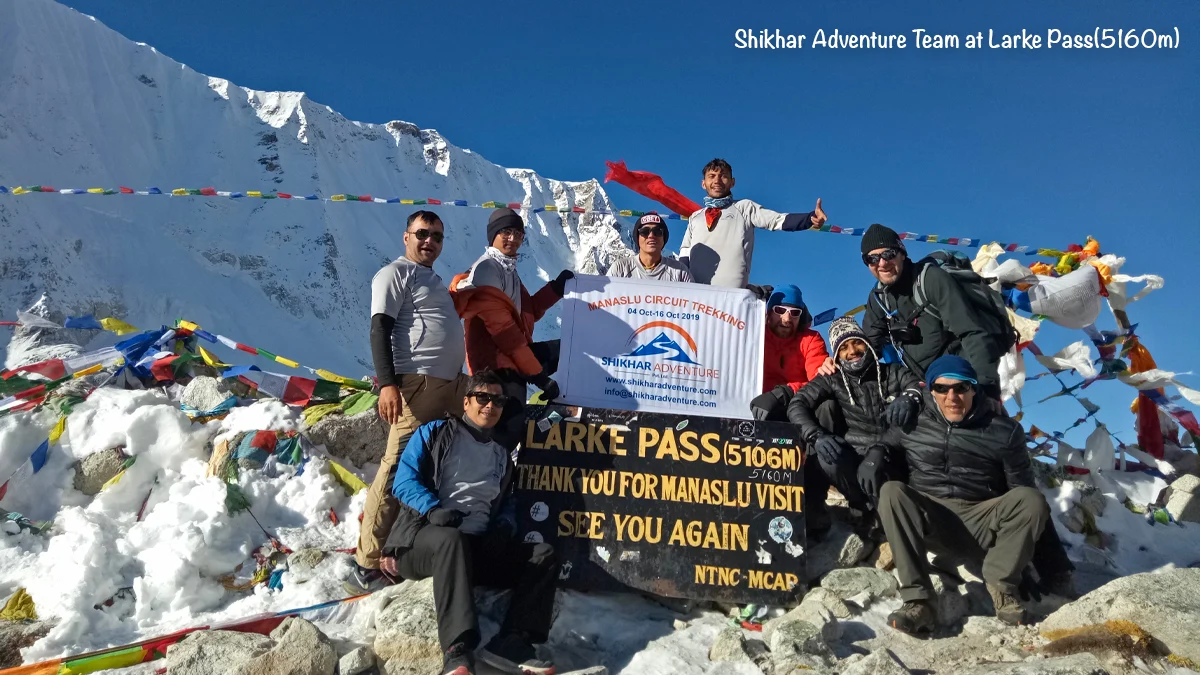
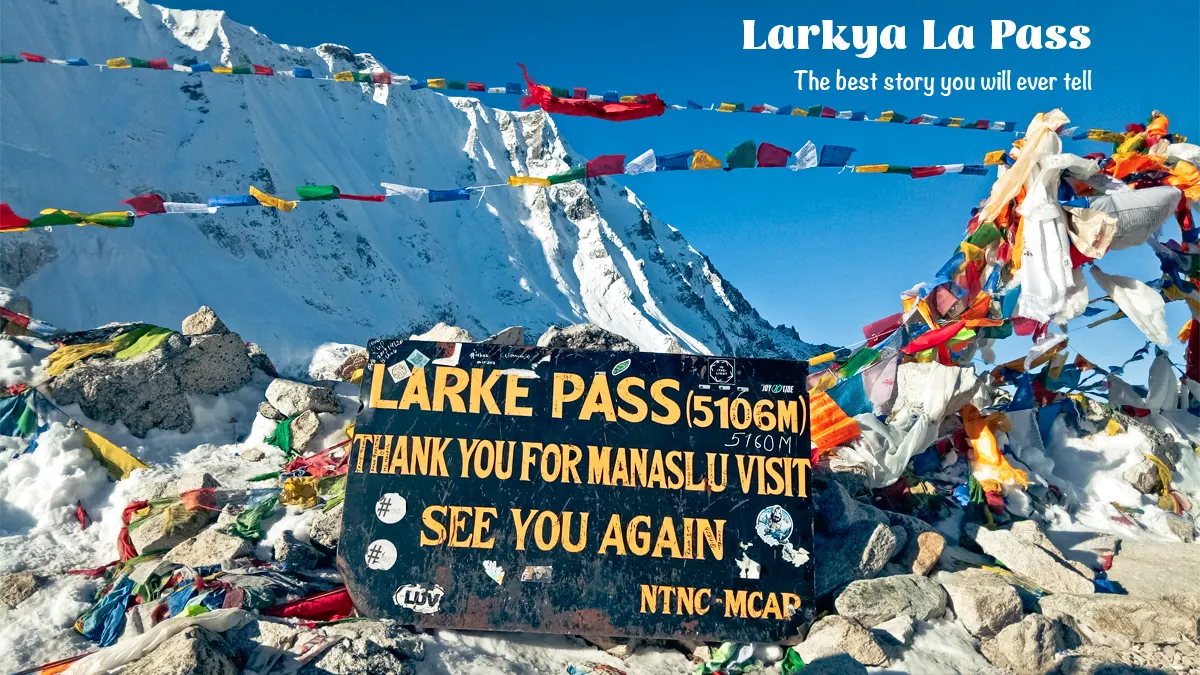
Shikhar Adventure team at Larke Pass
What the Crossing Actually Feels Like
Guidebook descriptions of Larkya La are usually clinical. Here is what I actually observe every time I lead this day.
At 3:30 AM, the Dharmasala teahouse is cold and barely lit. People eat rice porridge under headlamp light. Nobody talks much. The cold hits you the second you step outside. The trail starts climbing immediately. Within 20 minutes you are warm from the effort, but your face is frozen.
The hours between 4 AM and 7 AM are when trekkers feel weakest. The body has not fully woken up. The altitude is already pressing in. The trail gives almost no visual feedback. You cannot see the pass. You cannot see much of anything. You just follow the beam of light ahead and keep your feet moving.
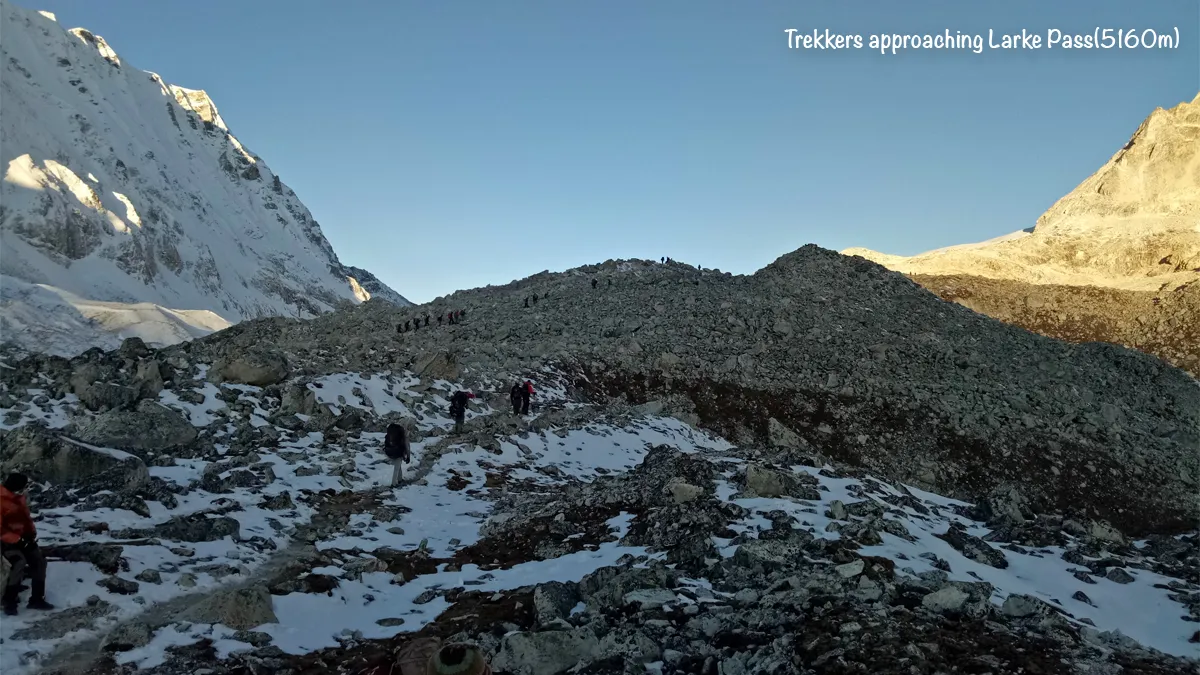
Around the glacier section, the terrain shifts. Loose rock and moraine replace the trail. Footing requires real attention. This is where pace becomes the difference between a hard day and a dangerous one.
Guide insight: I always tell my groups: the pass is not won at the pass. It is won in the three days before it. Trekkers who eat properly, sleep well at Samdo and Dharmasala, and start the day before sunrise will almost always make it. The ones who struggle are the ones who had a bad night and skipped breakfast. Every time.
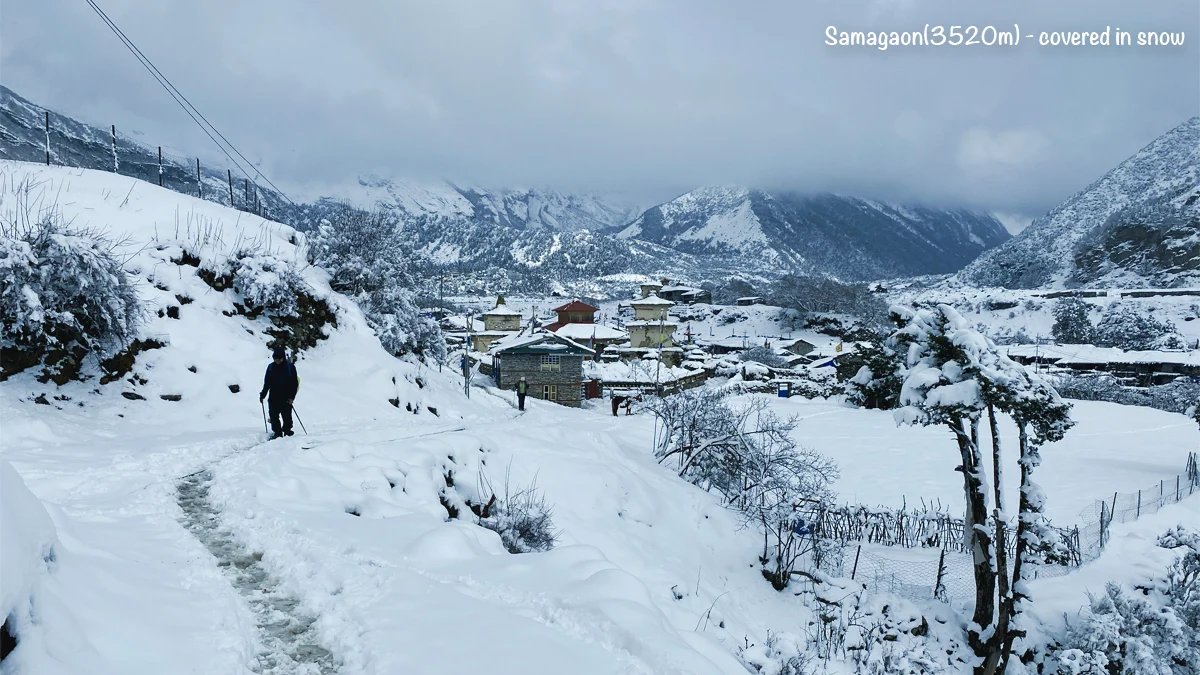
Snow-covered Samagaon village
Hour-by-Hour Breakdown of the Larkya La Crossing
3:30 AM – Departure from Dharmasala (4,460m)
Headlamps on. Immediate uphill. The trail is rocky and frozen underfoot. Start slow. Seriously, slower than feels necessary. The pace you hold in the first hour sets the tone for everything after it.
5:30 AM – First plateau zone (approx. 4,900m)
Sunrise begins. Mountains emerge from the dark around you. Stop here for a short rest. Eat something. Your fingers are still cold, but morale rises sharply with the light. This is the moment most trekkers start to believe in the day.
7:30 AM – Glacier moraine section (5,000m+)
The terrain changes completely. Loose rock, possible snow, uneven footing. Concentration required. This is the most physically demanding section of the climb. Short steps. Steady breathing. No rushing.
8:30 AM – Larkya La Pass summit (5,160m)
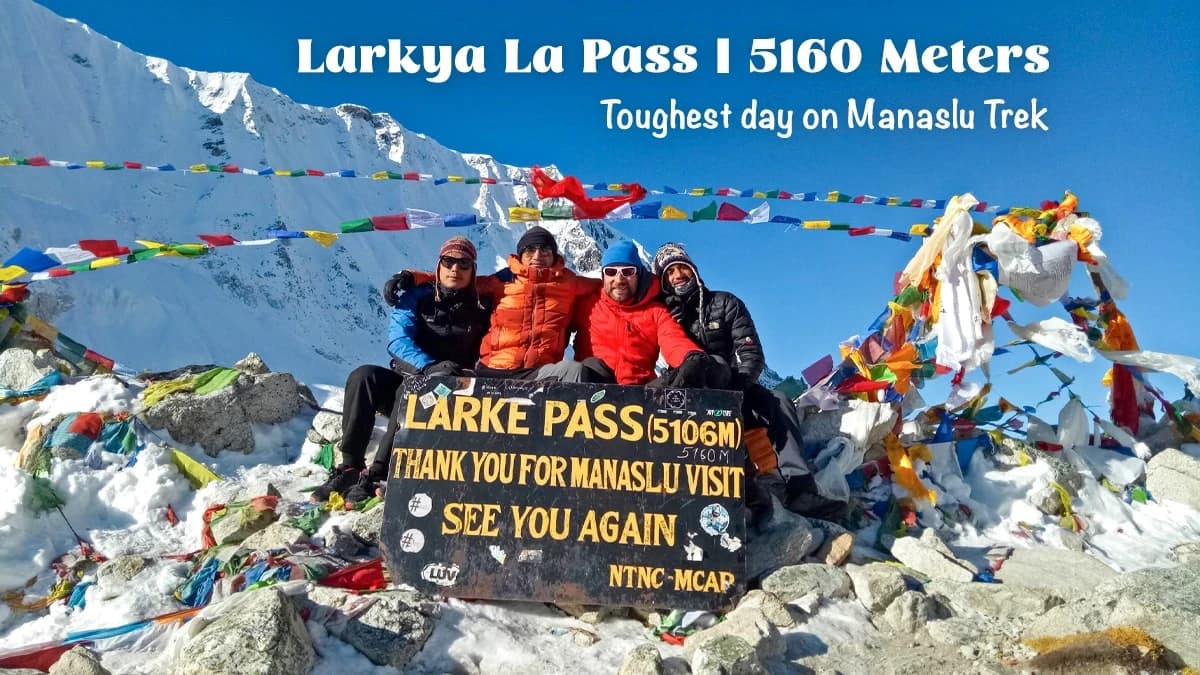
Prayer flags. Manaslu directly in front of you. Usually wind. Take photos, rest briefly, but do not linger in cold conditions. Many trekkers think the hard part is over here. It is not. The pass is the halfway point of the day, not the finish line.
10:00 AM – Upper descent section
Steep and loose in places. Knees start to feel the accumulated effort. Energy has usually dropped. This section consistently takes longer than trekkers expect. Poles help here more than anywhere else on the route.
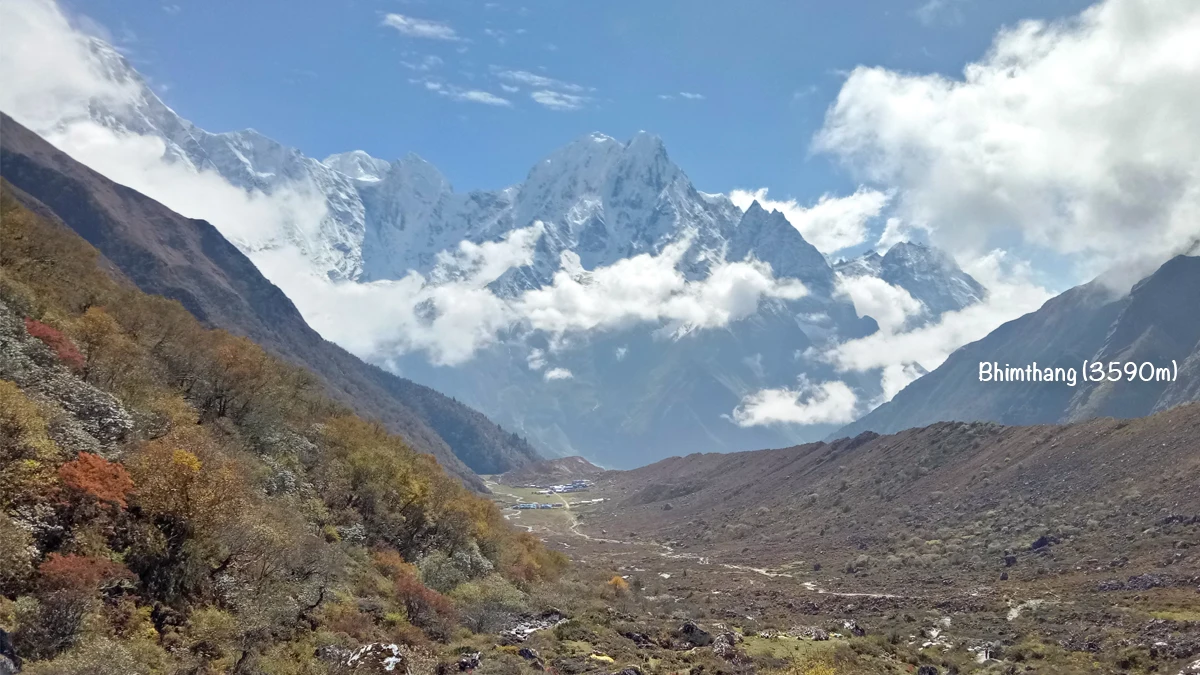
1:00 PM – Arrival at Bimthang (3,590m)
Green valley. Lower altitude. Warm teahouse. Most trekkers sit down and do not move for a long while. The sense of achievement at Bimthang is real, earned, and unlike anything else on the circuit.
Trekkers approaching the final climb to Larke Pass
Honest Difficulty Breakdown: What You Are Really Dealing With
I do not like overselling or underselling this pass. Here is a straight assessment.
Physical challenge: High. You need genuine cardiovascular fitness before you arrive in Nepal. If you cannot comfortably walk uphill for four hours at lower altitude, this day will be brutal. No itinerary can substitute for fitness built before the trip.
Altitude impact: Significant. At 5,160m, every step costs more than it feels like it should. Headaches, nausea, and breathlessness are common even in acclimatised trekkers. The body adapts over days, not hours. This is why rest days on the lower circuit are not optional.
Mental pressure: Underrated. The day is very long. After the pass, there are still hours of descent. Trekkers who go in thinking the summit is the finish struggle badly with the psychological weight of what remains.
What makes it harder than people expect:
The 3 AM cold is severe, not just uncomfortable
The descent to Bimthang takes as long as the ascent to the pass
There is no practical bailout point once you are past the glacier
Altitude measurably slows decision-making, balance, and reaction time
Who should be cautious:
Anyone with a history of acute mountain sickness above 4,000m
Trekkers who have done no uphill training in the months before the trip
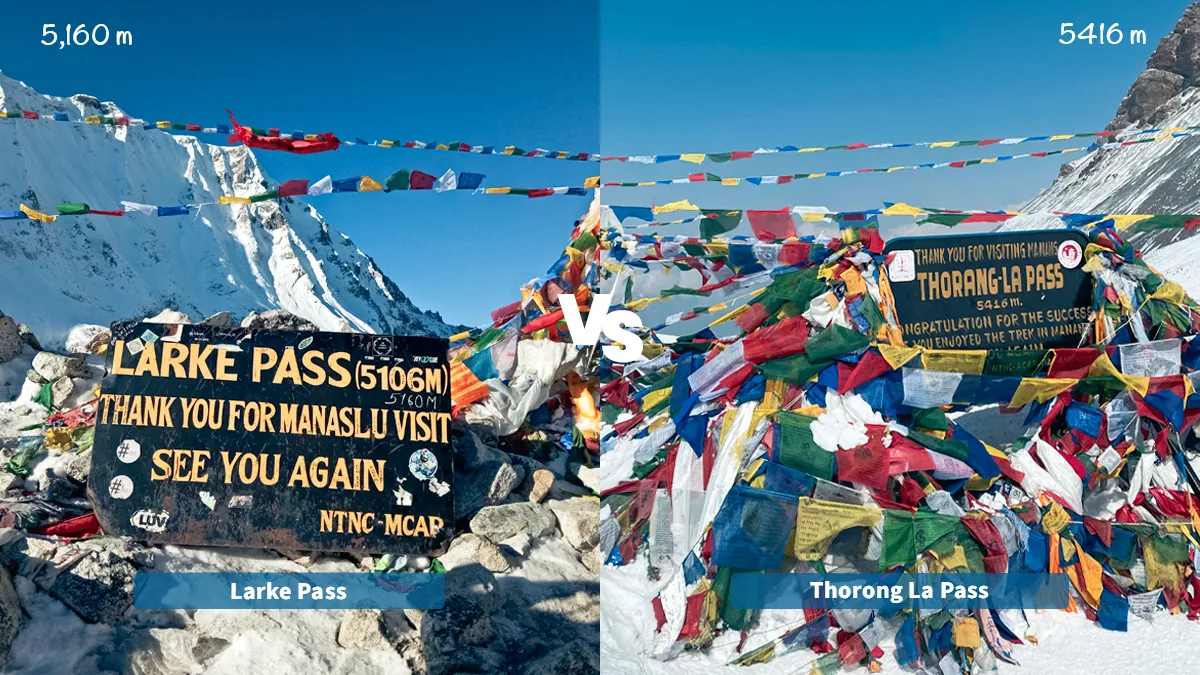
Larkya La vs Thorong La: Which Pass Is Actually Harder?
This is the most common question from trekkers planning their first high pass crossing in Nepal. Both are real challenges. Here is how they compare without the marketing.
Feature
Larkya La Pass
Thorong La Pass
Altitude
5,160m
5,416m
Crossing distance
~24 km
~16 km
Duration
8 to 10 hours
6 to 8 hours
Trekker traffic
Low to moderate
Very high
Terrain difficulty
More technical (glacier moraine)
Longer but more open trail
Remoteness
Very remote
Rescue infrastructure closer
Thorong La sits higher. But Larkya La is a harder day overall. The crossing is longer. The terrain through the glacier moraine is more demanding. The Manaslu region is more remote, which means if something goes wrong, help is significantly further away. I have led groups across both passes many times. Larkya La asks more from a trekker. That is not a debate.
Approaching Bhimthang after crossing Larke Pass
Common Mistakes Trekkers Make on Larkya La
After more than a hundred crossings, the same patterns repeat. These are the mistakes I see most often, and they are all avoidable.
Starting too late. Leaving Dharmasala after 5 AM dramatically increases your weather exposure. Afternoon storms are common in both spring and autumn seasons. If you want a safe window, you start in the dark. No exceptions.
Skipping acclimatisation days. The extra rest day at Samdo is the single biggest factor separating successful crossings from failed ones. Cutting it to save a day on the itinerary is one of the most common, and most costly, decisions I see trekkers make.
Not eating enough. Appetite drops at altitude. The body still needs fuel. Force yourself to eat a proper meal at Dharmasala the night before, and again at 3 AM before you leave. Trekkers who skip this feel it at exactly the wrong moment, around 5,000m.
Carrying too much. Your summit day pack should be as light as possible. Porters carry the main load. A heavy pack at 5,000m is not an inconvenience. It is a hazard. Strip the day pack down to essentials only.
Ignoring early warning signs. A persistent headache that does not improve with water and rest, poor coordination, or any confusion above 4,500m means one thing. Descend. Not rest and see. Descend immediately.
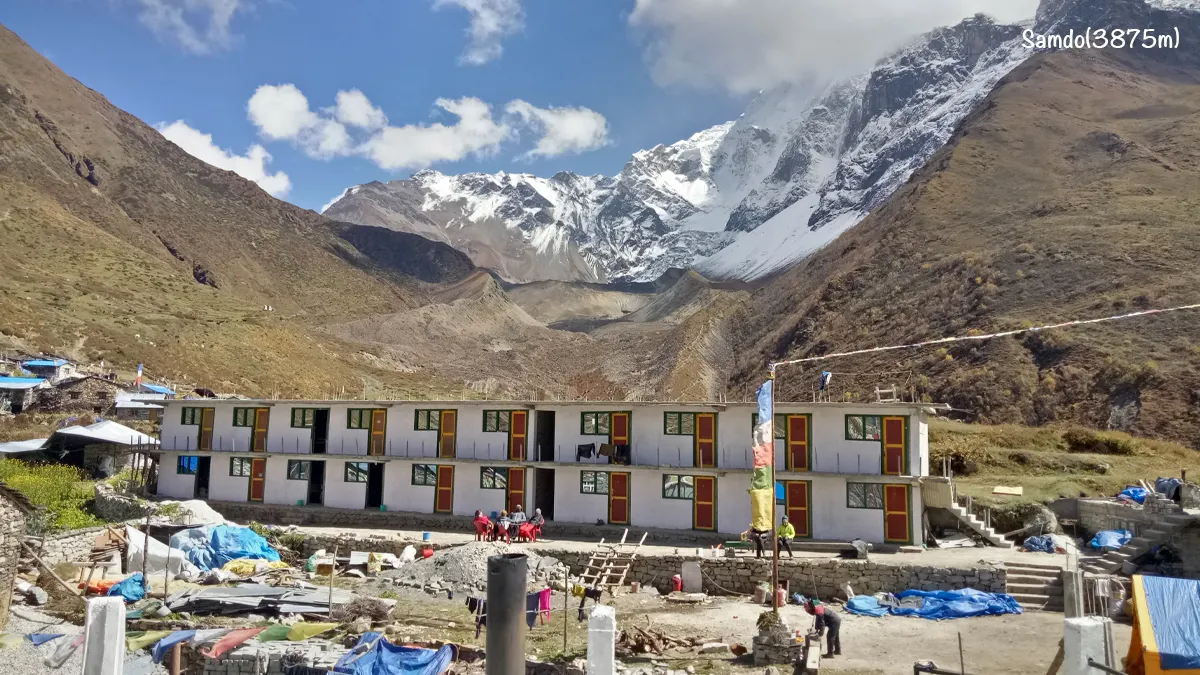
Beautiful views around Samdo village
Safety Strategy: How to Cross Larkya La and Come Back Fine
The Manaslu region is remote. There is no trail-side rescue infrastructure the way there might be on the busier Everest routes. Your preparation is your primary safety system, not the mountain rescue service.
Build fitness before you go. Start training at least eight weeks before your trip. Uphill walking, stair climbing, or loaded pack hikes build the specific endurance you will need. Cardiovascular base is the one thing no itinerary can give you once you are already in Nepal.
Do not cut acclimatisation days. The Manaslu Circuit itinerary builds altitude gain into the schedule deliberately. Rest days at Namrung, Samagaon, and Samdo are not optional padding. They are the reason you make it across the pass. Sleep is acclimatisation. Take it seriously.
Hydrate and pace carefully. Drink at least three litres of water on crossing day. Walk slower than you think you need to. Rest every 45 to 60 minutes even when you feel strong, especially when you feel strong. Altitude catches the people who start fast and fade hard.
Real emergency, spring 2022: One of my clients showed signs of high altitude cerebral oedema at 5,000m on the approach to the pass. We turned around without discussion and descended 1,200m without stopping. We arranged helicopter evacuation from Samdo the following morning. He was in a Kathmandu hospital within 24 hours. That descent saved his life. The mountain will be there next year. Never argue with serious symptoms.
On helicopter evacuation: It is not guaranteed. Bad weather closes the flight window for days at a time. Travel insurance with specific coverage for high altitude evacuation from Nepal is not a nice-to-have on this trek. Do not cross Larkya La without it. If you need help finding the right policy, read our travel insurance guide here.
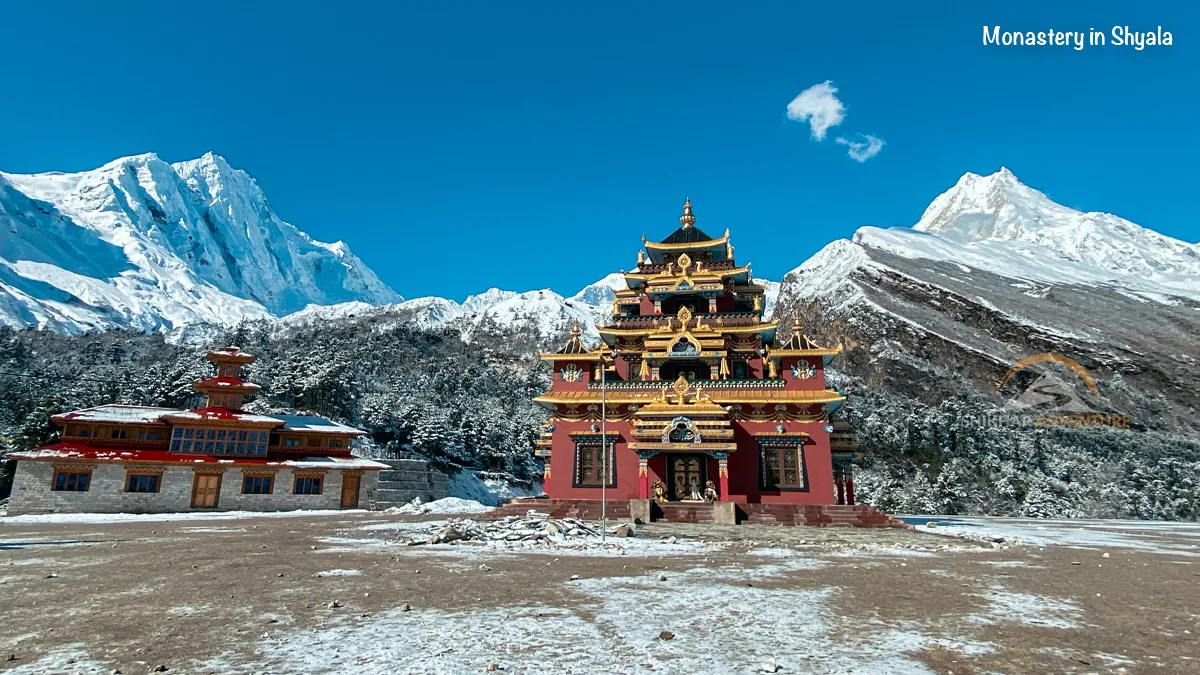
Shyala Monastery with Himalayan views
Logistics You Must Know Before the Manaslu Circuit
The Manaslu Circuit sits inside a restricted conservation area. It requires specific permits that cannot be arranged on the mountain, and a licensed guide is legally required throughout the restricted zone.
Required permits:
Manaslu Conservation Area Permit (MCAP)
Manaslu Restricted Area Permit (MRAP), issued per zone and varying by season
Annapurna Conservation Area Permit (ACAP) if you continue to the Annapurna side
TIMS card (Trekkers' Information Management System)
Guide requirement: Mandatory. A licensed guide is legally required for the Manaslu restricted area. Beyond the legal side, a guide on Larkya La is a genuine safety measure. Our guides at Shikhar Adventure are licensed, trained in wilderness first aid, and have crossed this pass dozens of times between them.
Accommodation at Dharmasala: Basic teahouse, shared facilities, limited comfort. That is the reality. Sleeping at 4,460m the night before the crossing is your final acclimatisation push. Bring a sleeping bag rated to at least minus 10. Do not rely on teahouse blankets alone at this altitude.
What to carry on summit day:
Down jacket and windproof outer shell
Warm gloves with thin liner gloves underneath
Balaclava and neck buff
High energy snacks: nuts, chocolate, energy gels or bars
Thermos of hot water or tea
Trekking poles with large powder baskets
Sunscreen SPF 50 or higher and quality glacier glasses
Personal first aid kit with altitude medication prescribed by a doctor
It can be, if you arrive poorly prepared or push through in bad weather. With proper acclimatisation, a licensed guide, and the right gear, fit trekkers complete this crossing every season. The danger almost always comes from overconfidence, poor timing, or skipping rest days, not from the pass itself.
How long does the Larkya La crossing take?
Usually 8 to 10 hours from Dharmasala to Bimthang. Snow conditions, group size, and fitness level all affect this. Strong trekkers with solid acclimatisation can finish closer to 7 hours. Less experienced groups should plan the full 10 and start no later than 4 AM.
Do I need a guide for Larkya La?
Yes, legally and practically. A licensed guide is required by Nepali law for the Manaslu restricted area. Beyond the legal requirement, the terrain, remoteness, and altitude of this crossing make an experienced guide genuinely important for your safety, not just a formality.
What is the best time to cross Larkya La Pass?
October and November offer the most stable conditions for an autumn crossing. March to May works well for spring. These windows carry the lowest risk of unexpected snowfall, the clearest visibility, and the most reliable morning weather windows on the pass.
Can a beginner do the Manaslu Circuit?
The Manaslu Circuit is a strenuous to challenging trek, not a beginner route. Trekkers who have already completed something like the Annapurna Base Camp trek are in a far better position. First-timers should consider starting with one of the beginner treks in Nepal before attempting Manaslu.
How much does the Manaslu Circuit cost with a guide?
With Shikhar Adventure, the 14-day Manaslu Circuit starts from USD 1,195. All permits, licensed guide, porter, accommodation, and meals on the trail are included. Private and custom departure dates are available. Contact us for a detailed quote.
The best story you will share from Larkya La Pass
The Toughest Day. The Best Story You Will Ever Tell.
"Every trekker who stands at the top of Larkya La and looks out at Manaslu earns that view. Not because the mountain gave it. Because they did the work to go take it."
Larkya La Pass is the hardest single day on the Manaslu Circuit and one of the most demanding high pass crossings in all of Nepal. It asks for fitness built weeks before you arrive, rest days taken without cutting corners, good judgment under pressure, and a guide who has been here before. What it gives back is a day you will talk about for the rest of your life.
Trekkers who cross this pass do not come back the same. Not because of trauma. Because they found out what they are capable of at the very edge of their limits. That is what these mountains do when you give them the respect they deserve.
If you are serious about doing this, do it properly. Train before you come. Stick to the acclimatisation schedule. Trek with a team that knows every metre of this route. The 2026 spring and autumn seasons have limited guided slots remaining.