Kanchenjunga Region: Nepal's Most Untouched Himalayan Trek
Where silence is loud and the mountains feel alive
Some destinations earn their legend. The Kanchenjunga Region in far eastern Nepal is one of them. This is not a place for the restless tourist ticking boxes off a bucket list. It is a place that asks something of you, patience, endurance, and a willingness to be truly moved.
Here, the world's third-highest mountain rises to 8,586 metres above sea level. Ancient forests swallow the trail. Mist rolls in off glaciers that no road reaches. And the people who live here will offer strangers butter tea with the ease of old friends.
For trekkers serious about trekking in Nepal, Kanchenjunga delivers an experience few regions in the Himalayas can match. It is raw, real, and completely unforgettable.
Trek at a Glance
| Detail | Information |
|---|---|
| Peak Elevation | 8,586 m - World's 3rd Highest Peak |
| Trek Duration | 18 - 24 Days |
| Total Distance | ~180-200 km |
| Start Point | Taplejung, East Nepal |
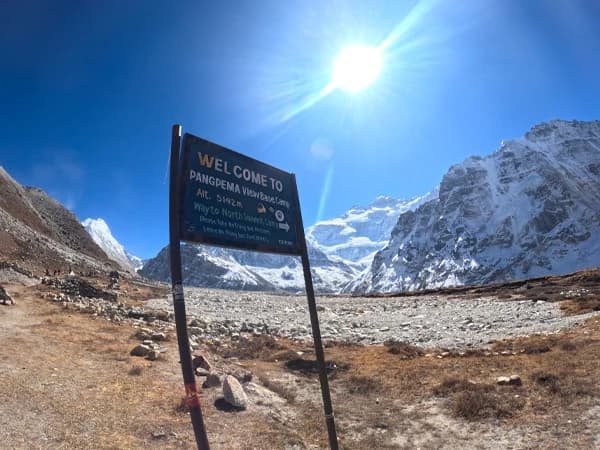
| Maximum Altitude | 5,143 m (North Base Camp) |
| Difficulty | Challenging |
| Best Season | March-May / September-November |
| Annual Trekkers | Fewer than 1,500 per year |
| Conservation Area | 2,035 km² |
| Bird Species | 250+ |
What Is the Kanchenjunga Trek?
The Kanchenjunga trek is one of Nepal's most remote and rewarding long-distance trails. Unlike the crowded Everest or Annapurna regions, this trek sees fewer than 1,500 trekkers per year. That number alone tells you everything.
The classic route loops between two major base camps, the North and the South, forming a complete circuit through forests, high alpine terrain, and glacier valleys. It is a journey that demands real commitment. But for those who give it, the mountains give back tenfold.
Key Highlights at a Glance
- Close-up views of Kanchenjunga (8,586 m), Jannu, Kabru, and Yalung Kang from multiple angles
- Two distinct base camps, North Base Camp (5,143 m) and South Base Camp (4,780 m)
- Trek through the pristine Kanchenjunga Conservation Area, one of Nepal's largest protected zones
- Immersive cultural encounters with Limbu, Tamang, and Tibetan Bhotia communities
- Near-complete solitude on the trail, a vanishing luxury on most Nepal hiking trails
"Standing beneath Kanchenjunga's north face, trekkers often describe a feeling that is impossible to explain, as if the mountain is looking back."
Landscapes and Biodiversity
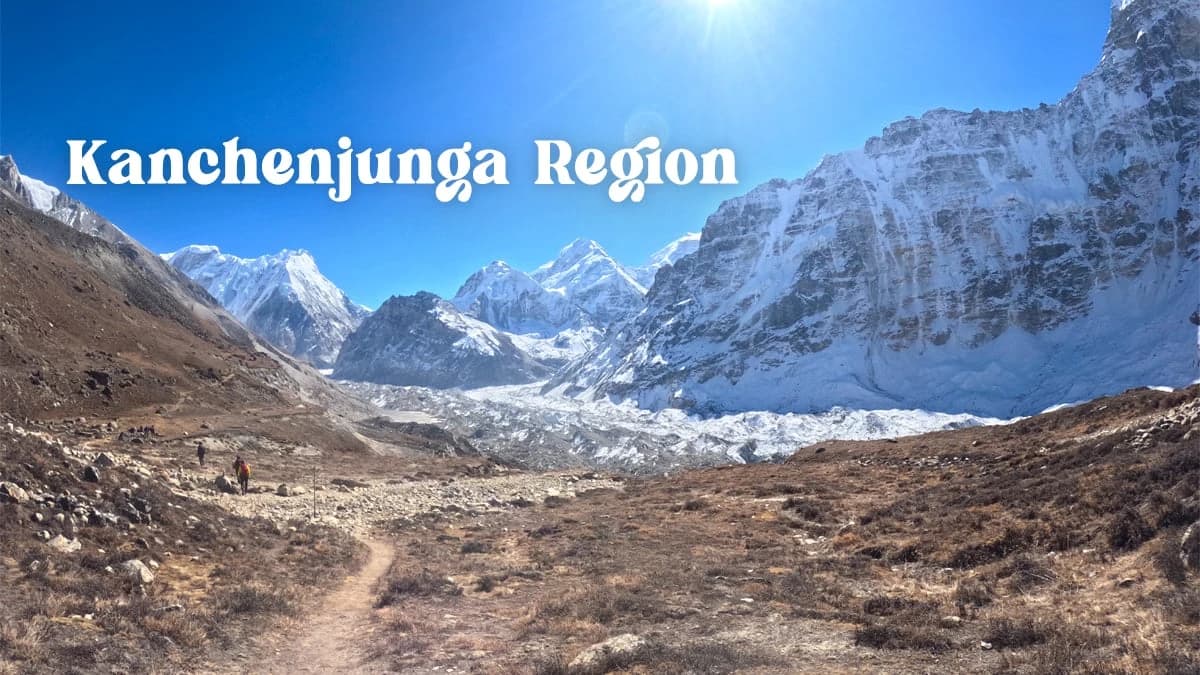
The scenery along this Himalayan trekking route changes every hour. At lower elevations, dense subtropical forest wraps the trail in green. Higher up, rhododendron trees explode into red and pink during spring. Above the tree line, windswept meadows give way to glaciers and snowfields that stretch to the sky.
The Ghunsa Valley is a particular highlight. Its wide, emerald floor is framed by dramatic peaks and waterfalls. Closer to the high camps, the landscape turns stark and sculptural. Ice towers shimmer. Silence deepens. The air thins and the world feels enormous.
Wildlife You May Encounter
The Kanchenjunga Conservation Area shelters some of Nepal's most endangered wildlife. Trekkers who move quietly and stay observant are regularly rewarded.
- Snow Leopard
- Red Panda
- Himalayan Black Bear
- Musk Deer
- Danphe Pheasant (Nepal's national bird)
- 250+ Bird Species
- Blue Sheep
- Over 2,000 plant species
Conservation Fact: The Kanchenjunga Conservation Area spans over 2,035 km² and forms part of a transboundary protected landscape with India and Bhutan. It is managed directly by local communities, making it one of the first community-managed conservation areas in Nepal.
Famous Trekking Routes and Key Stops
Most trekkers begin the journey from Taplejung in eastern Nepal, accessible by flight or a long road journey from Kathmandu. From there, the trail winds steadily northward across several distinct ecological zones.
The Classic Full Circuit
- Taplejung → Chirwa → Sekathum: The trail opens through terraced farmland, bamboo forest, and narrow river gorges.
- Ghunsa Village (3,595 m): A key acclimatisation stop. A historic Tibetan settlement with a 300-year-old monastery and spectacular mountain views.
- Oktang Viewpoint (4,730 m): The most dramatic panorama of the north face of Kanchenjunga, a defining moment of the whole trek.
- Kanchenjunga North Base Camp (5,143 m): The highest point of the circuit, offering direct views of the summit and the Kanchenjunga Glacier.
- Kanchenjunga South Base Camp (4,780 m): Approached from Tseram; offers stunning views of the Yalung Face and the Ramche Glacier.
- Olangchunggola (3,160 m): A remote Tibetan border village with ancient salt-trading history, one of the most culturally rich stops on any Nepal trail.
Remote Villages and Local Culture
The cultural richness of the Kanchenjunga Region is one of its greatest surprises. Trekkers do not just pass through landscapes here, they pass through living communities with centuries of history.
Ethnic Communities Along the Trail
- Limbu people: the dominant ethnic group of lower Taplejung; known for their distinctive Mundhum oral traditions and animist beliefs.
- Tamang communities: Buddhist highlanders whose monasteries and chortens dot the mid-altitude valleys.
- Tibetan Bhotia: high-altitude herders and traders with strong ties to Tibetan culture; their villages feel like stepping back 500 years.
Teahouses in villages like Ghunsa and Olangchunggola serve simple, nourishing meals. Tsampa porridge, dal bhat, and butter tea are staples. Evenings around a wood stove, listening to the wind on the ridge, become memories that trekkers carry home for life.
Cultural Tip: Always walk clockwise around chortens and mani walls. Remove shoes before entering any monastery. Carrying small gifts, pencils, notebooks, or fruit, for local children is welcomed and appreciated in remote villages.
Best Season for the Kanchenjunga Trek
Timing is everything on a remote trek like this. The Kanchenjunga Base Camp route crosses high passes above 5,000 metres, making weather a critical factor. Here is a clear seasonal breakdown:
| Season | Months | Verdict | Conditions |
|---|---|---|---|
| Spring | March - May | Best | Rhododendrons in full bloom, stable weather windows, clear summit views, comfortable daytime temperatures |
| Autumn | September - November | Best | Crystal-clear skies, ideal trekking conditions, post-monsoon freshness, peak visibility on passes |
| Monsoon | June - August | Avoid | Heavy rainfall daily, landslide risk on trails, leeches on lower sections, limited mountain views |
| Winter | December - February | Experts Only | Frozen high passes, extreme cold at altitude, very low visitor numbers, experienced teams only |
Difficulty Level and Trekking Suitability
The Kanchenjunga trek earns its challenging rating. This is not a trail for casual walkers or first-time trekkers in the Himalayas. It demands real physical preparation, prior altitude experience, and strong mental resilience.
Key Physical Demands
- Daily walking time of 7 to 9 hours on varied terrain including steep ascents and river crossings.
- Passes exceeding 5,000 metres, serious altitude sickness risk requiring mandatory acclimatisation days.
- Remote terrain with limited rescue access, helicopter evacuation is possible but not always swift.
- Basic teahouse accommodation, no hot showers or electricity above certain elevations.
Who Is This Trek For? This trek is ideal for experienced trekkers who have completed at least one multi-day Himalayan route above 4,000 metres. Prior experience on trails such as the Everest Base Camp trek, Annapurna Circuit, or Langtang Valley is strongly recommended before attempting the Kanchenjunga circuit.
Permits and Essential Information
The Kanchenjunga Region requires a restricted area permit, which must be arranged through a licensed Nepali trekking agency. Independent trekking is not permitted here.
| Permit / Document | Cost | Notes |
|---|---|---|
| Restricted Area Permit (RAP) | USD 10 per week | Mandatory for all foreign trekkers |
| Kanchenjunga Conservation Area Permit (KCAP) | NPR 3,000 per person | Supports local conservation |
| Licensed Guide | Varies by agency | Minimum group of two trekkers plus a registered guide, mandatory by law |
Why Kanchenjunga Feels Truly Different
Many trails in Nepal offer beauty. The Kanchenjunga trek offers something rarer, solitude. There are no coffee shops on the trail. No helicopter pads every two hours. No Wi-Fi signals competing for your attention. Just mountains, sky, and the sound of your own footsteps.
This sense of wild remoteness is precisely what draws serious trekkers back to eastern Nepal. The landscape has not been packaged for comfort. The culture has not been streamlined for tourism. What trekkers find here is Nepal as it existed before the age of Instagram, dignified, dramatic, and deeply human.
How It Compares to Other Nepal Treks
| Trek | Kanchenjunga vs. Others |
|---|---|
| vs. Everest Base Camp | Far fewer trekkers, longer duration, more cultural depth, similar altitude exposure |
| vs. Annapurna Circuit | More remote and wild; no road shortcuts; greater biodiversity; harder to organise |
| vs. Langtang Valley | Significantly more challenging; twice the duration; far greater sense of true isolation |
The Mountains Are Waiting
The Kanchenjunga Region calls to those who seek adventure without shortcuts. Its peaks are ancient, its forests are alive, and its people are unforgettable. Those who make the journey return not just with photographs, but with a story that lasts a lifetime.