Everest Foothills Trek

41 Reviews
15 Reviews
  • Private
  • Family
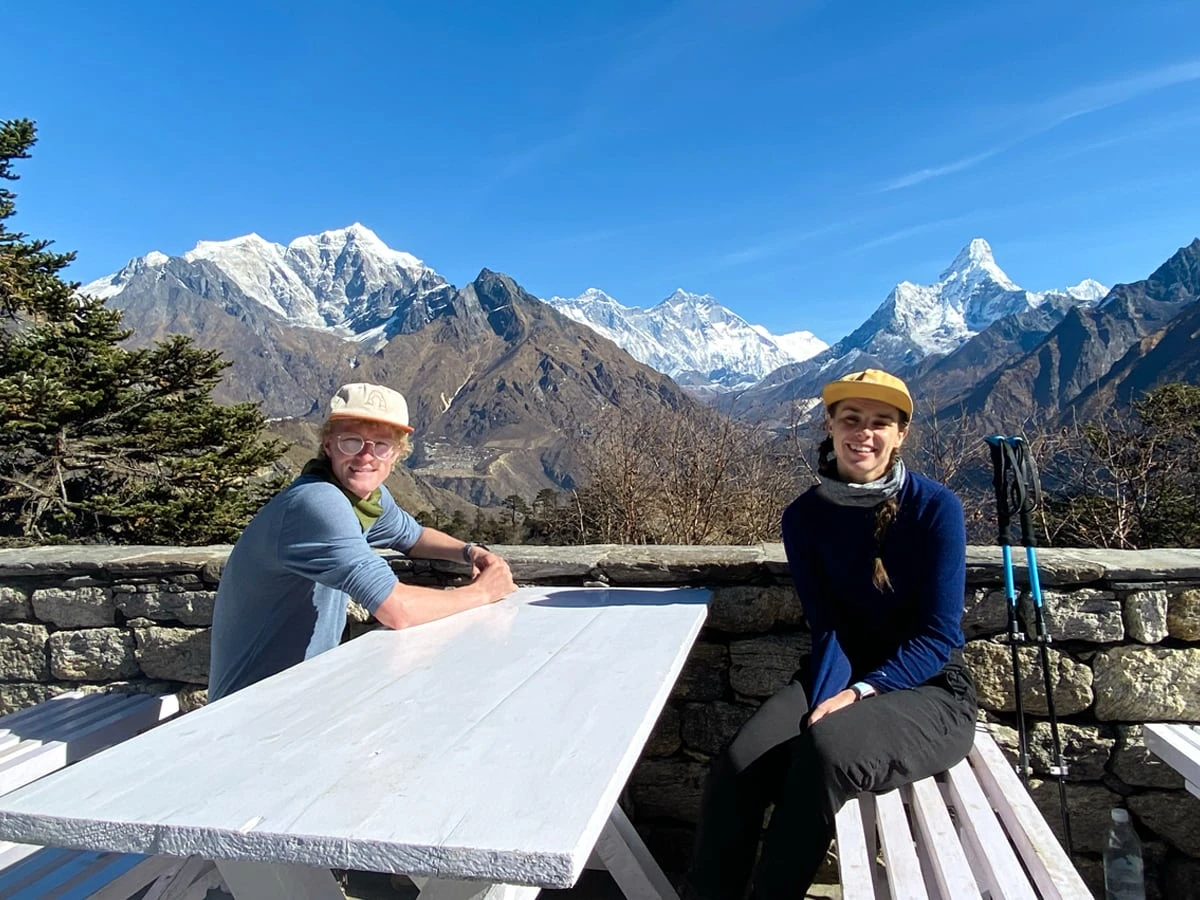
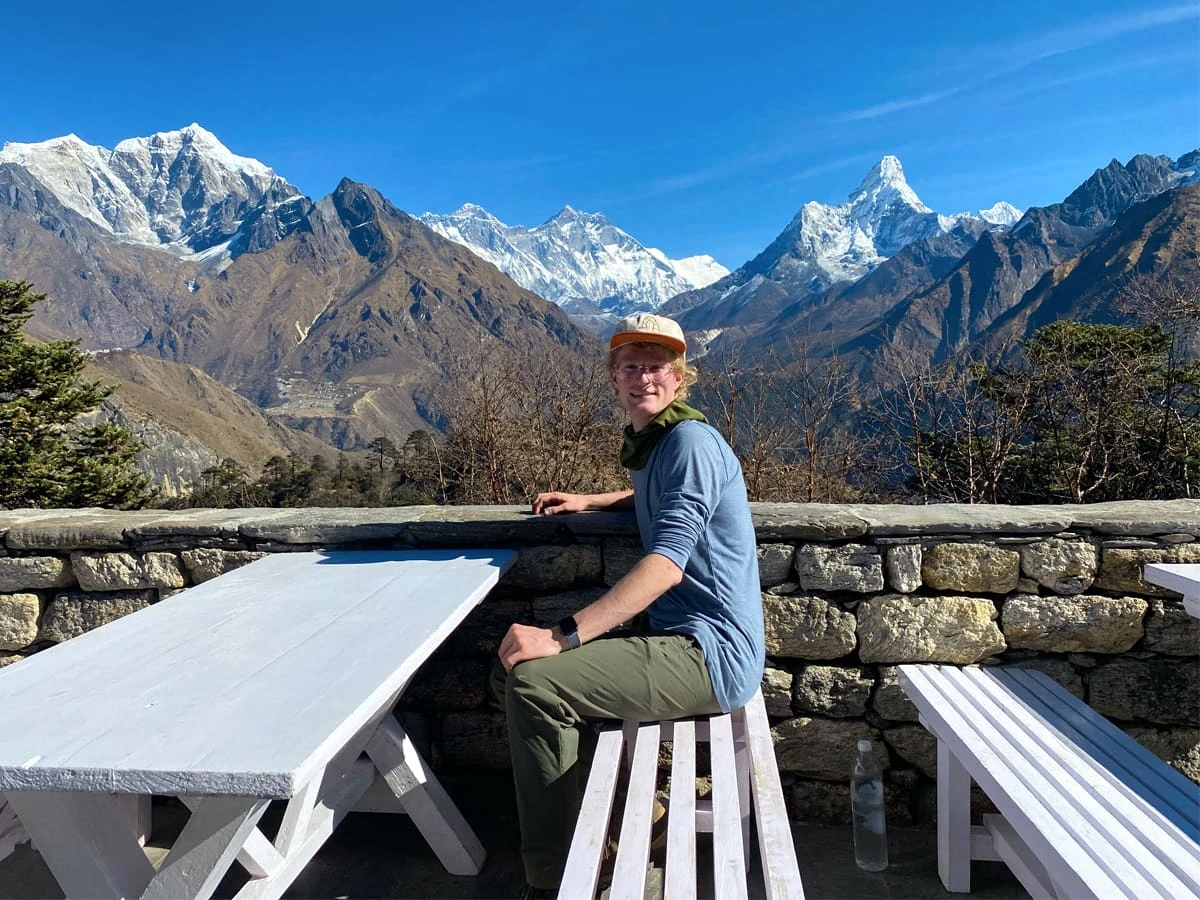
Trekkers enjoying mountain views from Everest View Hotel
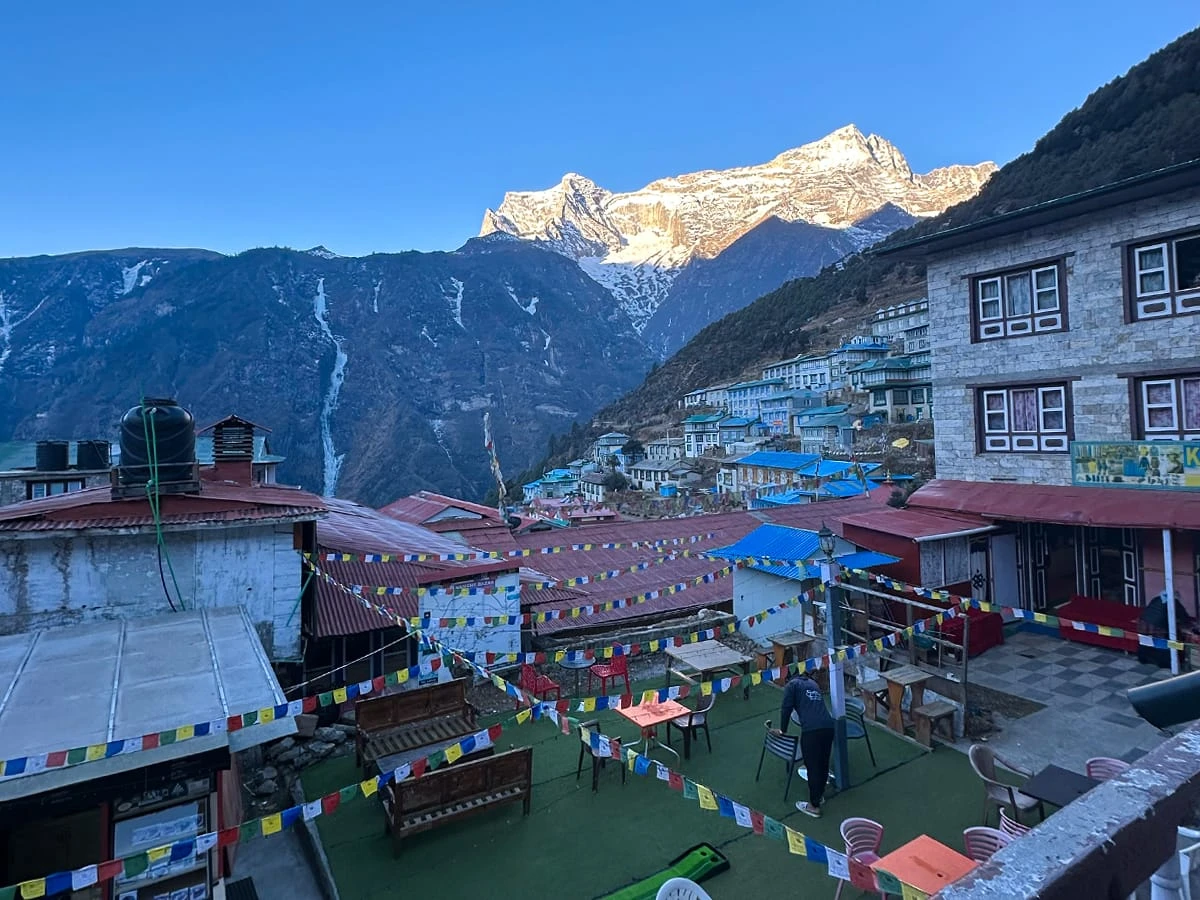
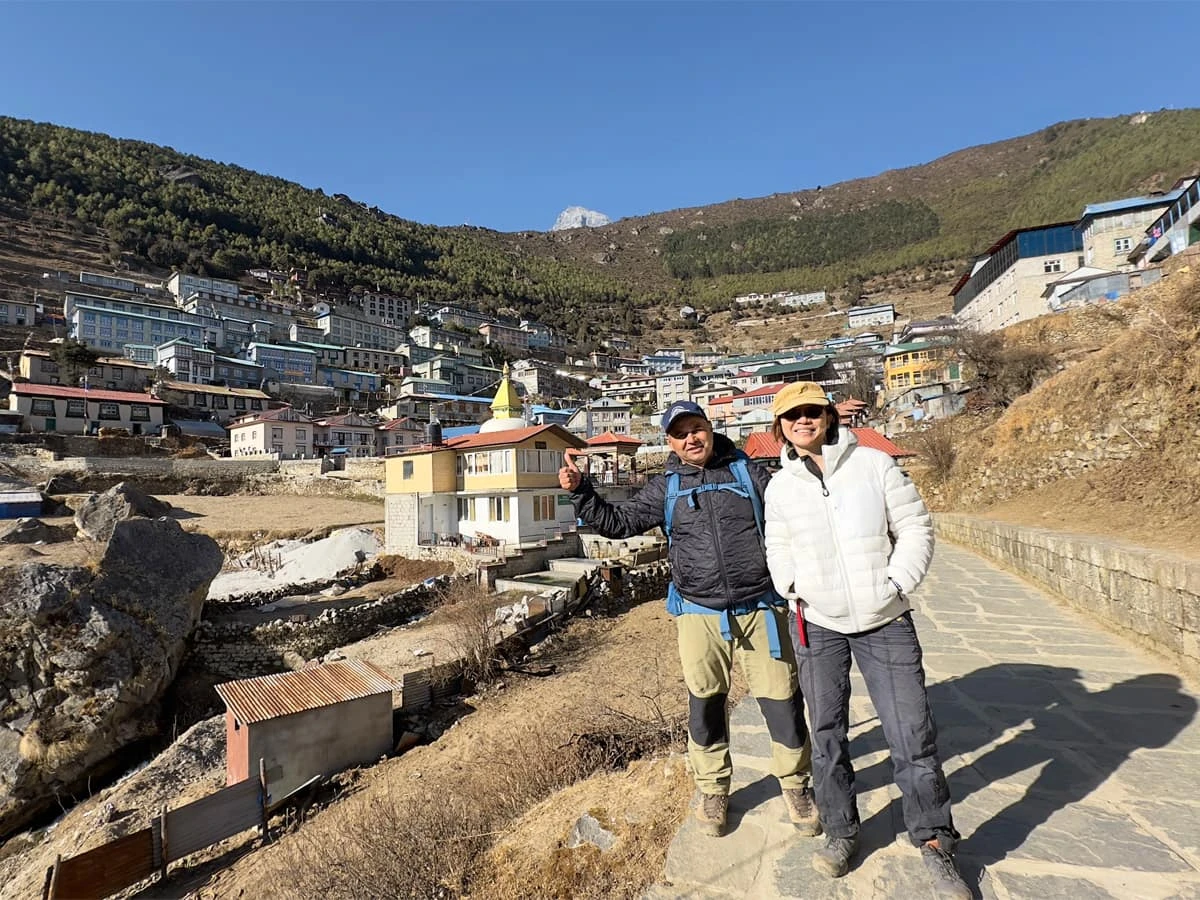
Sunrise view over Namche Bazaar in the Everest region
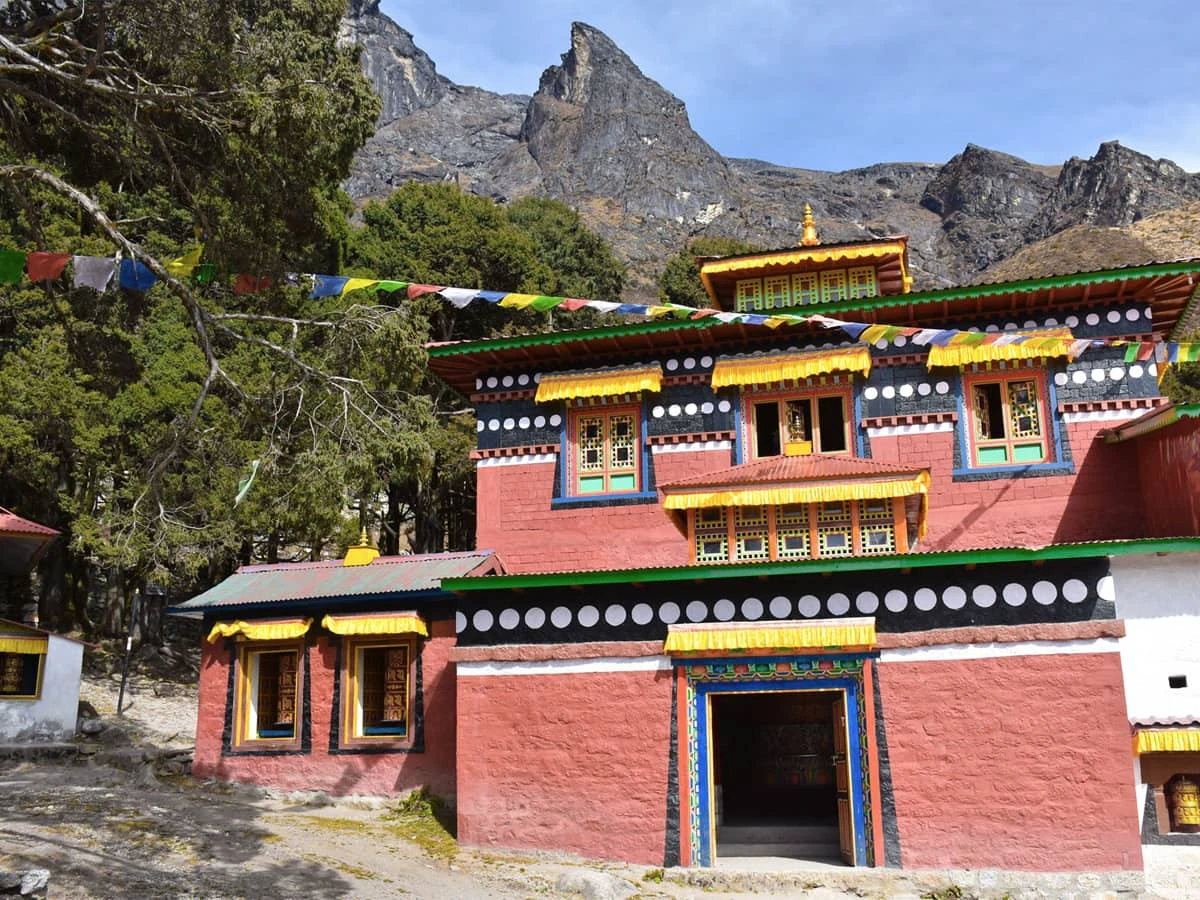
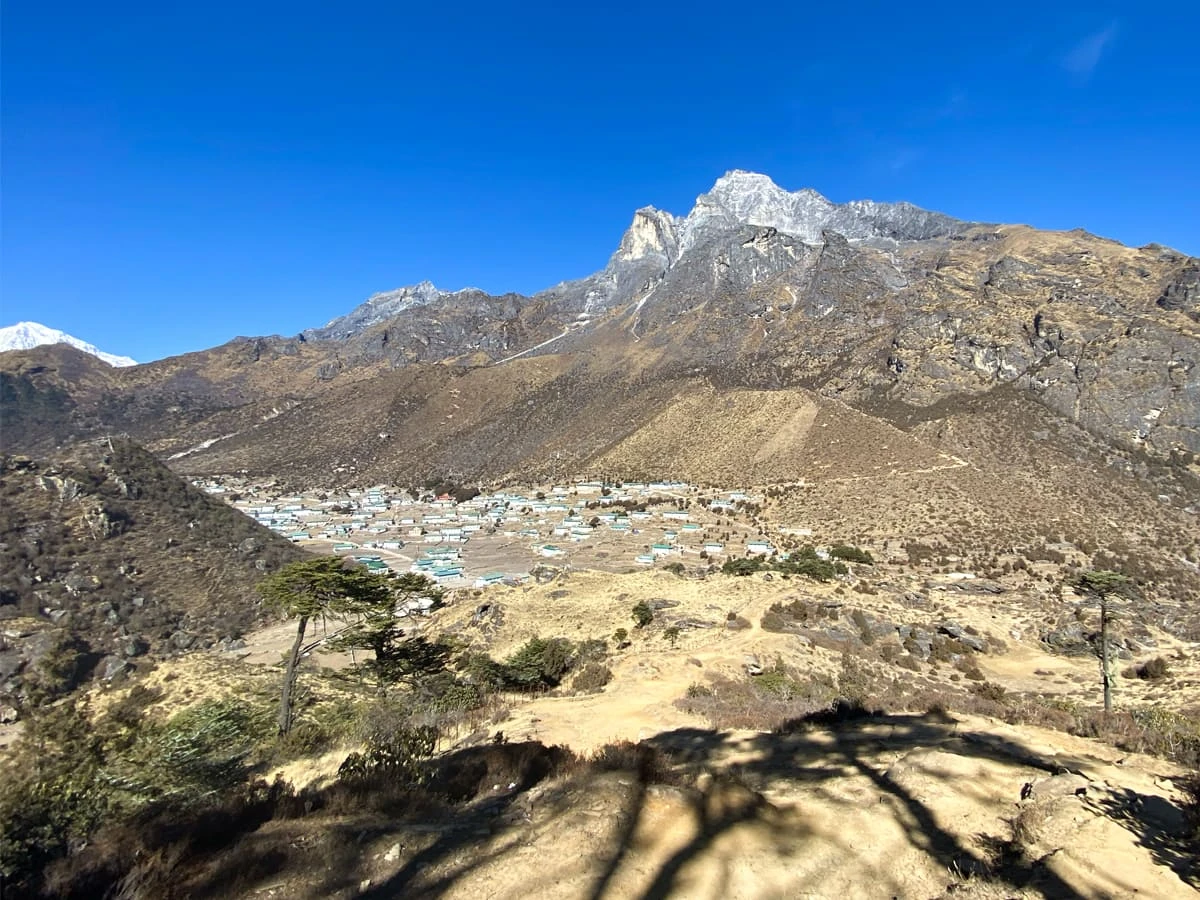
Khumjung Monastery on the Everest low altitude trek route
Duration11 Days
Trip GradeModerate
Maximum Altitude3,880 meters
ActivitiesTrekking
Group Size1-12
StartsKathmandu
EndsKathmandu
Best TimeSeptember-December

Trip Overview

The Everest Foothills Trek is not an alternative for Everest Base Camp due to altitude limits. It is a conscious, rewarding choice offering deep access to Khumbu culture and scenery. Sherpa hospitality, prayer flags, yak caravans, and Sagarmatha National Park defines this journey below 3,880 meters.

Picture yourself on the sunlit terrace of the world’s highest-placed hotel in the Everest region. You hold warm butter tea, with no ropes or crampons, just silence around you. At 8,848.86 meters, Mount Everest dominates the skyline with unmatched Himalayan presence ahead.

Your 11-day journey begins in Kathmandu, exploring four UNESCO World Heritage Sites before flying to Lukla. The flight is one of the world’s most scenic mountain airport experiences. From Lukla, you enter the Khumbu region via iconic suspension bridges toward Namche Bazaar.

You ascend gradually toward Hotel Everest View at 3,880 metres for your first Everest sighting. From here, you can see Everest, Ama Dablam, Lhotse, and Thamserku on clear days. You also explore Khumjung village, Hillary School, monastery, and traditional Sherpa heritage sites.

This low-altitude Everest trek suits first-time trekkers, families, photographers, and older travelers. It is ideal for anyone wanting Everest views without extreme altitude challenges.

With expert local guides at Shikhar Adventure, the experience stays safe and authentic throughout journey.

Everest Foothills Trek Highlights

  • Face-to-face Everest panorama from the world's highest hotel at 3,880 m
  • Explore Namche Bazaar: the legendary Sherpa capital of the Khumbu
  • Visit Khumjung Monastery and the famous Yeti scalp
  • Walk through Hillary School, founded by Sir Edmund Hillary in 1961
  •  Trek through Sagarmatha National Park, a UNESCO World Heritage Site
  • Four UNESCO World Heritage Sites in Kathmandu Valley (Day 2)
  • Experience the Tenzing-Hillary Airport, one of Earth's most thrilling runways
  • Wildlife encounters: Himalayan Tahr, Red Panda habitat, 118 bird species
  • Authentic Sherpa hospitality, dal bhat, butter tea, teahouse culture
  • Maximum altitude 3,880 m, dramatically lower AMS risk than EBC
  • Suitable for beginners, families, seniors, and first-time Himalayan trekkers

Why the Everest Foothills Trek Is One of Nepal’s Greatest Adventures

The Low Altitude Advantage

The classic Everest Base Camp Trek reaches 5,364 metres above sea level. At that elevation, roughly half oxygen available at sea level remains. Even fit, experienced trekkers battle headaches, disturbed sleep, and nausea for days.

The Everest Foothills Trek reaches a maximum altitude of 3,880 metres above sea level. This elevation sits above the official altitude sickness threshold for most trekkers. Most healthy adults acclimatise safely with one planned rest day included during the itinerary.

This is not about doing less. It is about experiencing more colour, energy, cultural immersion, and meaningful connection. Your body does not spend every resource fighting for oxygen.

Dramatically Lower AMS Risk

Acute Mountain Sickness (AMS) affects over 25% of trekkers who attempt Everest Base Camp.

On the Everest Foothills Trek, our itinerary includes a dedicated acclimatisation day in Namche Bazaar at 3,440 metres. This follows the internationally recommended climb high sleep low acclimatisation protocol for safety and adaptation.

AMS incidents on this route are rare and easily managed by experienced mountain guides team.

Richer Cultural Immersion

High-altitude trekkers move through culture as a blur, too breathless to stop. They remain too focused on reaching camp before dark during long trekking days.

At the Everest Foothills level, you have enough energy to explore Namche Bazaar Saturday market. You can share conversations with local Sherpa traders in a relaxed atmosphere. You can also wander through Khumjung Monastery and learn about the yeti scalp.

You visit the school Sir Edmund Hillary funded in 1961 which still operates today.

Authentic Everest Views Without Everest Base Camp Effort

The Everest View Hotel at Syangboche (3,880 m) is one of the finest mountain viewpoints on Earth.

From its terrace, you see Everest (8,848.86 m), Lhotse, and Nuptse across the skyline. You also view Ama Dablam, Thamserku, and Kangtega in a single panorama.

This is the same Everest experience and same Himalayan panorama without extreme altitude strain.

Ideal for Beginners, Families, and Senior Trekkers

No prior trekking experience is required for this Everest Foothills Trek itinerary.

The trails between Lukla, Phakding, Namche Bazaar, and Khumjung are well-maintained mountain paths with manageable daily elevation gains.

Children as young as 10 and travellers in their 70s have completed this route with Shikhar Adventure.

Our guides set the pace, carry medical supplies, and are trained in altitude safety. So every guest regardless of fitness level finishes the trek with confidence.

We at Shikhar Adventure operate guided departures for this trek with experienced local leadership.

The Shikhar Adventure Low Altitude Promise

Our Everest Foothills Trek itinerary has been refined over 12+ years of guiding experience. Every acclimatisation day, every meal stop, every teahouse choice has been made to maximise your comfort, safety, and wonder, not to tick boxes or rush you through the mountains.

Itinerary

Below is your complete day-by-day journey. Elevations, distances, and durations are based on our most recent guided departures.

Lukla Flight Information

During the busy trekking seasons, March to May and late September to November, flights to Lukla operate from Manthali Airport instead of Kathmandu. This is because Tribhuvan International Airport gets very busy with high demand and air traffic.

Manthali is about 130 km from Kathmandu. It takes about 4 to 5 hours to drive to airport there. There are some bumps in the road and it winds around a lot.

We leave Kathmandu around 2:00 AM to get to the early planes. This gives you enough time to get to Manthali, check in, and get on the plane.

We have to get up early, but that's part of the adventure. You get to travel through the quiet night and watch the first light of day over the hills before flying into the Himalayas.

Trip PlanExpand All

Your Everest adventure begins the moment you land at Tribhuvan International Airport. A Shikhar Adventure representative will be waiting in the arrival hall with your name card, ready to transfer you to your centrally located Kathmandu hotel in Thamel.

After you settle in, your lead guide will visit for a comprehensive trek briefing, covering everything from altitude safety and packing tips to Sherpa customs and trail etiquette.

This is also your evening to explore the medieval alleyways of Thamel, alive with butter lamps, monastery bells, and the warm smell of spiced tea.

Highlights

  • Airport welcome ceremony
  • Trek briefing with certified guide
  • Thamel evening walk
  • Welcome dinner with the group

Photo Opportunity

Thamel street photography at golden hour, butter lamps, monks, local market stalls.

Max Altitude: 1,400 meters Meals: NoneAccommodation: 3-Star Hotel

Today you explore one of the world's most densely layered cultural landscapes, the Kathmandu Valley, home to seven UNESCO World Heritage Site zones. Your private vehicle and expert guide will take you to four of the most iconic:

  • Swayambhunath Stupa (the Monkey Temple, 2,500 years old, offering sweeping valley panoramas)
  • Boudhanath Stupa (one of the world's largest Buddhist stupas, a living pilgrimage hub where monks and pigeons circle in equal devotion)
  • Pashupatinath Temple (Nepal's holiest Hindu site on the banks of the Bagmati River, a profound, moving experience)
  • Patan Durbar Square (a masterwork of Newari architecture with a square dating back to the 3rd century)

Beyond sightseeing, this day primes your mind for everything ahead, the living faith, the mountain mythology, the Sherpa Buddhism you will encounter deeper on the trail.

Highlights

  • Swayambhunath monkey temple sunrise
  • Boudhanath circumambulation with monks
  • Pashupatinath riverside cremation ceremony (respectful observation)
  • Patan Durbar Square intricate carvings

Photo Opportunity

Wide-angle Boudhanath from above, macro carvings at Patan, Pashupatinath river reflections at dusk.

Max Altitude: 1,400 meters Meals: BreakfastAccommodation: 3-Star Hotel

The morning begins before dawn. A 4 AM transfer takes you to the domestic terminal for your 30-minute flight to Lukla, and the Tenzing-Hillary Airport runway, carved into a steep Himalayan hillside with a 12% gradient and a mountain wall at one end, is itself an unforgettable experience. The moment you step off the plane, the air is different, cleaner, thinner, scented with juniper. Lukla hums with porter caravans, yak bells, and the controlled energy of a mountain trailhead. Your guide collects permits and you set off north along the Dudh Koshi River gorge. Today's walk is a gentle descent through pine and rhododendron forest, crossing your first prayer-flag-draped suspension bridges over turquoise glacial water. Phakding, a charming village of teahouses and prayer wheels, is your first Khumbu overnight.

Highlights

  • Tenzing-Hillary Airport landing (one of the world's most thrilling flights)
  • First suspension bridges
  • Dudh Koshi River
  • Phakding village monastery

Photo Opportunity

The Lukla runway from the window seat, dramatic first suspension bridge crossing, river and forest reflection shots.

Max Altitude: 2,610 meters Meals: Breakfast, Lunch and DinnerAccommodation: Mountain Teahouse

This is the day the Khumbu reveals itself. You cross the famous Hillary Bridge, Nepal's highest suspension bridge at 60 metres above the Dudh Koshi, and enter Sagarmatha National Park, a UNESCO World Heritage Site protecting Snow Leopards, Himalayan Tahrs, Red Pandas, and 118 species of bird. The trail winds through silver birch and fir forests before delivering the steep Namche Hill, the 300-metre climb that tests legs and lungs, but rewards you, at the top, with your first unobstructed glimpse of Mount Everest framed between the valley walls. Namche Bazaar sweeps across a natural amphitheatre at 3,440 m: colourful teahouses, bakeries serving cinnamon rolls, a well-stocked gear market, the Sherpa Culture Museum, and Saturday's famous open-air bazaar where Tibetan traders and Sherpa farmers exchange goods under the peaks.

Highlights

  • Hillary suspension bridge crossing
  • Sagarmatha National Park entry
  • First Everest view on the ascent to Namche
  • Namche Bazaar Saturday market (if applicable)
  • Sherpa Culture Museum

Photo Opportunity

Hillary Bridge wide-angle with prayer flags, first Everest glimpse from the trail, Namche amphitheatre from above at sunset.

Max Altitude: 3,440 meters Meals: Breakfast, Lunch and DinnerAccommodation: Mountain Teahouse

Today is the centrepiece of the entire trek, and arguably the most spectacular morning in the entire Himalayan foothills. You leave Namche early, climbing steadily through yak pastures and silver fir forest to Syangboche plateau and the Everest View Hotel, a Guinness World Record holder as the world's highest-altitude hotel (3,880 m), built by Japanese architect Yoshinobu Kumagaya in 1971. From the sun terrace, you are face-to-face with six of the world's highest mountains simultaneously: Everest, Lhotse, Nuptse, Ama Dablam, Thamserku, and Kangtega. Your guide names each peak, tells the story of the 1953 first ascent, and points out the Khumbu Icefall far below where every Everest expedition begins its technical climb. This acclimatisation hike follows the climb high, sleep low principle, ascending to 3,880 m but returning to sleep at 3,440 m, preparing your body for the trail ahead while eliminating AMS risk.

Highlights

  • Everest panorama from the world's highest hotel
  • Six 6,000-metre+ peaks visible simultaneously
  • Yak herds on Syangboche plateau
  • Ama Dablam tower dominating the south

Photo Opportunity

The definitive Everest horizon shot from the hotel terrace, bring your widest lens. Yak silhouette against peak backdrops. Morning prayer flag movement in the wind.

Max Altitude: 3,880 meters Meals: Breakfast, Lunch and DinnerAccommodation: Mountain Teahouse

Today you leave the trekking highway and step into the Nepal that has existed for centuries. Khumjung (3,790 m) is a traditional Sherpa village perched on a high plateau with uninterrupted views of Khumbila peak, the sacred mountain of the Sherpa people, never climbed out of religious reverence. At Khumjung Monastery, your guide will show you the monastery's most famous, and most debated, possession: a dark, domed skull mounted in a glass case, said to be the scalp of a Yeti. Whether you believe in the Abominable Snowman or not, the monastery is a place of deep spiritual power, its walls painted with protective deities, its butter lamps burning through the Himalayan cold. Visit Khumjung School, founded by Sir Edmund Hillary in 1961, still educating 200+ Sherpa children today. Walk through traditional stone-walled Sherpa homes, speak with weavers and farmers, and understand how this community has lived, and thrived, in one of the world's most extreme environments for over a millennium.

Highlights

  • Khumjung Monastery's legendary Yeti scalp
  • Hillary School visit
  • Sacred Khumbila peak panorama
  • Traditional Sherpa stone architecture
  • Himalayan Tahr wildlife spotting

Photo Opportunity

Hillary School classroom portraits, monastery interior butter lamps, stone-wall textures with Khumbila backdrop, Khumjung village from above with peak views.

Max Altitude: 3,790 meters Meals: Breakfast, Lunch and DinnerAccommodation: Mountain Teahouse

Legs acclimatised, mind full of memories, you now begin the gentle, satisfying descent back through the valley. The path from Namche to Monjo is a sensory gift in reverse, the same suspension bridges, the same river gorge, but now the peaks you have come to know fill the sky behind you as you walk. Your body, fully adjusted to the altitude, feels strong and efficient on the downhill trail. Monjo, a quiet cluster of teahouses at 2,835 m, sits just below the Sagarmatha National Park checkpoint, a peaceful overnight with views across the Bhote Koshi valley. Evening is early and restful; the teahouse kitchen fills with dal bhat steam and the sound of your fellow trekkers sharing the day's memories.

Highlights

  • Sagarmatha National Park exit checkpoint
  • Jorsale riverside rest
  • Valley panorama looking back towards Namche
  • Birch and rhododendron forest in bloom (spring) or golden autumn colour

Photo Opportunity

Rear-facing valley shots with Namche in the distance, suspension bridge reflections in the Dudh Koshi, rhododendron close-ups in season.

Max Altitude: 2,835 meters Meals: Breakfast, Lunch and DinnerAccommodation: Mountain Teahouse

The final full trekking day. From Monjo, you retrace the familiar trail through Phakding, where you ate your first Khumbu breakfast, and continue to Lukla, the mountain town you landed in days ago but now see with entirely different eyes. The walk is energising, fuelled by the knowledge that you have done something real: you have walked into the Khumbu, stood face-to-face with Everest, slept under its shadow, and returned on your own two feet. Lukla celebrates returning trekkers with a warm hospitality, its restaurants and teahouses are among the best-equipped on the route, and your farewell dinner tonight will be a genuine celebration. Share stories, tip your guide and porter generously, and toast to the mountains.

Highlights

  • Final Hillary Bridge crossing (emotional on the return)
  • Phakding monastery
  • Lukla airport viewpoint
  • Farewell dinner and certificate presentation

Photo Opportunity

Farewell shot at the Lukla runway sign, group celebration portrait with guide, last Himalayan sunset from Lukla ridge.

Max Altitude: 2,860 meters Meals: Breakfast, Lunch and DinnerAccommodation: Mountain Teahouse

Early morning transfer to Lukla airport for the scenic flight back to Kathmandu. Watch the Himalayan landscape fall away below you, the same peaks you walked among now impossibly vast from the sky. Back in Kathmandu, a hot shower, a comfortable bed, and the feeling of genuine accomplishment. The afternoon is yours: a visit to a spa, a rooftop restaurant meal, a final walk through Thamel. Your guide team will ensure your hotel transfer is smooth. This evening, reflect on what you have achieved, not everyone gets to stand where you stood.

Highlights

  • Final mountain flight views
  • Return to Kathmandu comfort
  • Thamel afternoon exploration
  • Rooftop dinner with Himalaya views if weather permits

Photo Opportunity

Aerial Himalayan panorama from the Lukla flight window, keep your camera ready.

Max Altitude: 1,400 meters Meals: BreakfastAccommodation: 3-Star Hotel

Day 10 is built into every Shikhar Adventure Everest Foothills Trek itinerary as a deliberate buffer day. Lukla flights are weather-dependent, mountain weather is real and unpredictable, and this day ensures that if Day 9's flight was delayed, your entire international connection is protected. If your flight landed on schedule, Day 10 becomes a delightful free day. Explore Thamel's legendary trekking gear shops (excellent for authentic pashmina, singing bowls, Thangka paintings, and locally produced coffee). Take a private half-day cooking class in a local home. Revisit Boudhanath for a final circumambulation. Or simply sit in a garden café, read, and let the Himalayas settle into memory.

Highlights

  • Thamel gear and souvenir shopping
  • Optional Boudhanath revisit
  • Kathmandu cooking class
  • Spa and massage
  • Himalayan museum exploration

Photo Opportunity

Thamel market colour and texture photography, singing bowl artisan workshop portraits.

Max Altitude: 1,400 meters Meals: BreakfastAccommodation: 3-Star Hotel

Your Everest Foothills Trek concludes with a private vehicle transfer to Tribhuvan International Airport for your onward flight. A Shikhar Adventure team member will accompany you to ensure smooth check-in. You leave with more than photographs, you leave with the visceral, personal knowledge that you walked in the Khumbu, breathed the mountain air, slept under those peaks, and saw the greatest mountain on Earth from 3,880 metres. That is not something you can read about. That is something you lived.

Highlights

  • Final Nepal farewell
  • Airport transfer
  • Departure with memories of a lifetime

Photo Opportunity

Sunrise over Kathmandu Valley from the hotel rooftop, a quiet, perfect final frame.

Meals: BreakfastAccommodation: None
Couldn't find what you're after?Reach out to our travel experts, who are eager to plan your trip according to your personal travel preferences.
Customize Trip

Cost Details

Included

  • All airport and hotel transfers by private vehicle throughout the trip
  • 3-star hotel accommodation in Kathmandu (2 nights on arrival + 2 nights on return)
  • Domestic round-trip flight: Kathmandu - Lukla - Kathmandu
  • All meals during trekking days (Breakfast, Lunch & Dinner)
  • Breakfasts in Kathmandu hotels
  • All teahouse/lodge accommodation during the trek (twin-sharing, private rooms)
  • Licensed, English-speaking government-certified trekking guide
  • 1 porter per 2 trekkers (carries up to 15 kg of your gear)
  • Sagarmatha National Park Entry Permit
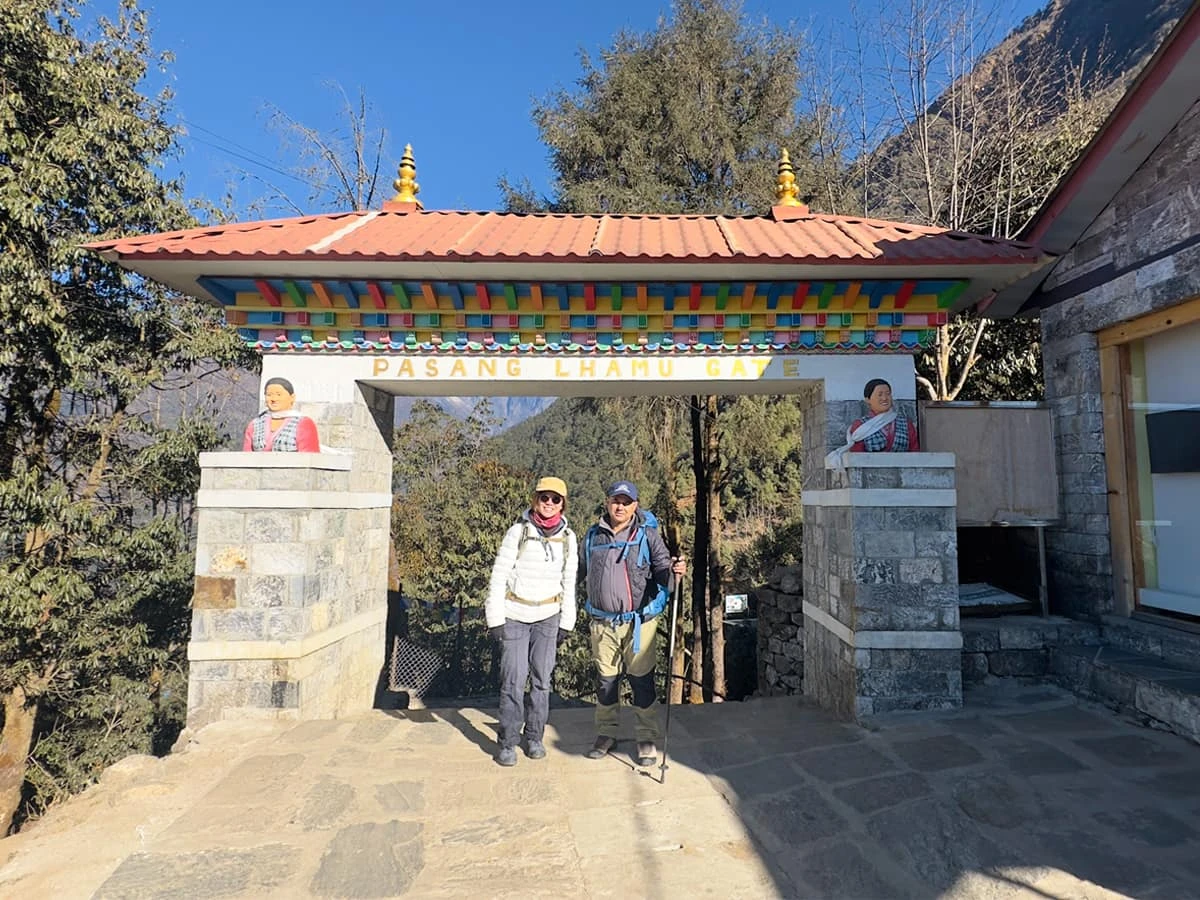
  • Khumbu Pasang Lhamu Rural Municipality Permit
  • Kathmandu Valley UNESCO sightseeing with guide and private vehicle
  • First aid kit, pulse oximeter, altitude medication (Diamox available)
  • Shikhar Adventure trekking certificate on completion
  • All government taxes and company service charges

Excluded

  • International flights to/from Kathmandu
  • Nepal entry visa fees (payable on arrival)
  • Travel and medical insurance (mandatory, must cover emergency helicopter evacuation)
  • Personal trekking equipment and clothing
  • Personal spending: tips, bar bills, hot showers on trail, Wi-Fi, phone charging
  • Single room supplement (available on request)
  • Emergency helicopter evacuation costs (covered by your travel insurance)
  • Guide and porter tips (recommended: USD 15–20/day for guide; USD 8–10/day for porter)
  • Optional extensions or add-ons (overnight at Hotel Everest View, Chitwan safari, etc.)
  • Anything not mentioned in cost includes section

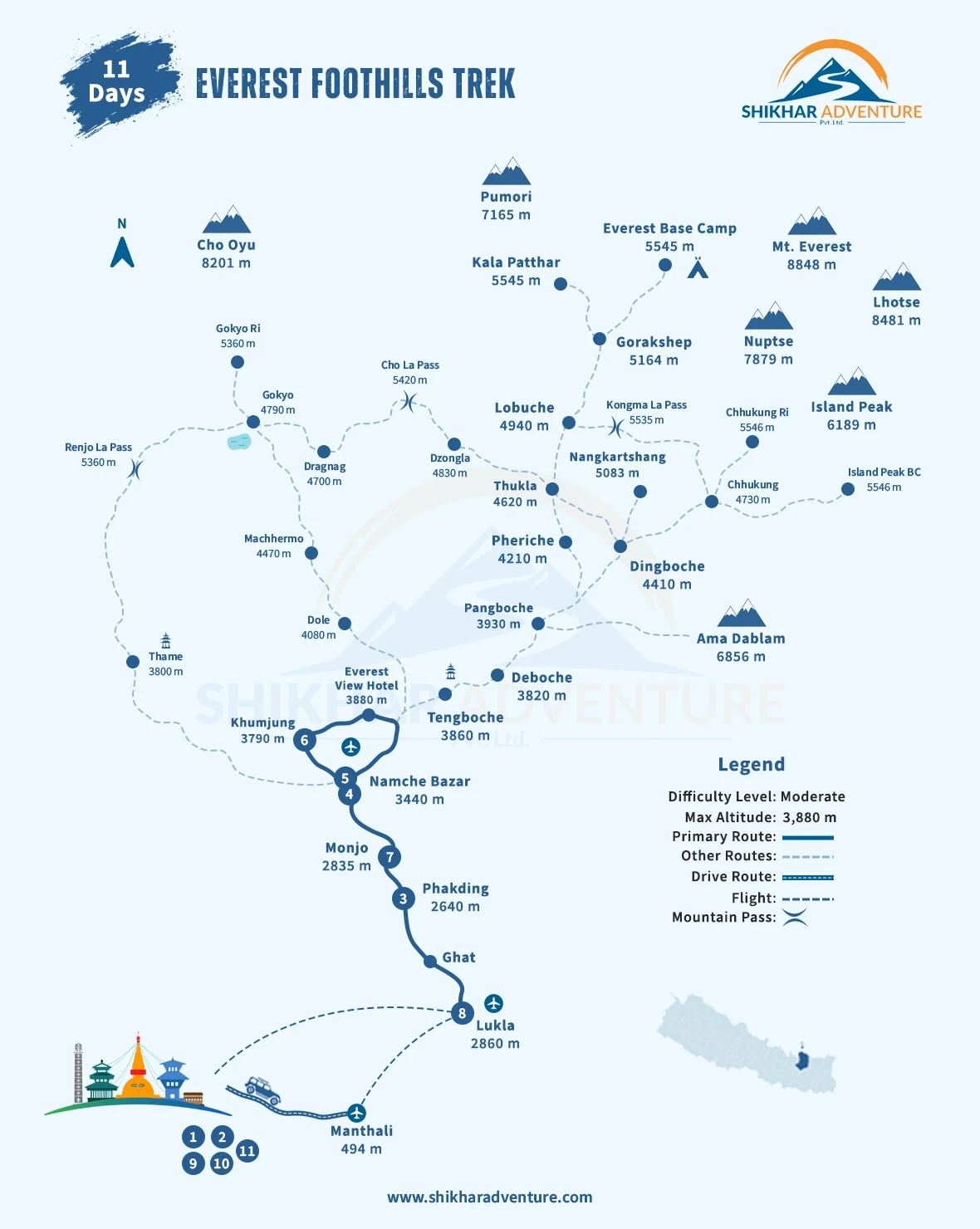
Route Map

Route map of the Everest Foothills Trek in Nepal

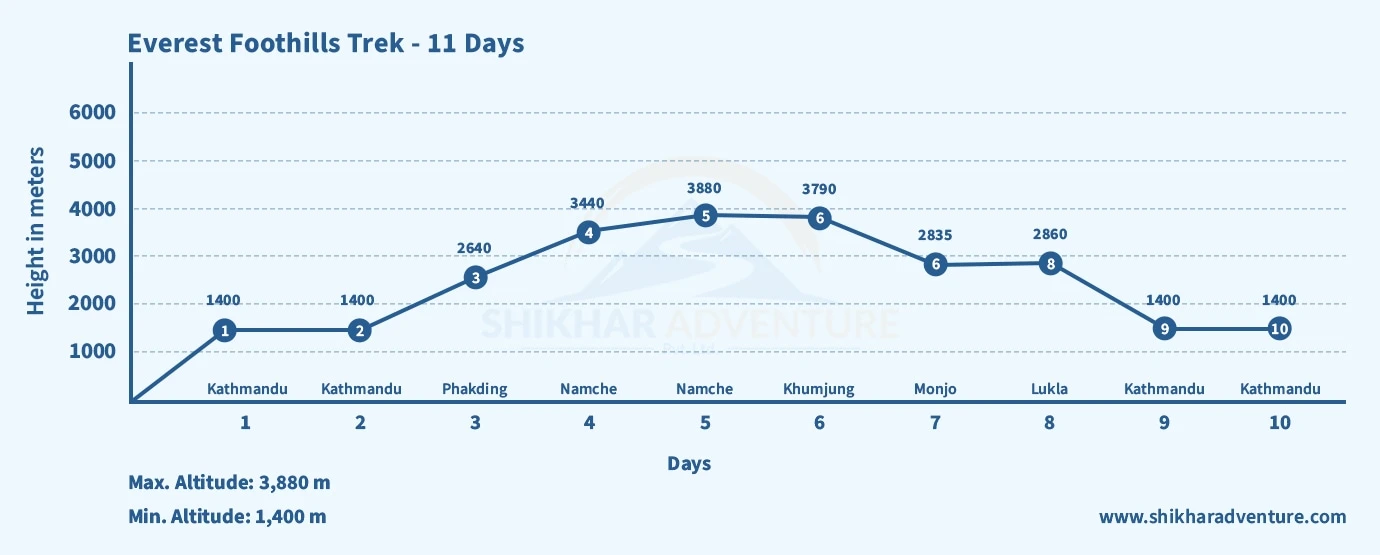
Altitude Chart

Everest Foothills Trek altitude profile

Essential Information

Who Is the Everest Foothills Trek Designed For?

This trek has been specifically designed to open the Khumbu to a wider range of travelers than any other Everest region route. If you recognise yourself in any of the profiles below, the Everest Foothills Trek was made for you.

First-Time Trekkers No prior experience required. Daily distances are 8–16 km on well-marked trails. Your guide handles navigation, permits, and logistics entirely.
Families with Teenagers Children aged 10+ have completed this route. The Khumbu's cultural richness and real-world education, UNESCO sites, Sherpa schools, national park, make this as meaningful as it is adventurous.
Senior Travellers (50–70+) We have guided trekkers in their early 70s on this route. The pace is yours. Our porters carry your bag. Your guide ensures every step is safe.
Altitude-Anxious Trekkers If you have ever turned back from an altitude trek or worry about AMS, this itinerary's 3,880 m maximum, with built-in acclimatisation, gives you the best possible chance of a symptom-free, joyful experience.
Photographers Six 8,000-metre peaks in a single frame. Hillary Bridge. Monastic interiors. Sherpa village life. This trek is a photographer's Khumbu masterclass.
Cultural Travellers Four UNESCO sites in Kathmandu, Sagarmatha National Park, Namche Museum, Khumjung Monastery, this is one of Nepal's deepest cultural itineraries.
Luxury Travellers Our premium departure option includes the Yak & Yeti Hotel in Kathmandu, Hotel Everest View overnight at 3,880 m, and premium teahouses throughout. Ask us about luxury upgrades.
Time-Conscious Professionals 11 days total. No wasted hours. Fly into Lukla and fly out, the trek is engineered to be extraordinary without consuming weeks of vacation.

Altitude, Difficulty & Safety: What to Expect

Your Elevation Profile, Day by Day

Day Location Altitude (m) Altitude (ft) Net Change
1 Kathmandu 1,400 4,593
2 Kathmandu (sightseeing) 1,400 4,593
3 Phakding 2,610 8,563 −250 m from Lukla
4 Namche Bazaar 3,440 11,286 +830 m
5 Everest View Hotel* 3,880 12,729 +440 m (day hike)
5 Sleep: Namche Bazaar 3,440 11,286 Return overnight
6 Khumjung* 3,790 12,434 +350 m (day hike)
6 Sleep: Namche Bazaar 3,440 11,286 Return overnight
7 Monjo 2,835 9,300 −605 m
8 Lukla 2,860 9,383 +25 m
9–11 Kathmandu 1,400 4,593 −1,460 m (flight)

Day hike, return to lower sleep elevation for optimal acclimatisation.

Difficulty Rating: Moderate

Daily Walk Time 3–6 hours per trekking day, manageable for most healthy adults
Daily Distance 7–16 km depending on day, no marathon distances
Terrain Well-maintained mountain trails, stone steps, and suspension bridges
Steepest Section Namche Hill (Day 4): +300 m in ~1.5 hours, tough but achievable
Prior Experience Needed None, beginners complete this trek successfully every season
Fitness Requirement Ability to walk 4–6 hours at a comfortable pace over 5 consecutive days

Acute Mountain Sickness (AMS) Prevention

AMS occurs when the body cannot adjust to reduced oxygen levels at altitude. On the Everest Foothills Trek, our itinerary includes a full acclimatisation day in Namche Bazaar before any ascent above 3,440 m. All day hikes to Everest View Hotel (3,880 m) and Khumjung (3,790 m) follow the climb high, sleep low protocol, ascending during the day and returning to a lower sleeping altitude at night.

Your Shikhar Adventure guide carries a pulse oximeter to monitor blood-oxygen saturation throughout the trek, a complete first-aid kit, and altitude medication (Diamox available on prescription). Emergency helicopter evacuation can be arranged within 1–2 hours from any point on the route with travel insurance coverage.

Best Time to Do the Everest Foothills Trek

The Khumbu has two outstanding trekking windows each year. Here is a month-by-month breakdown to help you choose your ideal departure:

Month Season Weather Crowd Level Verdict
March–April Spring Clear skies, rhododendron bloom, warm days High BEST, peak views + blooming trails
May Spring Excellent visibility, warming temps Moderate EXCELLENT, late spring ideal
June–Aug Monsoon Rain daily, leeches on lower trails Low Not recommended
Sept Pre-autumn Rain clearing, vivid green landscapes Moderate Good for budget travelers
Oct–Nov Autumn Crystal clarity, dry trails, stunning colour Very High BEST, peak season, perfect views
Dec–Feb Winter Cold nights (−15°C), snow above 3,000 m Low Possible for hardy adventurers

Food & Accommodation on the Everest Foothills Trek

Accommodation

In Kathmandu, you stay at a 3-star centrally located hotel with private en-suite bathroom, hot shower, and included breakfast. Our preferred properties are in Thamel, within walking distance of the airport shuttle and Kathmandu's cultural sites.

On the trail, accommodation is in well-maintained Khumbu teahouses (also called lodges). These are the backbone of Himalayan hospitality, family-run establishments offering twin-share rooms with warm blankets, a communal dining hall heated by a yak-dung or wood stove, and a menu that includes everything from dal bhat to pizza (quality varies with altitude). Our operations team personally vets every teahouse on this route for cleanliness, hospitality standards, and safety. Private rooms are available at all stops, we do not book dormitory accommodation for our guests.

Food on the Trail

All breakfasts, lunches, and dinners during the trekking days are included in your package price. The Khumbu teahouse menu is surprisingly varied:

  • Breakfasts: Porridge, eggs (any style), Tibetan bread with honey, pancakes, granola, noodle soup
  • Lunches: Dal bhat (the trekker's fuel, free refills always), noodle soup, fried rice, momos (dumplings), pasta
  • Dinners: Dal bhat, vegetable curry, potato dishes, garlic soup (a genuine AMS prevention aid), apple pie, hot chocolate
  • Drinks: Butter tea, ginger-lemon-honey tea, black tea, coffee, hot chocolate, boiled water (included)

Dietary Note

Vegetarian food is universally available on this route. Vegan options are possible with advance notice. Gluten-free dining requires planning, please inform us at booking. We do not recommend eating meat above Namche Bazaar due to freshness considerations.

Permits Required for the Everest Foothills Trek

Two permits are required to enter the Khumbu region. Shikhar Adventure obtains both on your behalf, all costs are included in your package price.

Sagarmatha National Park Entry Permit NPR 3,000 per person (foreigners) | NPR 1,500 (SAARC nationals). Required to enter the UNESCO World Heritage Site area encompassing the entire Khumbu trekking zone.
Khumbu Pasang Lhamu Rural Municipality Permit NPR 3,000 per person. Local government entry fee for the Khumbu region. Collected at checkpoints in Lukla and Monjo.
TIMS Card No longer required for the Everest region as of 2024, our team ensures you carry only current, valid documentation.
Nepal Visa Required for all non-Nepali nationals. Available on arrival at Tribhuvan Airport (15 days: USD 30 | 30 days: USD 50 | 90 days: USD 125). We provide a pre-arrival visa application guide.

Everest Foothills Trek Packing List

This is a tea-house trek, your porter carries your main bag (max 15 kg). You carry a daypack of 5–7 kg. Here is what we recommend:

Clothing

  • Moisture-wicking base layers (thermal top and bottom, 2 sets)
  • Fleece mid-layer jacket
  • Down jacket (−10°C rating minimum)
  • Waterproof, windproof shell jacket and trousers (GORE-TEX or equivalent)
  • 2–3 pairs of trekking trousers or convertible hiking pants
  • Warm trekking socks (Merino wool, bring 4–5 pairs)
  • Sun hat and warm beanie / buff neck gaiter
  • Lightweight gloves + 1 pair warm insulated gloves

Footwear

  • Well-broken-in waterproof hiking boots (critical, do NOT arrive with new boots)
  • Camp sandals or lightweight shoes for teahouse evenings
  • Gaiters (optional but useful in snow conditions, Dec–Feb)

Gear

  • Daypack 25–30 litres (for your trail carry: water, layers, camera, snacks)
  • Trekking poles (adjustable, knees will thank you on descents)
  • Sleeping bag liner (teahouses provide blankets; a liner adds warmth and cleanliness)
  • Headlamp + spare batteries
  • Reusable water bottle (1 litre), we provide water purification tablets
  • Sunglasses (UV400, altitude sun is intense)
  • High-SPF sunscreen and lip balm

Health & Safety

  • Personal first aid kit: blister treatment, antiseptic, anti-diarrhoeal, pain relief
  • Diamox (altitude medication), consult your doctor before travel
  • Hand sanitiser and wet wipes
  • Personal prescription medications with a doctor's letter

Documents

  • Passport (valid 6+ months beyond your departure date)
  • Travel insurance documents (with emergency helicopter evacuation coverage up to 4,000 m)
  • Nepal visa (or apply on arrival at TIA)
  • Emergency contact card and trip confirmation documents

Electronics

  • Camera and lenses (this trek is photographically extraordinary)
  • High-capacity power bank (charging is available at teahouses for a fee, USD 2–5)
  • Universal power adapter (Nepal uses Type C, D, and M sockets)
  • Local SIM card (Ncell or NTC, available at TIA; data works in Namche Bazaar)

Why Trek with Shikhar Adventure?

We are not a booking platform. We are a Kathmandu-based trekking company founded by Himalayan guides who grew up in the mountains they lead you through. Shikhar Adventure is government-registered in Nepal, a member of the Trekking Agencies' Association of Nepal (TAAN), and has been guiding trekkers through the Khumbu, Annapurna, and Langtang regions for over 12 years.

Local Expertise, Not a Middleman

Every guide, porter, teahouse partnership, and permit we use is sourced directly in Nepal. No third-party commissions, no inflated markup. You deal directly with the people who walk beside you.

Safety Is Our Non-Negotiable

All Shikhar guides hold Nepal Tourism Board certification, Wilderness First Aid training, and carry pulse oximeters and AMS medications on every departure. Emergency protocols are briefed before every trek.

Small Groups, Genuine Experiences

We limit our Everest Foothills groups to a maximum of 12 trekkers. This is not a convoy. It is a curated experience where your guide knows your name, your fitness, and your goals.

Transparent, All-Inclusive Pricing

No hidden costs. Our package prices include every permit, meal, flight, and accommodation on the itinerary. What you see is what you pay.

Responsible & Community Tourism

We pay all porters above the TAAN minimum wage, provide proper equipment, enforce load limits (max 15 kg), and channel a portion of every booking to Khumbu school and trail maintenance initiatives.

Personalised Itinerary Customisation

Want to add an overnight at Hotel Everest View? Combine this trek with a Chitwan safari? Start from Jiri instead of Lukla? Our team customises every departure, ask us.

24/7 Guest Communication

From your first inquiry to your airport departure, our team is available via WhatsApp (+977 9841869254) 24 hours a day.

12+ Years & Thousands of Happy Trekkers

Our returning guest rate and TripAdvisor rating reflect over a decade of consistently delivering the Khumbu as it deserves to be experienced.

Questions? Our trek experts are on WhatsApp right now.
Chat with us: +977 9841869254 | We reply within 1 hour

Everest Foothills Trek: Frequently Asked Questions

These are the questions we receive most from prospective trekkers. If yours is not here, WhatsApp us, we answer every question personally.

Is the Everest Foothills Trek suitable for complete beginners?

Absolutely. The Everest Foothills Trek is one of the best Himalayan treks specifically designed for first-time trekkers. The maximum altitude is 3,880 m, manageable for most healthy adults. Daily walking times range from 3 to 6 hours on well-maintained mountain trails. Your guide sets the pace and your porter carries your main bag. No prior trekking experience is required. If you can walk for 4–5 hours at a comfortable pace, you can complete this trek.

What is the maximum altitude on the Everest Foothills Trek?

The highest point on this trek is the Hotel Everest View at Syangboche, situated at 3,880 metres (12,729 feet). This is reached as a day hike from Namche Bazaar (3,440 m), following the climb high, sleep low acclimatisation principle. All overnight camps are at or below 3,440 m, keeping altitude sickness risk low.

Will I actually see Mount Everest on this trek?

Yes, multiple times and spectacularly. Your first Everest glimpse typically comes on the trail to Namche Bazaar (Day 4), framed between the valley walls. On Day 5, from the Hotel Everest View terrace at 3,880 m, you see Everest (8,848 m), Lhotse, Nuptse, Ama Dablam, Thamserku, and Kangtega simultaneously in one panoramic view. Weather is best in spring (March–May) and autumn (October–November), when clear skies guarantee mountain views.

Is the Everest Foothills Trek safe for children? What is the minimum age?

We recommend a minimum age of 10 years for this trek. Children aged 10–16 complete this route regularly with Shikhar Adventure, particularly in the spring and autumn seasons. The maximum altitude of 3,880 m is within the range considered generally safe for fit children with proper acclimatisation. We recommend a pre-trek health consultation with your family doctor. Our guides are trained in paediatric altitude first aid and will monitor children closely throughout.

Can senior trekkers (50–70+) do the Everest Foothills Trek?

Yes, many of our most rewarding departures have included trekkers in their 60s and early 70s. Age is not a barrier on this route; fitness and attitude are. The key requirements are the ability to walk for 4–5 hours daily at a gentle pace, a recent health check clearing you for mild altitude exposure, and a willingness to go slowly. Our guides adjust pace entirely to the group, and our porters carry all heavy gear. Diamox (altitude medication) is available and commonly used by senior trekkers as a precaution.

What is the risk of altitude sickness on this trek?

The Everest Foothills Trek has one of the lowest AMS rates of any Khumbu route, precisely because the maximum sleeping altitude (3,440 m) is within the range where most healthy adults acclimatise successfully. Our itinerary includes a full rest/acclimatisation day in Namche before any higher ascent. Our guides carry pulse oximeters and first aid supplies. Mild symptoms (headache, fatigue) are common at 3,000+ m and managed by rest and hydration. Serious AMS requiring descent or evacuation is rare on this route but our emergency protocols are fully in place.

How difficult is the trek physically?

We rate the Everest Foothills Trek as Moderate. The steepest section is the Namche Hill (Day 4), a 300 m ascent over approximately 1.5 hours. Most days involve 3–6 hours of walking on maintained mountain trails at a comfortable pace. There is no technical climbing, no glacial crossing, and no equipment beyond normal trekking gear. Our recommended preparation: begin walking 45–60 minutes daily with a weighted daypack 4–6 weeks before departure.

What is the best season for the Everest Foothills Trek?

The two optimal seasons are spring (March–May) and autumn (October–November). Spring offers the added spectacle of rhododendron forests in bloom, explosions of red, pink, and white along the trail, while autumn delivers the Khumbu's legendary crystal clarity and the richest mountain views. Both seasons have excellent weather windows. March–April and October–November are our highest-booked months, so we recommend reserving at least 3–4 months in advance for these periods.

Is travel insurance mandatory?

Yes, travel insurance with emergency helicopter evacuation coverage up to 4,000 m is mandatory for all Shikhar Adventure trekking departures, and it is genuinely important. Helicopter evacuation from the Khumbu costs USD 3,000–5,000 per flight without insurance. We do not allow trekkers to depart Lukla without proof of valid coverage. We recommend World Nomads, Safety Wing, or BUPA for comprehensive policies covering Nepal trekking.

What permits do I need and are they included?

Two permits are required: the Sagarmatha National Park Entry Permit (NPR 3,000 for foreign nationals) and the Khumbu Pasang Lhamu Rural Municipality Permit (NPR 3,000). Both are obtained by our team and included in your package price. You do not need to apply or queue for anything, we handle all permit logistics.

Q: What is the Lukla flight experience like?

The flight from Kathmandu to Lukla is 30 minutes aboard a small propeller aircraft (typically Twin Otter or similar), departing from Kathmandu domestic terminal or Ramechhap Airport during peak seasons. The Tenzing-Hillary Airport runway at Lukla has a 12% gradient and is one of the most photographed airports on Earth. The flight itself offers extraordinary aerial Himalayan views. Weather cancellations are possible, this is exactly why our itinerary includes a buffer Day 10 to protect your international connection.

Can I customise this trek or combine it with other experiences?

Absolutely. Shikhar Adventure specialises in personalised Nepal itineraries. Common additions to the Everest Foothills Trek include: an overnight stay at the Hotel Everest View (3,880 m) for a sunrise experience, a 3-day Chitwan National Park jungle safari before or after the trek, a Pokhara extension, or an upgraded Kathmandu hotel and private vehicle arrangement throughout. Contact us to design your custom itinerary.

What happens if the Lukla flight is cancelled due to weather?

Lukla weather cancellations are an inherent feature of Himalayan aviation and are rare in our peak seasons but possible. Our itinerary includes a built-in buffer Day 10 in Kathmandu specifically to absorb potential weather delays. If your flight is delayed by more than one day, we work with airline partners to rebook immediately. If delays extend beyond the buffer day, we have options including helicopter transfer (at additional cost) or a road transfer to Salleri for a ground approach, all managed by our operations team.

What is the difference between this trek and the Everest Base Camp Trek?

The Everest Base Camp Trek (14–16 days) reaches 5,364 m and crosses 5,100 m passes. It requires significant fitness, 14+ days, experienced altitude acclimatisation, and carries a real AMS risk even for fit trekkers. The Everest Foothills Trek (11 days) reaches 3,880 m, requires no prior experience, and is suitable for beginners, families, and senior travellers. Both routes share the same iconic Khumbu landscapes, Lukla, Hillary Bridge, Namche Bazaar, and both offer direct Everest views. The Foothills Trek simply delivers the heart of the Khumbu experience without the physiological extremes of EBC.

How do I book and what is the payment process?

Booking with Shikhar Adventure is straightforward: (1) Contact us via WhatsApp (+977 9841869254) or our inquiry form with your preferred dates and group size. (2) We send you a detailed quote, customised itinerary, and booking confirmation within 24 hours. (3) A 20% deposit secures your departure date; the balance can be settled at your arrival. We accept international bank transfer and most international cards. We also offer flexible postponement and cancellation terms, ask our team for details.

Get Your Free Custom Quote

Tell us your dates, group size, and budget, we'll send a personalised itinerary within 24 hours. No commitment. No pressure. Just expert advice from people who live in these mountains.

WhatsApp Us Now

+977 9841869254

Available 24/7, We reply within 1 hour

Group Booking Discount

Enjoy exclusive discounts for groups of 6+

Corporate, School & Family

Corporate, school, and family groups welcome

Excellent Communication and Experienced Guide

My wife and I did this trek and it was perfect. Just save yourself the time and book with Shikhar Adventure.

We looked into so many different trekking companies before...

read more +
Kimball B
Kimball B- United States
January 05, 2026
Exceptional Everest Base Camp Trek with Shikhar Adventure

I honestly don’t have enough words to describe how incredible my Everest Base Camp trek was with Shikhar Adventure. From the very first day to the final steps of the...

read more +
Michael B
Michael B- Australia
December 27, 2025
Incredible Everest Base Camp Experience

We had a truly amazing time on our Everest Base Camp Trek with Shikhar Adventure. From the start, there was nothing we had to worry about because everything was pre-planned.

...
read more +
E
Elliot C- United States
November 26, 2025

You May Also Like

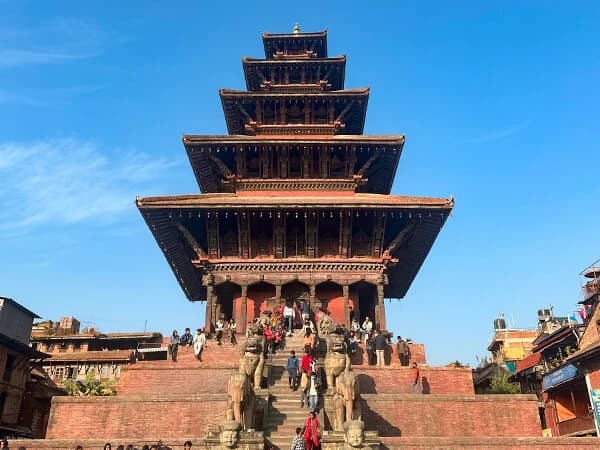
Bhaktapur

Bhaktapur and Patan Tour

Starting from
US$25
Explore
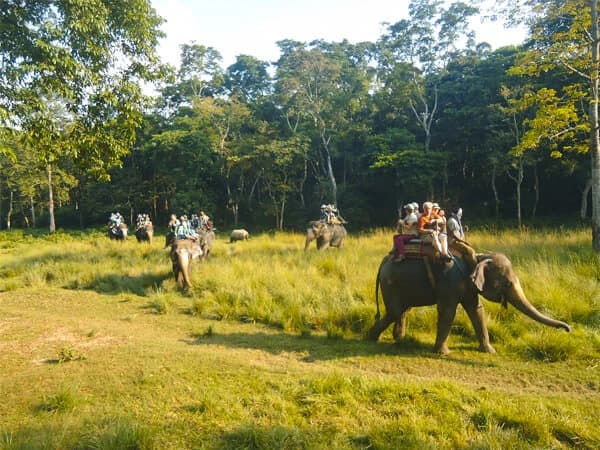
Elephant ride in Chitwan

Chitwan Jungle Safari Tour

Starting from
US$195US$220
Explore
Need Help? Call Us.+977 9841869254