Altitude Profile of Kanchenjunga Base Camp Trek: All 22 Days
| Day |
Destination |
Altitude (m) |
Change |
Trek Hours |
| 1 |
Kathmandu (arrival) |
1,400m |
— |
— |
| 2 |
Kathmandu (sightseeing) |
1,400m |
0m |
— |
| 3 |
Taplejung (drive) |
1,820m |
+420m |
— |
| 4 |
Sekathum (drive) |
1,575m |
-245m |
— |
| 5 |
Amjilasa |
2,400m |
+825m |
6–7h |
| 6 |
Gyabla |
2,730m |
+330m |
6–7h |
| 7 |
Ghunsa |
3,600m |
+870m |
6–7h |
| 8 |
Ghunsa (rest day) |
3,600m |
0m |
Rest |
| 9 |
Khangbachen |
4,050m |
+450m |
5–6h |
| 10 |
Lhonak |
4,755m |
+705m |
5–6h |
| 11 |
Pangpema (day) / Lhonak (sleep) |
5,143m / 4,755m |
+388m / -388m |
7–8h |
| 12 |
Ghunsa |
3,600m |
-1,155m |
7–8h |
| 13 |
Sele La Camp |
4,200m |
+600m |
6–7h |
| 14 |
Tseram (via Sele La 4,480m) |
3,870m |
-330m |
8–9h |
| 15 |
Ramche |
4,580m |
+710m |
5–6h |
| 16 |
Oktang (day) / Ramche (sleep) |
4,730m / 4,580m |
+150m / -150m |
6–7h |
| 17 |
Torangden |
3,000m |
-1,580m |
7–8h |
| 18 |
Yasang |
2,870m |
-130m |
6–7h |
| 19 |
Taplejung (drive) |
1,820m |
— |
4–5h trek |
| 20 |
Kathmandu (flight) |
1,400m |
— |
— |
| 21 |
Kathmandu (buffer) |
1,400m |
0m |
— |
| 22 |
Departure |
— |
— |
— |
Book your 2026 or 2027 Kanchenjunga Base Camp Trek with Shikhar Adventure. The restricted area means permit processing takes time. We recommend enquiring at least six to eight weeks before your intended start date.
Book This Trek | Request Custom Dates
Transparent pricing. No hidden charges. Flexible cancellation policy.
Permits Required for the Kanchenjunga Trek
The Kanchenjunga region is a restricted trekking area under Nepal's Department of Immigration. Three permits are required before entering the region. All three are arranged by Shikhar Adventure as part of your package. There is no government-imposed daily quota on trekker numbers, but the permit system ensures all trekkers are registered and travel with a licensed guide. The region remains genuinely uncrowded due to its remoteness, length, and permit requirements, not because of trekker caps.
Restricted Area Permit (RAP)
The Restricted Area Permit is your official authorisation to enter the Kanchenjunga border zone, which sits close to Nepal's boundaries with Tibet and India. The RAP costs $10 per person per week and can only be obtained through a registered trekking agency, individual applications directly to the Department of Immigration are not accepted. Solo trekkers may obtain this permit provided they travel with a licensed, registered guide. Checkposts at multiple points along the route verify permits. Trekking without a valid RAP carries fines and legal consequences.
Kanchenjunga Conservation Area Permit (KCAP)
The Kanchenjunga Conservation Area covers 2,035 sq km and is Nepal's only transboundary conservation zone, linked to the Khangchendzonga Biosphere Reserve in Sikkim, India. Entry costs USD 20 per person for foreign nationals (NPR 2,000 equivalent). This fee directly supports local infrastructure, schools, health posts, and trail maintenance, inside the conservation area. The permit can be obtained at the Nepal Tourism Board in Kathmandu or at the conservation area entrance. Shikhar Adventure handles this as part of the package.
TIMS Card
The Trekkers' Information Management System (TIMS) is No Longer Required as of 2026 rules.
Difficulty Level: Is This Trek Right for You?
The Kanchenjunga Base Camp Trek is rated strenuous. The challenge comes from four specific factors. First, sustained high altitude, you sleep above 4,700m on Day 10 and push to 5,143m on Day 11. Second, remoteness, above Lhonak, rescue logistics are complex and teahouses are very basic. Third, daily trekking hours, Days 11 and 14 both require seven to nine hours on difficult terrain. Fourth, the weather, conditions above Sele La Camp change without warning.
This trek is ideal for experienced trekkers who have already completed routes like the Everest Base Camp or Annapurna Circuit at a comfortable pace, who are physically active year-round, and who have had a previous altitude experience above 4,000m without serious AMS. If this is your first major Himalayan trek, consider starting with one of our beginner-friendly Nepal treks before committing to Kanchenjunga.
How Kanchenjunga Compares to Other Nepal Treks
| Factor |
Kanchenjunga BC |
Everest BC |
Annapurna Circuit |
| Max altitude |
5,143m |
5,364m |
5,416m |
| Duration |
22 days |
14–16 days |
14–21 days |
| Crowd level |
Very Low |
Very High |
Moderate to High |
| Teahouse quality |
Basic (upper route) |
Good to Excellent |
Good |
| Guide requirement |
Legally mandatory |
Recommended |
Recommended |
| Permit type |
Restricted Area Permit |
Standard permits |
Standard permits |
| Best suited for |
Experienced, remote-seeking |
First major trek |
First circuit trek |
Best Time for the Kanchenjunga Base Camp Trek
Spring: March to May
Spring is the most popular season for the Kanchenjunga trek. Rhododendron forests between 2,000m and 3,500m bloom from late March, with up to 30 species colouring the slopes between Gyabla and Ghunsa. Temperatures rise steadily. The Sele La Pass is generally snow-free by mid-April. Days are long. If your dates align with the Limbu Sakela festival in April or May, ask your guide to arrange a village visit, it is one of the most authentic cultural experiences available anywhere in Nepal.
Browse our spring trekking guide to compare Kanchenjunga against other seasonal options across Nepal.
Autumn: September to November
Autumn delivers the clearest skies and sharpest mountain photography conditions in Nepal. The monsoon ends by late September, washing the atmosphere clean. Temperatures drop steadily through October and November, but remain manageable at mid-altitude. October is peak season across all Nepal trekking and permits are arranged faster for departures in this month. November brings colder nights above Ghunsa but crystalline views and near-empty trails.
Monsoon and Winter: What to Expect
Monsoon trekking from June to August is possible but brings heavy rain, leeches below 3,000m, landslide risk on jeep roads, and reduced mountain visibility. The upper trail above Ghunsa stays drier than lower sections during monsoon. Winter treks from December to February risk Sele La Pass being blocked by snow and many teahouses above Khangbachen closing entirely. These seasons are suitable only for highly experienced trekkers who understand the additional risk.
For alternatives in these seasons, explore our top winter treks in Nepal or our selection of low altitude treks that remain accessible year-round.
| Month |
Suitability |
Key Notes |
| March |
Good |
Warming, some snow on Sele La, rhododendrons starting |
| April |
Excellent |
Best spring conditions, blooms at peak, Sakela festival |
| May |
Good |
Pre-monsoon clouds possible by late May |
| June |
Limited |
Monsoon begins, rain and leeches below 3,000m |
| July |
Poor |
Heavy monsoon, landslide risk on access roads |
| August |
Poor |
Late monsoon, some upper-trail trekking possible |
| September |
Good |
Monsoon ending, skies clearing from mid-month |
| October |
Excellent |
Best autumn conditions, peak season, book early |
| November |
Good |
Clear skies, colder nights, fewer trekkers |
| December |
Limited |
Cold, Sele La Pass can block, reduced facilities |
| January |
Poor |
Winter, most facilities above Ghunsa closed |
| February |
Limited |
Late winter, conditions slowly improving |
Accommodation and Food on the Trail
Teahouses on the Kanchenjunga Route
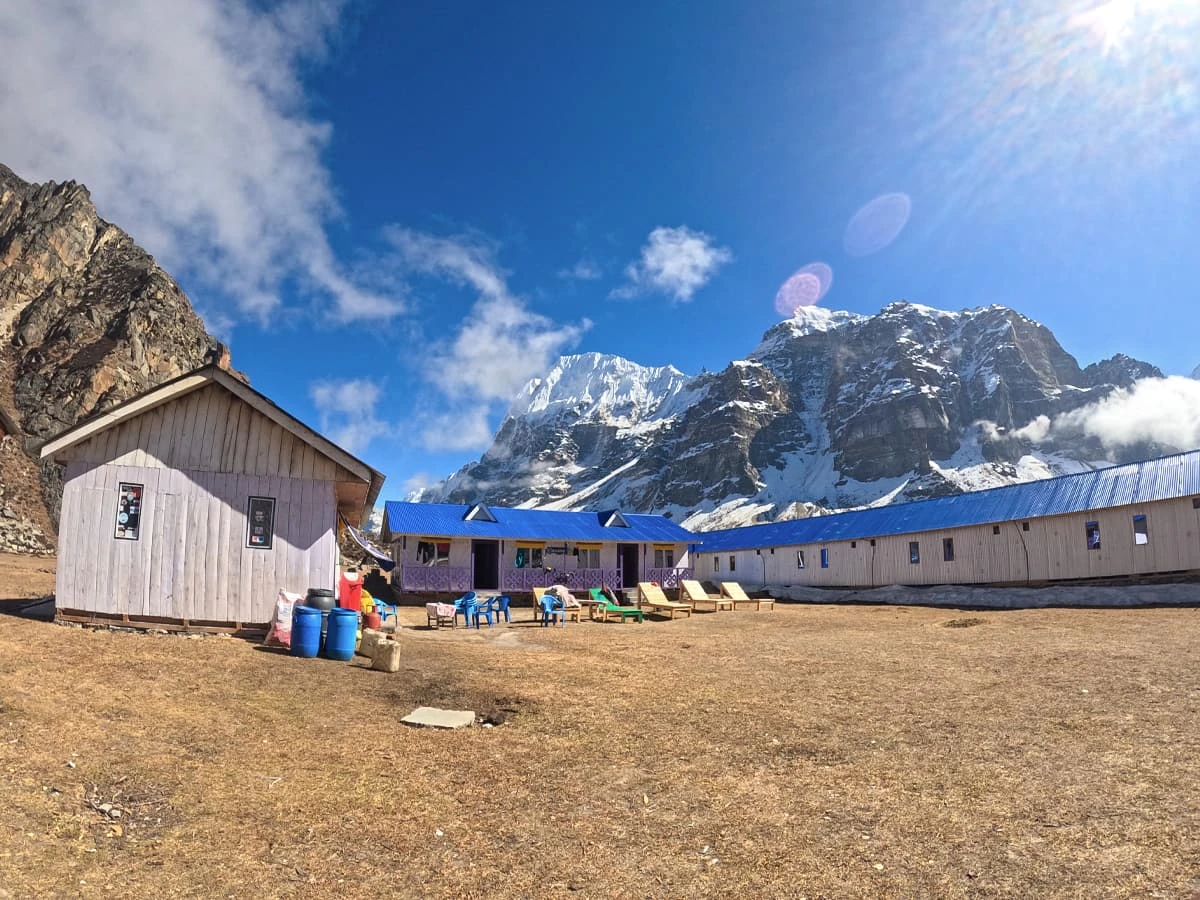
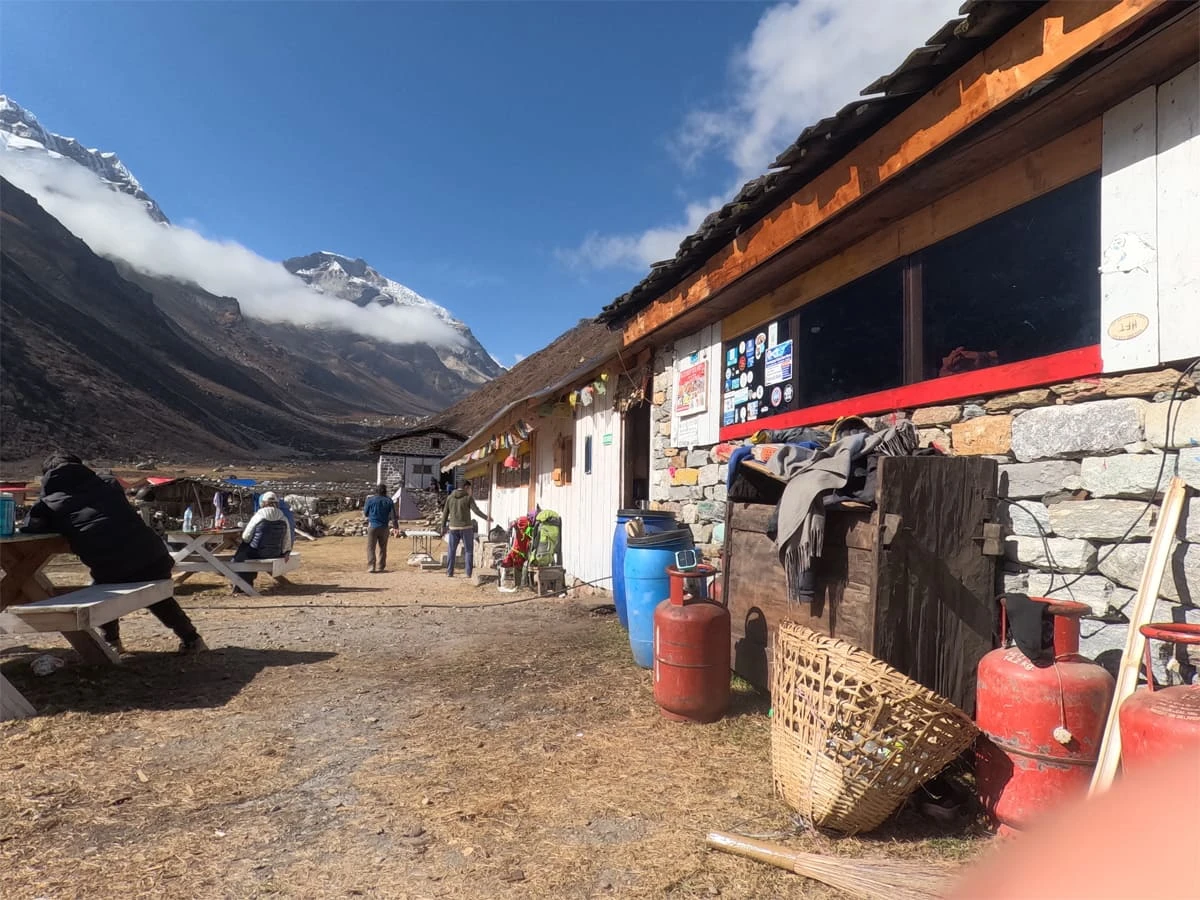
Teahouses are available from Sekathum to Lhonak on the northern route and to Ramche on the southern side. Quality decreases noticeably with altitude. Below Ghunsa, rooms are simple but clean, with private bathrooms in most guesthouses. From Ghunsa upward, expect shared bathrooms, basic twin rooms, and thin mattresses. Bring a sleeping bag rated to at least -10°C and -15°C for November treks. Charging facilities are limited above Ghunsa. Carry a portable power bank.
Key teahouse stops on the northern route: Sekathum, Amjilasa, Gyabla, Ghunsa (best facilities), Khangbachen, Lhonak. Southern route: Sele La Camp, Tseram, Ramche (last teahouse before Oktang).
What to Eat on the Trek
Dal bhat - rice, lentil soup, vegetables, and pickle, is the standard meal at all teahouses and the best fuel for sustained daily trekking. It is filling, nutritious, and often comes with a free refill. Breakfast options include porridge, eggs, bread, and chapati. Above Lhonak, the menu shrinks significantly to a few noodle dishes and eggs. Carry your own snacks for those days. Stay well-hydrated above 4,000m and use water purification tablets or a UV pen, bottled water is unavailable above Ghunsa.
Local specialties worth trying in lower valley teahouses:
- Tongba: warm fermented millet beer served in a wooden vessel with a bamboo straw, the traditional Limbu drink
- Gundruk: fermented dried greens, served as a side dish or in soup, found in Limbu village teahouses
- Dhido: thick buckwheat porridge, the traditional Nepali alternative to rice in remote areas
- Chhurpi: hard dried yak cheese, offered in teahouses above Ghunsa, very high in protein
Getting to the Kanchenjunga Trek Starting Point
Option 1: Fly to Bhadrapur (Recommended)
Buddha Air and Yeti Airlines operate daily flights from Kathmandu to Bhadrapur. Duration is approximately one hour. Cost is $90–$120 one way. From Bhadrapur, a jeep covers the 260km to Taplejung in seven to eight hours through Birtamod, the Ilam tea garden region, and Phidim. Roads are paved until Phidim, then turn to rough mountain jeep tracks. From Taplejung, another 70km jeep ride reaches Sekathum in five to six hours.
Option 2: Bus Route (Budget Only)
An overnight bus from Kathmandu to Biratnagar takes 12–14 hours, followed by a jeep to Taplejung. Total journey exceeds 20 hours. This saves approximately $80–$100 compared to the flight but starts a 22-day high-altitude trek on heavily fatigued legs. Shikhar Adventure does not recommend this option for Kanchenjunga.
Packing List for the Kanchenjunga Base Camp Trek
Clothing
| Item |
Notes |
| Moisture-wicking base layers (2–3 sets) |
Merino wool preferred |
| Fleece or lightweight down mid-layer |
For evenings above Ghunsa |
| Down jacket (600+ fill power) |
Mandatory above 4,000m |
| Waterproof shell jacket |
GORE-TEX or equivalent |
| Waterproof trousers |
Especially for the Sele La crossing day |
| Trekking trousers (2 pairs) |
One light, one warm |
| Merino wool hiking socks (4–5 pairs) |
Avoid cotton entirely |
| Lightweight gaiters |
Useful on snow-covered pass sections |
| Gloves: liner + waterproof outer |
Both needed above Sele La |
| Warm hat and sun hat |
Both are used at different altitudes |
| Balaclava or neck gaiter |
Nights above 4,000m are cold |
Footwear and Technical Gear
| Item |
Notes |
| Waterproof trekking boots with ankle support |
Must be fully broken in before travel |
| Camp sandals or lightweight shoes |
For teahouse evenings |
| Collapsible trekking poles |
Mandatory above Lhonak on moraine terrain |
| Sleeping bag rated to -15°C |
Teahouses provide no warm bedding above Ghunsa |
| Headlamp with spare batteries |
Cold temperatures drain batteries faster |
| Portable power bank (20,000mAh+) |
No charging above Ghunsa |
| Sunglasses UV400 or glacier glasses |
Critical above 4,000m for UV protection |
| Water purification UV pen or tablets |
Bottled water unavailable above Ghunsa |
| 2 × 1-litre insulated water bottles |
Prevent freezing above 4,500m |
Medical and Safety
| Item |
Notes |
| Diamox (acetazolamide) |
Consult your doctor before travel, not suitable for everyone |
| Personal first-aid kit |
Blister plasters, antiseptic, bandages, wound closure strips |
| Ibuprofen and paracetamol |
Headaches and muscle pain at altitude are common |
| Oral rehydration salts |
Essential at high altitude to maintain electrolyte balance |
| Loperamide |
For stomach upsets in remote areas with limited facilities |
| DEET insect repellent |
For lower valley jungle sections below 3,000m |
| Sunscreen SPF 50+ |
UV intensity increases significantly above 4,000m |
Wildlife and Nature in the Kanchenjunga Conservation Area
The Kanchenjunga Conservation Area covers 2,035 sq km across Taplejung district and connects to the Khangchendzonga Biosphere Reserve in Sikkim, India. It is Nepal's only transboundary conservation zone and one of the country's richest areas for Himalayan biodiversity. The area spans five distinct vegetation zones, from subtropical Sal forest at the trek's beginning to permanent snowfield at its highest point.
Wildlife You May Encounter
- Red panda (Ailurus fulgens): most reliably spotted in bamboo and rhododendron forest between Gyabla and Ghunsa at dawn and dusk
- Snow leopard (Panthera uncia): present above 3,500m, confirmed by camera traps, but rarely seen by trekkers
- Himalayan black bear: found in mid-altitude forests, typically avoids contact with trekkers
- Musk deer: spotted in alpine meadows above 3,500m; males identifiable by their distinctive tusks
- Blue sheep (bharal): commonly seen on rocky slopes near Khangbachen and Lhonak
- Himalayan monal: Nepal's national bird; the iridescent male is unmistakable on open slopes from 2,500m to 4,500m
- Red-billed chough: common above 4,000m, known for acrobatic soaring above glacial valleys
- Lammergeier (bearded vulture): large soaring raptor visible over the high valleys
Cultural Highlights Along the Trail
The Limbu Community
The Limbu are one of Nepal's most ancient indigenous nationalities, with their own script (Sirijonga/Limbu script), oral literature (Mundhum), and animist-ancestral religion (Kirat Mundhum). Lower valley villages like Amjilasa and Gyabla are predominantly Limbu-inhabited. The Sakela festival, celebrated in April-May and November, involves the rhythmic Chyabrung drum dance performed in village community circles. If your dates overlap with Sakela, your guide can arrange attendance at a village celebration.
The Rai Community
The Rai people share deep historical roots with the Limbu as a Kirat indigenous group. They inhabit the lower Tamor valley villages along the trek approach. Their shamanic tradition (Bijuwa) is still practised alongside Buddhism. Traditional Rai homes often feature hand-painted decoration on door frames and window surrounds, small details that reward a slow, observant walking pace.
Sherpa and Tibetan Buddhist Culture from Ghunsa Upward
From Ghunsa at 3,600m northward, Tibetan Buddhist culture becomes the dominant influence. Mani walls carved with the mantra Om Mani Padme Hum line the trail through Ghunsa and Khangbachen. The Ghunsa gompa is a small but active monastery. Prayer flags snap in the wind above the village. Yak herding is the primary livelihood above 3,800m. Yak butter tea is offered in most teahouses from Ghunsa upward, it is an acquired taste, but worth trying at least once.
Frequently Asked Questions: Kanchenjunga Base Camp Trek
How many days is the Kanchenjunga Base Camp Trek?
The Shikhar Adventure Kanchenjunga Base Camp Trek takes 22 days. This covers both Pangpema (North Base Camp, 5,143m) and Oktang (South Base Camp, 4,730m) via the Sele La Pass at 4,480m. Shorter 14 to 19-day options visiting a single base camp are available on request. The full circuit cannot be safely reduced below 18 days without cutting essential acclimatisation days.
How much does the Kanchenjunga Base Camp Trek cost?
Package costs range from $1,950 per person for a group of four to $2,600–$3,000 for a private solo trek. The price includes all permits, guide, porter, teahouse accommodation, all meals during the trek, domestic flights, and jeep transfers. Contact Shikhar Adventure for a quote based on your group size and travel dates.
What permits are needed for the Kanchenjunga trek?
Three permits are required: the Restricted Area Permit (RAP) at $10 per person per week, the Kanchenjunga Conservation Area Permit (KCAP) at USD 20 per person, and the TIMS card at NPR 2,000. All three are arranged by Shikhar Adventure as part of the package. RAP applications are accepted through registered agencies only and cannot be obtained independently.
Can I trek Kanchenjunga alone?
Yes. Solo trekkers can undertake the Kanchenjunga Base Camp Trek provided they travel with a licensed, registered guide. There is no minimum group size requirement for trekkers. The licensed guide is the legal and safety requirement in this restricted area. Shikhar Adventure organises solo treks with full guide support throughout the circuit.
Is the Kanchenjunga Base Camp Trek harder than Everest Base Camp?
For most trekkers, yes. Kanchenjunga involves a longer duration, a high mountain pass crossing at 4,480m, more remote terrain with fewer teahouses and rescue options, and greater daily walking hours on technical ground. Maximum altitude at Pangpema (5,143m) is slightly lower than Everest Base Camp (5,364m), but the physical and logistical challenge overall is greater. Previous Everest Base Camp or Annapurna Circuit experience is a recommended minimum benchmark.
What is the best time for the Kanchenjunga Base Camp Trek?
Spring (March to May) and Autumn (September to November) are both excellent seasons. Spring brings rhododendron blooms and the Limbu Sakela festival. Autumn delivers the clearest skies and sharpest views. October permits fill fastest, so book at least six to eight weeks in advance for autumn departures.
What is the highest point on the Kanchenjunga trek?
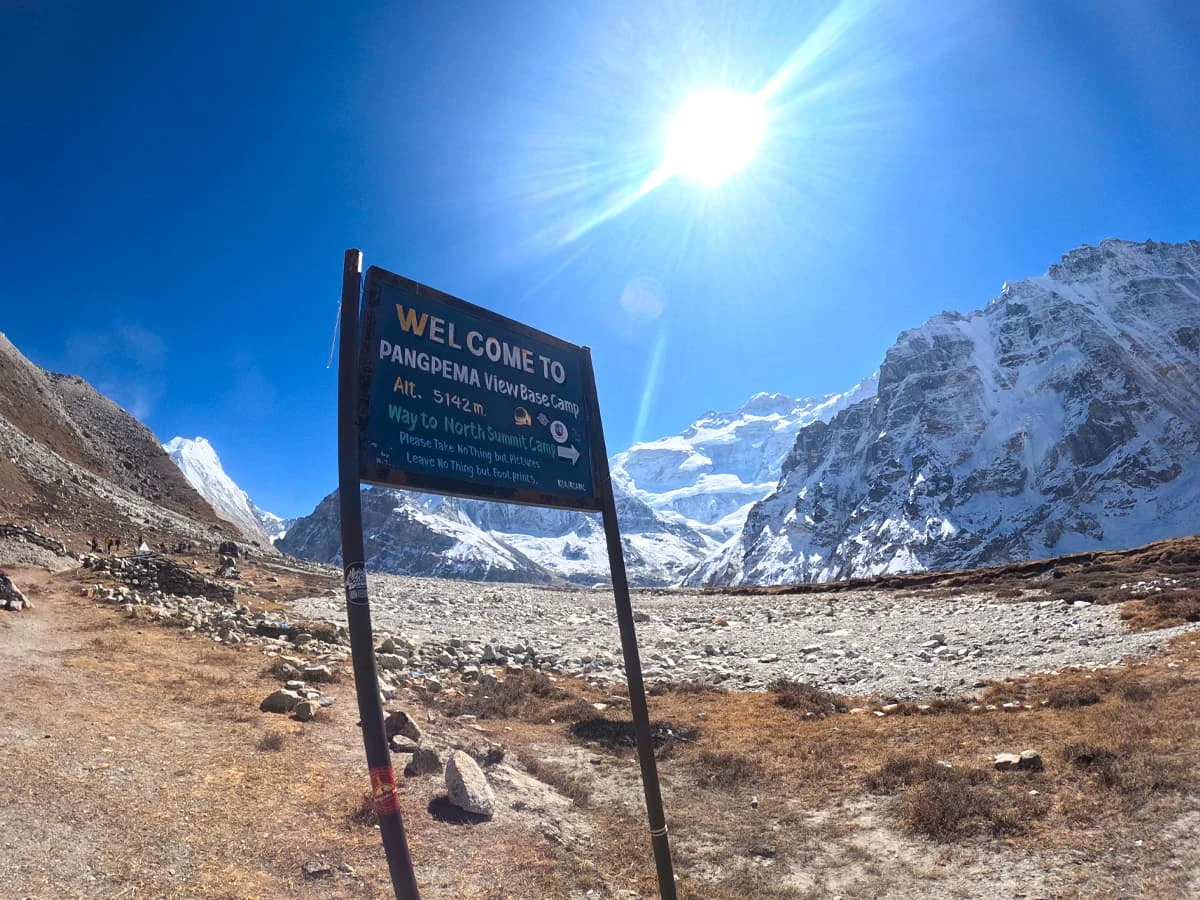
The highest point is Pangpema (North Base Camp) at 5,143m (16,873 feet), reached on Day 11. The South Base Camp at Oktang sits at 4,730m (15,518 feet), reached on Day 16. The Sele La Pass at 4,480m (14,698 feet) is the highest regularly crossed point on the route.
What wildlife can I see on the Kanchenjunga trek?
The Kanchenjunga Conservation Area is one of Nepal's richest zones for Himalayan wildlife. Red pandas are regularly spotted in bamboo forests between Gyabla and Ghunsa. Blue sheep are common above 4,000m near Khangbachen. Nepal's national bird, the Himalayan monal, appears frequently on open slopes. Snow leopards and Himalayan black bears live in the area, though sightings are rare. Over 250 bird species have been recorded across the conservation area.
Are teahouses available the whole way?
Teahouses are available from Sekathum to Lhonak on the north side and to Ramche on the south side. Quality decreases significantly above Ghunsa. Some groups supplement with tents above Lhonak. Shikhar Adventure confirms teahouse availability for your specific dates before you depart from Kathmandu.
What is the difference between Kanchenjunga North and South Base Camp?
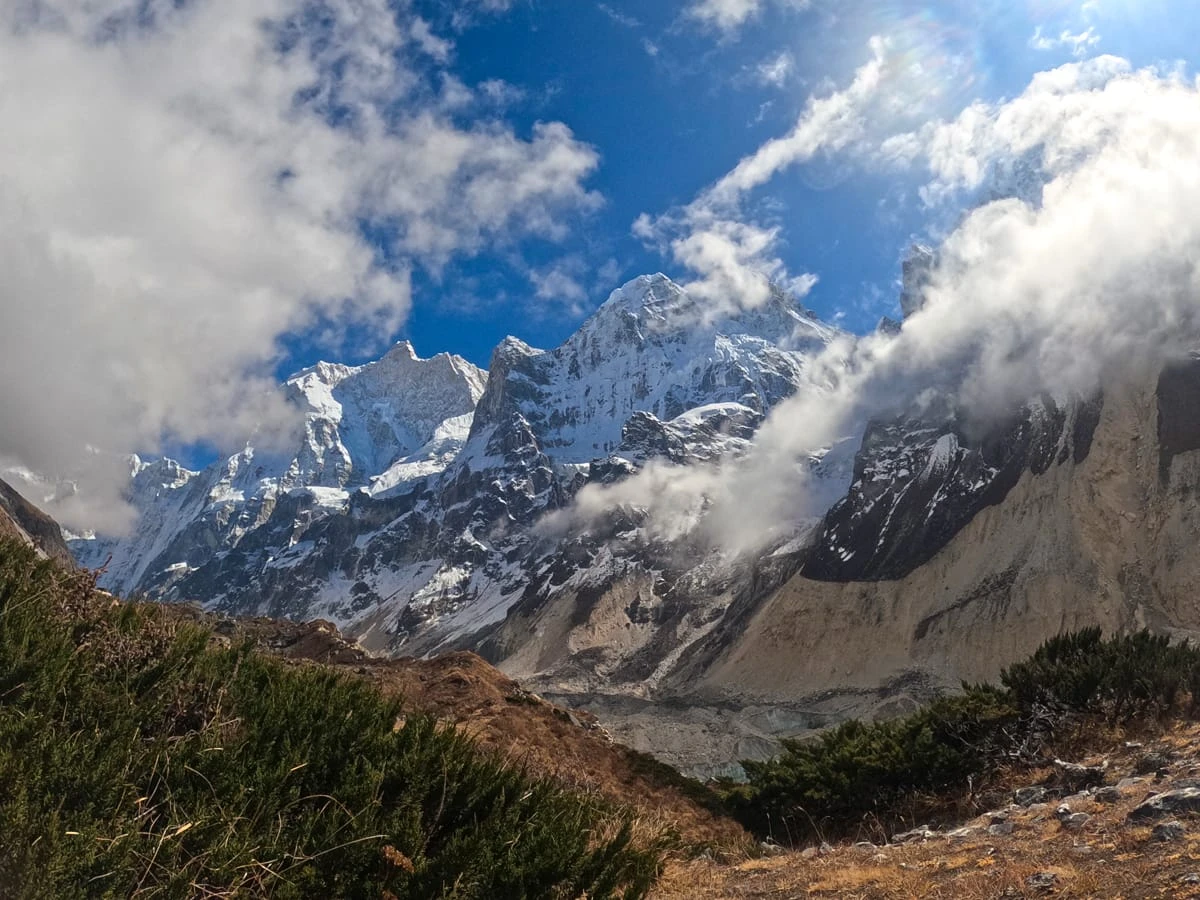
The North Base Camp at Pangpema (5,143m) gives a dramatic close-up of Kanchenjunga's north face and its massive icefalls. The South Base Camp at Oktang (4,730m) faces the Yalung Glacier and provides a broader panoramic view of the south face and surrounding peaks including Kabru and Rathong. Most trekkers find Pangpema the more dramatic of the two. The full circuit covers both in one journey.
Do I need prior trekking experience for Kanchenjunga?
Yes. Prior high-altitude trekking experience is essential for this route. Trekkers who have completed Everest Base Camp or the Annapurna Circuit at a comfortable pace are well-prepared. You should be capable of trekking six to eight hours per day on difficult terrain and have no history of serious acute mountain sickness. A structured six to eight week fitness preparation program before departure is strongly recommended.
What does the Shikhar Adventure package include?
The all-inclusive package covers airport transfers, Kathmandu hotel (2 nights, breakfast included), domestic flights (Kathmandu to Bhadrapur and return), all jeep transfers, all three permits (RAP, KCAP, TIMS), a certified English-speaking guide, porter service (1 porter per 2 trekkers), all teahouse accommodation during the trek, all meals from Day 4 to Day 20 (breakfast, lunch, and dinner), guide and porter insurance and welfare, and emergency first-aid support throughout.
Why Trek with Shikhar Adventure?
Shikhar Adventure is a government-registered Nepal trekking company with experienced, certified guides who have led trekkers across the Himalayas, including in the remote eastern Nepal circuits. We are not the flashiest agency in Thamel. We are the one that answers questions thoroughly, handles logistics precisely, and puts a good guide in front of you on Day 1 and keeps them there until you reach the airport on Day 22.
- Certified and licensed guides on every trek. All Shikhar Adventure guides hold government-issued Nepal trekking licences and current wilderness first-aid certification. Your safety is not a marketing claim, it is built into every itinerary.
- Transparent, all-inclusive pricing. The price you see covers everything listed under inclusions. There are no surprise charges on the trail and no ambiguous line items in the invoice.
- Ethical porter welfare policy. Porters receive above-minimum daily wages, adequate shelter, proper meals, and correct equipment on every Shikhar Adventure trek. Porter loads are capped at 20kg.
- Small group sizes for genuine experience. Kanchenjunga groups are capped at a maximum of eight trekkers. You will have your guide's attention, not a crowd to move around.
- Emergency preparedness on every trek. Each Kanchenjunga group carries a pulse oximeter, comprehensive first-aid kit, and satellite communication device. Evacuation contacts and helicopter service agreements are in place before you leave Kathmandu.
- Full permit expertise. Restricted area permits require precise documentation and correct timing. Our team processes RAP, KCAP, and TIMS applications daily and has never had a client turned back at a checkpoint for permit issues.
If you are researching different Nepal trekking options and want to understand how Kanchenjunga fits into the broader range of Himalayan adventures, our guides are available to talk through the options with you, no obligation, no pressure. We plan treks for people the way we would want someone to plan one for us.
Begin Your Kanchenjunga Base Camp Trek
Twenty-two days. Two base camps. One of the world's last genuinely uncrowded high-altitude trekking circuits. The Kanchenjunga Base Camp Trek asks more of you than most Himalayan routes, and gives back more in return. Solitude at 5,143m. A Limbu village at festival time. Red pandas in bamboo forest at first light. The Sele La Pass panorama with Everest in the far west and Kanchenjunga close enough to feel its cold.
Shikhar Adventure has the permits experience, the certified guides, and the logistics network to make this trek work safely and smoothly. We handle the complexity. You handle the mountain.
Restricted area permits require advance processing. We recommend enquiring at least 6 to 8 weeks before your intended departure date to ensure permits, flights, and guide availability are all confirmed.
Book This Trek | Chat with a Trekking Specialist
No payment required to start planning. Our team responds within 24 hours.
Explore More Treks with Shikhar Adventure