What No One Tells You Before Booking the Annapurna Circuit
Yes, you can complete the Annapurna Circuit in 10 days - but you need to know what that trade-off means before you commit.
After 20 years guiding trekkers across the Himalayas, I have seen the same mistake repeated. Trekkers choose the wrong itinerary length for their fitness level. It costs them the experience they came for.
Last October, I guided four Australians - two seasoned hikers, two first-timers. They booked 10 days due to work constraints. By Day 7, the first-timers had fatigue and mild altitude headaches. We managed fine, but they missed the Thorong La sunrise because they needed extra rest at High Camp. Two more days would have changed everything.
This guide covers all three Annapurna Circuit itinerary options for 2026 - 10, 12, and 14 days. Each one gets an honest day-by-day breakdown. You will also find current permit costs, transport options, budget figures, and insider tips from decades on this trail. By the end, you will know exactly which plan suits you.
Which Itinerary Is Right for You - 10, 12, or 14 Days?
The difference between these plans is not just time. It is the pace of altitude gain, cultural depth, and whether you include the side trip to Tilicho Lake.
10-Day Annapurna Circuit
Best for experienced trekkers with tight schedules. You start from Dharapani (1,860 m) by jeep - already at moderate elevation - and move quickly from day one. There is no buffer for a bad acclimatization day or poor weather at the pass. Not recommended for first-time Himalayan trekkers.
12-Day Annapurna Circuit
The plan I recommend to most trekkers. Starting from Jagat (1,300 m) adds one day of gentle walking before altitude kicks in - a significant acclimatization advantage. You also get a cultural overnight in Jomsom on the way down. The pacing is comfortable and the experience more complete.
14-Day Annapurna Circuit - with Tilicho Lake
The full experience. Three additional days take you to Tilicho Lake at 4,919 m - one of the highest lakes in the world. Last November, I guided Stefan, a solo trekker from Germany who almost skipped it to save time. Standing at the lake's edge the next morning, he told me it was the most extraordinary thing he had ever seen. If you have the days, do not skip it.
Itinerary Comparison - At a Glance
| Feature |
10 Days |
12 Days |
14 Days |
| Start point |
Dharapani (1,860 m) |
Jagat (1,300 m) |
Jagat (1,300 m) |
| Tilicho Lake |
No |
No |
Yes (4,919 m) |
| Jomsom overnight |
No |
Yes |
No* |
| Best for |
Experienced trekkers |
Most trekkers |
Full experience seekers |
| Weather buffer |
None |
Minimal |
Built in |
*14-day plan drives directly from Muktinath to Pokhara - no Jomsom overnight.
10-Day Annapurna Circuit Itinerary
The fastest viable plan. Every day counts - there is no buffer built in. Best suited to physically fit trekkers with previous high-altitude experience.
Day 1 - Drive: Kathmandu to Dharapani
Elevation: 1,860 m | Distance: 225 km | Drive: 8–9 hrs
Your trek begins with a long jeep drive through the Marsyangdi valley - stunning from the window. Dharapani sits at the confluence of the Dudh Khola and Marsyangdi rivers, and marks the gateway into the Annapurna Conservation Area. Rest well tonight.
💡 Tip: Book a private jeep over a shared vehicle. The roads are rough and a private ride gives you flexibility on stops and departure time.
Day 2 - Trek: Dharapani to Chame
Elevation: 2,610 m | Trek: 6–7 hrs
The trail climbs through pine and oak forests, passing Bagarchhap - the first village with distinctly Tibetan architectural character. You continue through Danaque and Timang before descending into Chame, the administrative capital of Manang District. Teahouse quality is good here.
💡 Tip: Carry your ACAP and TIMS permits (not mandatory in 2026 so far) accessible - there is a checkpoint at Chame.
Day 3 - Trek: Chame to Pisang
Elevation: 3,300 m | Trek: 6–7 hrs
One of the most dramatic sections of the entire Annapurna Circuit trek. You pass the famous curved rock face above the Marsyangdi gorge - a sheer cliff wall that frames the valley perfectly. The landscape shifts from temperate forest to high-altitude Tibetan plateau as you approach Pisang.
💡 Tip: Stay in Upper Pisang for better views of Annapurna II and Annapurna IV. The extra 15-minute climb is absolutely worth it.
Day 4 - Trek: Pisang to Manang
Elevation: 3,540 m | Trek: 5–6 hrs
Two route options from Pisang:
- High trail via Ghyaru and Ngawal - more scenic, panoramic Annapurna massif views, highly recommended
- Lower valley trail - easier, faster, less memorable
Manang is the largest village on the circuit - good teahouses, bakeries, hot showers, and a Himalayan Rescue Association (HRA) clinic with free evening altitude awareness talks.
💡 Tip: Attend the HRA altitude talk in Manang. It is free, takes one hour, and could genuinely save your summit day.
Day 5 - Acclimatization Day: Manang
Elevation: 3,540 m | Activity: Short hike + rest
This day is not optional - it is critical. Do not spend it in bed. Instead:
- Hike to Gangapurna Lake or Ice Lake (4,600 m) - 3 to 4 hours
- Return to Manang to sleep (climb high, sleep low)
- Drink 4–5 litres of water throughout the day
- Attend the HRA clinic talk if you missed it yesterday
Mild headaches are normal at this elevation. A severe or worsening headache needs immediate attention at the HRA clinic.
Day 6 - Trek: Manang to Yak Kharka
Elevation: 4,018 m | Trek: 4–5 hrs
A short day by distance - but your first move above 4,000 m. The trail climbs through open grazing pastures. Yak Kharka is a windswept plateau settlement with basic teahouses and year-round yak herds. Views of Chulu East and Chulu West begin to dominate the northern skyline.
💡 Tip: Eat a proper dinner even if your appetite drops. You need fuel for the High Camp climb tomorrow.
Day 7 - Trek: Yak Kharka to High Camp
Elevation: 4,800 m | Trek: 5–6 hrs
The trail climbs through moraine and scree to Thorong Phedi (4,525 m), then steeply up to High Camp. Sleep is often difficult here - thin air, cold temperatures, and the anticipation of the pass crossing. Teahouse accommodation is basic but functional.
💡 Tip: Book High Camp before leaving Manang. Rooms fill completely in October and April. Bring a sleeping bag rated to -10°C - non-negotiable.
Day 8 - Cross Thorong La Pass → Muktinath Temple
Elevation: 5,416 m → 3,780 m | Trek: 8–9 hrs
This is the defining day of your Annapurna Circuit trek. Here is what to expect:
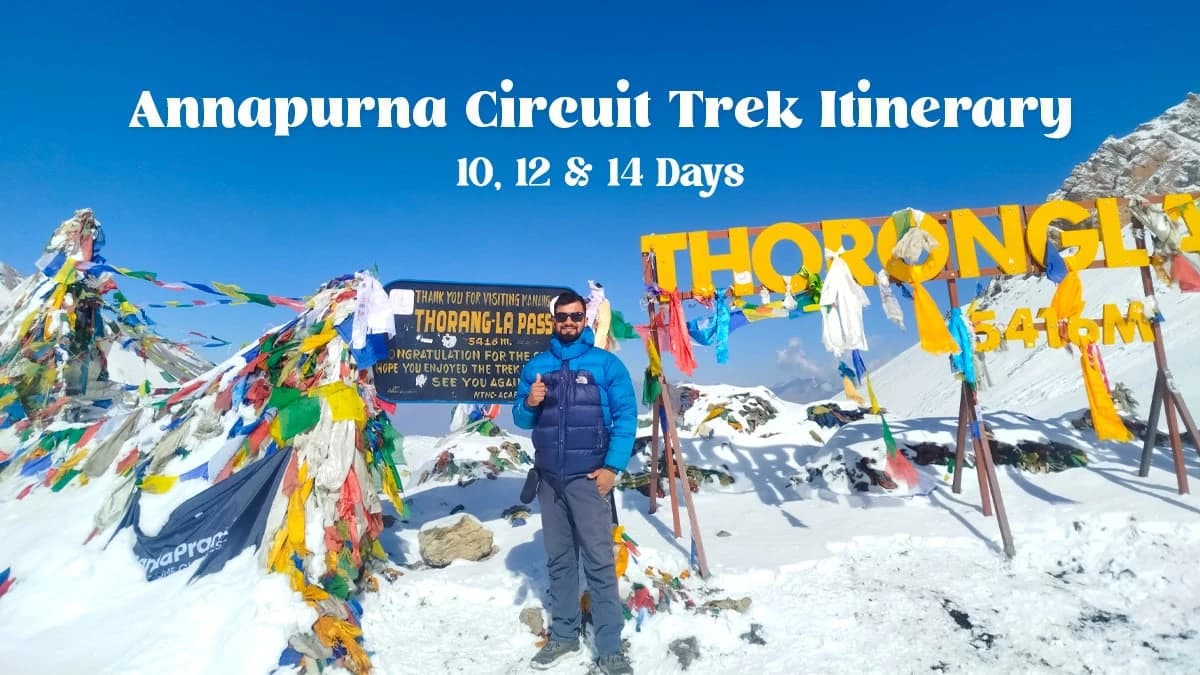
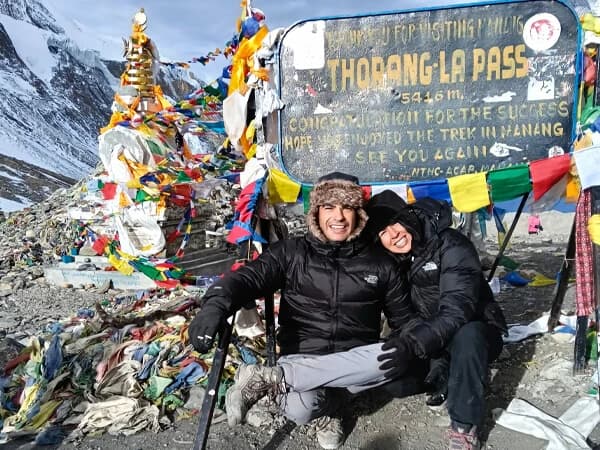
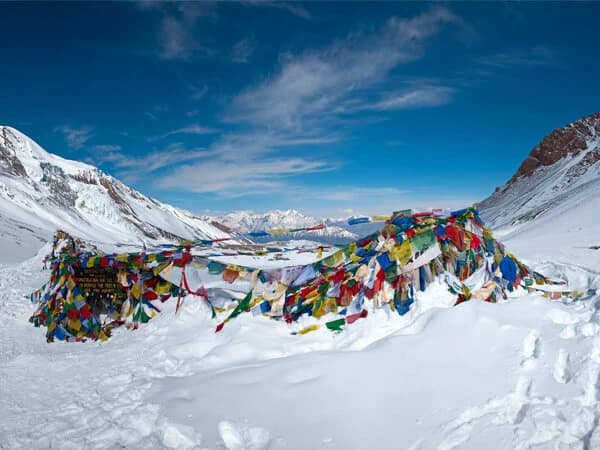
Start no later than 5 AM - ideally 4:30 AM. At the summit: prayer flags, stone cairns, and a horizon of Himalayan peaks in every direction. Muktinath Temple - sacred to both Hindus and Buddhists - waits at the bottom of the descent.
💡 Tip: If weather deteriorates above High Camp, turn around. Check conditions with your teahouse host the night before.
Day 9 - Drive: Muktinath to Pokhara
Elevation: 822 m | Drive: 7–8 hrs
A long but well-earned drive. Jeeps descend through Jomsom and on to Beni, where you join the main highway to Pokhara. The Kali Gandaki gorge - one of the deepest in the world - lines your route. Pokhara's lakeside restaurants and hot showers will feel like a different planet.
💡 Tip: Book your jeep the evening before. Seats fill fast in peak season.
Day 10 - Drive: Pokhara to Kathmandu
Elevation: 1,400 m | Drive: 7 hrs
Tourist bus, private car, or the 30-minute Pokhara–Kathmandu flight - your choice. Most trekkers spend one final night in Thamel for a celebration dinner before flying home.
💡 Tip: The morning flight (approx. USD 120–150) is worth it if your body needs more rest time or your schedule is tight.
12-Day Annapurna Circuit Itinerary
The most balanced plan - and the one I guide most often. Two key additions over the 10-day route:
- A gentler start from Jagat (1,300 m) for better early acclimatization
- A cultural overnight in Jomsom after crossing the pass
Day 1 - Drive: Kathmandu to Jagat
Elevation: 1,300 m | Distance: 210 km | Drive: 7–8 hrs
Starting 560 m lower than Dharapani makes a real difference to your acclimatization in the days ahead. Jagat's teahouses are simple but adequate - this is your last night below 2,000 m for over a week.
Day 2 - Trek: Jagat to Dharapani
Elevation: 1,860 m | Trek: 5–6 hrs
The lower Marsyangdi gorge is lush, warm, and subtropical. The trail passes Sattale, Philim, and Deng before arriving at Dharapani. This is deliberately easy - your body is warming up, not working hard yet.
💡 Tip: Your ACAP permit gets registered at the Jagat checkpoint. Keep it on you at all times from here.
Days 3–9 follow the same stages as the 10-day plan - Chame, Pisang, Manang, acclimatization day, Yak Kharka, High Camp, and the Thorong La crossing to Muktinath. All daily details, tips, and accommodation notes from those days apply here.
Day 10 - Trek: Muktinath to Jomsom
Elevation: 2,740 m | Trek: 5–6 hrs
Rather than driving immediately, this day walks you through the Kali Gandaki - the world's deepest gorge, flanked by Dhaulagiri (8,167 m) and Annapurna I (8,091 m). Strong afternoon winds are a daily feature here - start early. Jomsom is a frontier town with:
- Apple orchards and apple brandy
- Authentic Thakali cuisine
- Tibetan-influenced architecture
- Good phone and internet connectivity
💡 Tip: Order the Thakali set meal - dal bhat with buckwheat. Outstanding, and nothing like the standard trekking menu.
Day 11 - Drive: Jomsom to Pokhara
Elevation: 822 m | Drive: 6–7 hrs
The jeep follows the Kali Gandaki river down through Beni to the main highway. Note: a Jomsom–Pokhara flight exists (20 minutes) but is frequently cancelled due to high winds. Do not rely on it for time-sensitive connections - the road is slower but reliable.
Day 12 - Drive: Pokhara to Kathmandu
Elevation: 1,400 m | Drive: 7 hrs
Same options as the 10-day finale - bus, private car, or flight. Most trekkers spend a final night in Kathmandu to decompress before international travel.
14-Day Annapurna Circuit Itinerary - with Tilicho Lake
The complete Annapurna Circuit experience. Days 1–6 are identical to the 12-day plan: Jagat → Dharapani → Chame → Pisang → Manang → acclimatization day. From Day 7, the route branches toward Tilicho Lake before rejoining the main circuit.
Day 7 - Trek: Manang to Shree Kharka
Elevation: 4,060 m | Trek: 7–8 hrs
The Tilicho route branches away from the main circuit here. The trail climbs steeply out of Manang valley, traverses several ridgelines, and descends to Shree Kharka - a remote cluster of teahouses used almost exclusively by Tilicho-bound trekkers. Views of Annapurna III and Gangapurna are extraordinary on clear days.
💡 Tip: Book Shree Kharka ahead in October and April - it has very few beds. Sleeping bag rated to -10°C is essential.
Day 8 - Trek: Shree Kharka to Tilicho Base Camp
Elevation: 4,150 m | Trek: 4–5 hrs
A shorter day, deliberately paced for acclimatization. The trail crosses a notorious landslide section between the two camps - move quickly and carefully across exposed scree. Tilicho Base Camp has basic but warm teahouse accommodation. Prepare mentally for tomorrow.
💡 Tip: Trekking poles are essential on the landslide section. Do not attempt it in poor visibility or after heavy snowfall.
Day 9 - Trek to Tilicho Lake and return to Shree Kharka
Elevation: 4,919 m (day high) | Trek: 7–8 hrs
This is the day Stefan called the most extraordinary of his life - and after 20 years on this trail, I still feel the same every time I stand there.
Tilicho Lake sits in a natural amphitheatre of ice walls and 7,000-metre peaks. The water shifts from grey-green to deep turquoise as the morning sun hits the surface. There is nothing like it anywhere on the Annapurna Circuit trek.
💡 Tip: Start by 6 AM - reach the lake before afternoon cloud builds. The Tilicho Pass summit (5,322 m) is visible above the shoreline and forms an advanced alternative route into Mustang.
Day 10 - Trek: Shree Kharka to Yak Kharka
Elevation: 4,018 m | Trek: 4–5 hrs
From Shree Kharka, you descend back toward Manang and then climb east to rejoin the main circuit at Yak Kharka. A recovery day of sorts - but cumulative altitude is real by now. Hydrate well and eat a full dinner.
Days 11 and 12 mirror Days 7 and 8 of the 10-day plan - Yak Kharka to High Camp, then the full Thorong La crossing to Muktinath. All tips and details from those stages apply. Day 13 is the drive to Pokhara and Day 14 the return to Kathmandu.
Permits, Transportation & Budget - 2026
Permits Required
| Permit |
Cost (approx.) |
Status 2026 |
| ACAP Permit (Annapurna Conservation Area) |
USD 22 |
Required |
| TIMS Card (Trekkers' Information Management System) |
USD 15 |
Not mandatory in 2026 |
Both permits are available at:
- Kathmandu - Nepal Tourism Board office, Pradarshani Marg
- Pokhara - ACAP office near Lakeside
Bring two passport-size photos and your passport. Processing takes 30–45 minutes. Verify current fees at the official Nepal Tourism Board website before travel - permit pricing is reviewed annually.
Transportation Options
| Route |
Mode |
Duration |
Approx. Cost (USD) |
| Kathmandu to Dharapani/Jagat |
Private jeep |
7–9 hrs |
$80–$120 |
| Kathmandu to Dharapani/Jagat |
Shared jeep |
8–10 hrs |
$20–$30 |
| Muktinath/Jomsom to Pokhara |
Jeep |
6–8 hrs |
$25–$40 |
| Jomsom to Pokhara |
Flight (weather dependent) |
20 min |
$80–$110 |
| Pokhara to Kathmandu |
Tourist bus |
7 hrs |
$10–$15 |
| Pokhara to Kathmandu |
Flight |
30 min |
$120–$150 |
Daily Budget Breakdown
| Category |
Budget (USD/day) |
Mid-range (USD/day) |
| Accommodation |
$5–$10 |
$10–$15 |
| Meals |
$12–$20 |
$20–$30 |
| Snacks & drinks |
$5–$8 |
$8–$15 |
| Miscellaneous |
$3–$5 |
$5–$10 |
Accommodation costs range from USD 5–15 per night - higher near Manang and at High Camp. Meals range from USD 4–10 per item.
Best Time to Trek in 2026
| Season |
Months |
Conditions |
Crowds |
| Peak Autumn |
October – November |
Clear skies, dry trails |
High |
| Spring |
March – May |
Rhododendron blooms, warm |
Moderate |
| Winter |
December – February |
Cold, pass may close |
Low |
| Monsoon |
June – September |
Heavy rain, landslides |
Very Low |
💡 Tip: For quieter trails, target early March or late November. You accept slightly colder conditions but far fewer crowds - especially at High Camp.
Safety, Acclimatization & Preparation
Acclimatization Rules - Follow These
- Climb high, sleep low - hike above your sleeping elevation every rest day
- Drink 4–5 litres of water daily from Day 3 onward
- Never skip the Manang rest day - it is a medical necessity, not comfort
- Ascend no more than 500 m per day above 3,000 m where possible
AMS - Know the Symptoms
Mild (manageable with rest and hydration)
- Headache
- Fatigue
- Reduced appetite
- Mild nausea
Severe (descend immediately)
- Persistent vomiting
- Loss of coordination or balance
- Confusion or disorientation
- Severe headache unresponsive to ibuprofen
In April 2023, I was guiding a group when one member - a highly fit marathon runner from South Korea - developed HACE (High Altitude Cerebral Edema) above Yak Kharka. Fitness does not protect you from altitude illness. We descended immediately, called a helicopter from Manang, and she was in Kathmandu within three hours. Altitude tolerance and physical fitness are entirely separate things.
Thorong La Pass - Safety Checklist
- Depart High Camp by 4:30–5:00 AM
- Check conditions with teahouse host the night before
- Carry waterproof layers, gloves, and balaclava regardless of forecast
- Turn around if weather deteriorates above High Camp
- Never attempt the pass alone - guide or trekking group recommended
Travel Insurance - Non-Negotiable
Standard travel insurance is not sufficient for the Annapurna Circuit. Your policy must include helicopter evacuation coverage. Emergency contacts on the trail:
- HRA Clinic - Manang: First point of contact for AMS above 3,500 m
- CIWEC Hospital - Kathmandu: Primary post-evacuation medical facility
Carry your policy number and helicopter rescue contact on your person at all times.
Fitness Preparation Timeline
| Weeks Before Trek |
Focus |
Activity |
| 12–10 weeks |
Aerobic base |
Running, cycling, swimming — 4x weekly |
| 10–6 weeks |
Weighted hiking |
Uphill hikes with 8–12 kg pack |
| 6–3 weeks |
Trail-specific conditioning |
Long weekend hikes, stair climbs |
| 3–1 weeks |
Taper + gear test |
Reduce volume, hike in full gear setup |
FAQ - Annapurna Circuit Itinerary 2026
Q: Which itinerary is best for first-timers?
The 12-day Annapurna Circuit plan. The lower starting point at Jagat and extra walking day give your body a real acclimatization head start. The Jomsom stop also adds cultural depth you will appreciate. Contact us to match the right package to your schedule and fitness level.
Q: Is 10 days enough for the Annapurna Circuit?
Yes - if you have prior high-altitude experience and strong fitness. No - if this is your first Himalayan trek or your fitness is average. The 10-day plan has zero buffer for weather delays or a slow acclimatization day.
Q: How hard is crossing Thorong La Pass?
Physically demanding but not technically difficult - no climbing gear required. The challenge is altitude (5,416 m), the 8–9 hour duration, and the early 4:30 AM start in cold and dark. Proper acclimatization in Manang makes it very achievable.
Q: Can I trek Annapurna Circuit without a guide?
Yes, as it is well-marked and there are plenty of tea houses. However, having a licensed guide can greatly increase safety in AMS recognition, emergency logistical support, and cultural information. It is highly recommended for solo travelers or those who are trekking Annapurna Circuit for the first time.
Q: What is the best month in 2026 to trek Annapurna Circuit?
October, for clarity and atmosphere. Late September or early November for a balance of good weather and fewer trekkers. March and April are excellent for spring blooms and fewer people than autumn peak.
Q: Is Tilicho Lake worth the extra two days?
Absolutely - no hesitation. Tilicho Lake at 4,919 m is one of the most visually dramatic places accessible by trekking in the entire Himalayas. If you have 14 days, build the itinerary around it.
Q: What permits do I need for the Annapurna Circuit in 2026?
Two - the ACAP permit (approx. USD 22) and the TIMS card (approx. USD 15) - not mandatory in 2026. Both are processed in Kathmandu or Pokhara before the trek starts. We handle permit procurement as part of all our guided packages.
Plan Your 2026 Annapurna Circuit Trek
The right itinerary comes down to three questions:
- How much time do you genuinely have?
- What is your actual fitness baseline - not your optimistic one?
- How deeply do you want to experience this trail?
The 10-day plan is fast and entirely achievable for the right trekker. The 12-day plan is the balanced choice for most people. The 14-day plan with Tilicho Lake is the complete Himalayan experience - and the one most trekkers wish they had chosen when they look back.
Crossing Thorong La as the sun breaks across the Himalayas - knowing every day before it built to that moment - is something you carry for the rest of your life. But it only feels that way when your body was ready and your itinerary gave it the time it needed.
→ Contact us to start planning your 2026 Annapurna Circuit trek
View our full Annapurna Circuit packages | Read our packing list