Manaslu Circuit Trek: This trekking adventure lasts for 14 days and passes through a restricted region, circumnavigating the world's eighth-tallest mountain, measuring 8,163m.
The Manaslu Circuit Trek needs three permits, costing around $146-$180, the presence of a guide, and a moderate to challenging level of fitness.
This trek gets fewer than 7,000 visitors annually, unlike the 30,000 visitors that scale the Everest. The trekkers can indulge in the Tibetan Buddhist culture and enjoy the pristine landscapes. The trek involves the challenging passage through the 5,160m-high Larkya La Pass.
What Sets the Manaslu Circuit Trek Apart from Other Himalayan Trails
This trek is rated as moderate to challenging. Over the course of 14 days, you will encircle the world's eighth highest mountain, standing at 8,163 meters. There are three different permits that need to be purchased for this trek, and these range from $146 to $180, depending upon the time of year that you trek.
It is also estimated to be around 177 kilometers long and is restricted. Only less than 7,000 people trek this route in 2025, as opposed to the Everest Base Camp trek that has more than 30,000 per year.
The Larkya La Pass is 5,160 meters high. Altitude sickness may occur in 20 to 30 percent of climbers if they ascend too quickly. Our guides have led more than 200 groups on this itinerary. In most cases, climbers underestimate the climb or miss rest days.
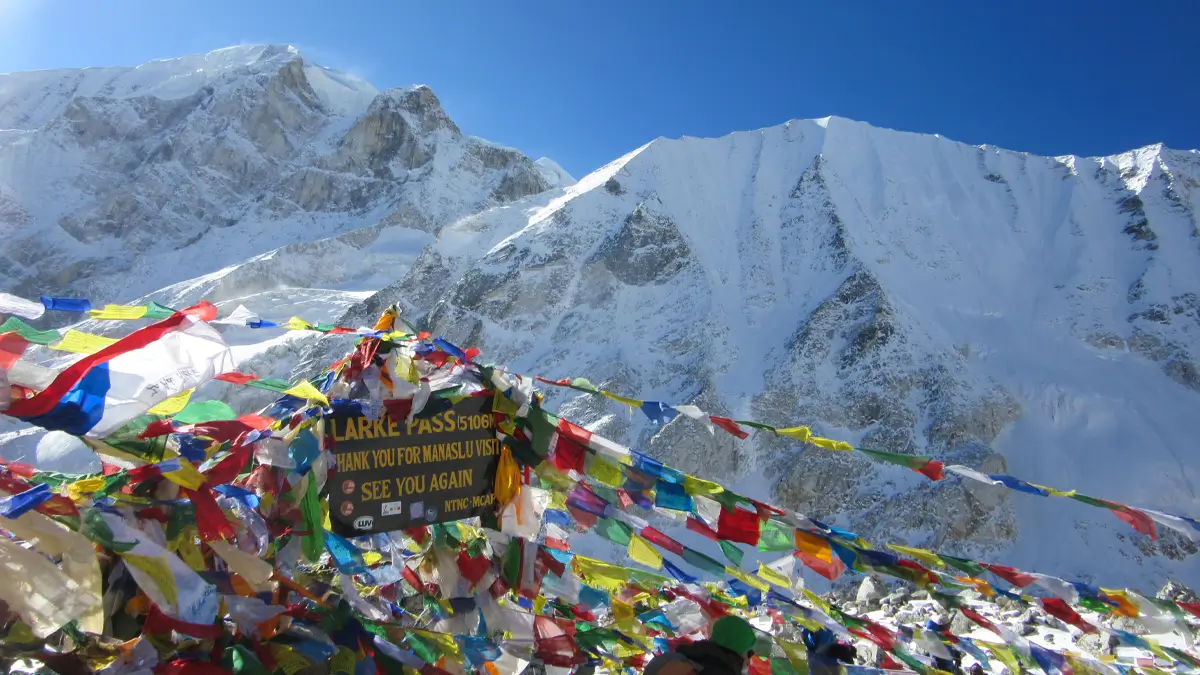
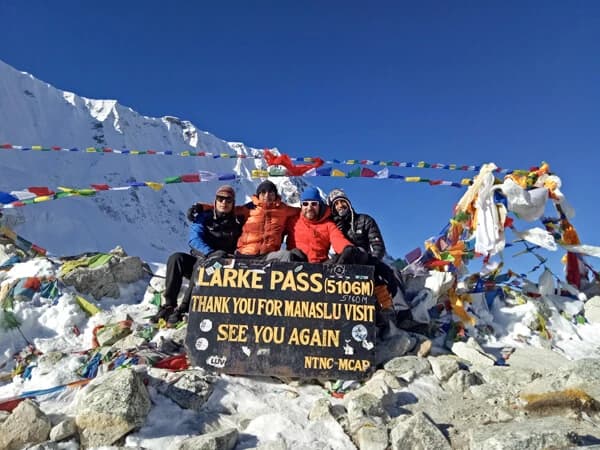
Larkya La Pass on the Manaslu Circuit Trek - 5,106 m
Last March, we led a 58-year-old Australian schoolteacher who had not gone above 3,000 meters. In Kathmandu, she asked, "Am I too old for this?" Three weeks later, she stood atop Larkya La with tears streaming down her face.
In this guidebook, we have incorporated our two decades of Himalayan trails to give you a true reflection.
The Manaslu area was only opened to foreign trekkers in 1991, and it is surprisingly unspoiled compared to other trekking routes in Nepal.
While the Everest Base Camp trek welcomes more than 30,000 visitors every year, the Manaslu Circuit trek will give you a genuine Himalayan trekking adventure. You will get to enjoy the nights with Tibetan Buddhist families, with no lining up for tea or crowded guesthouses.
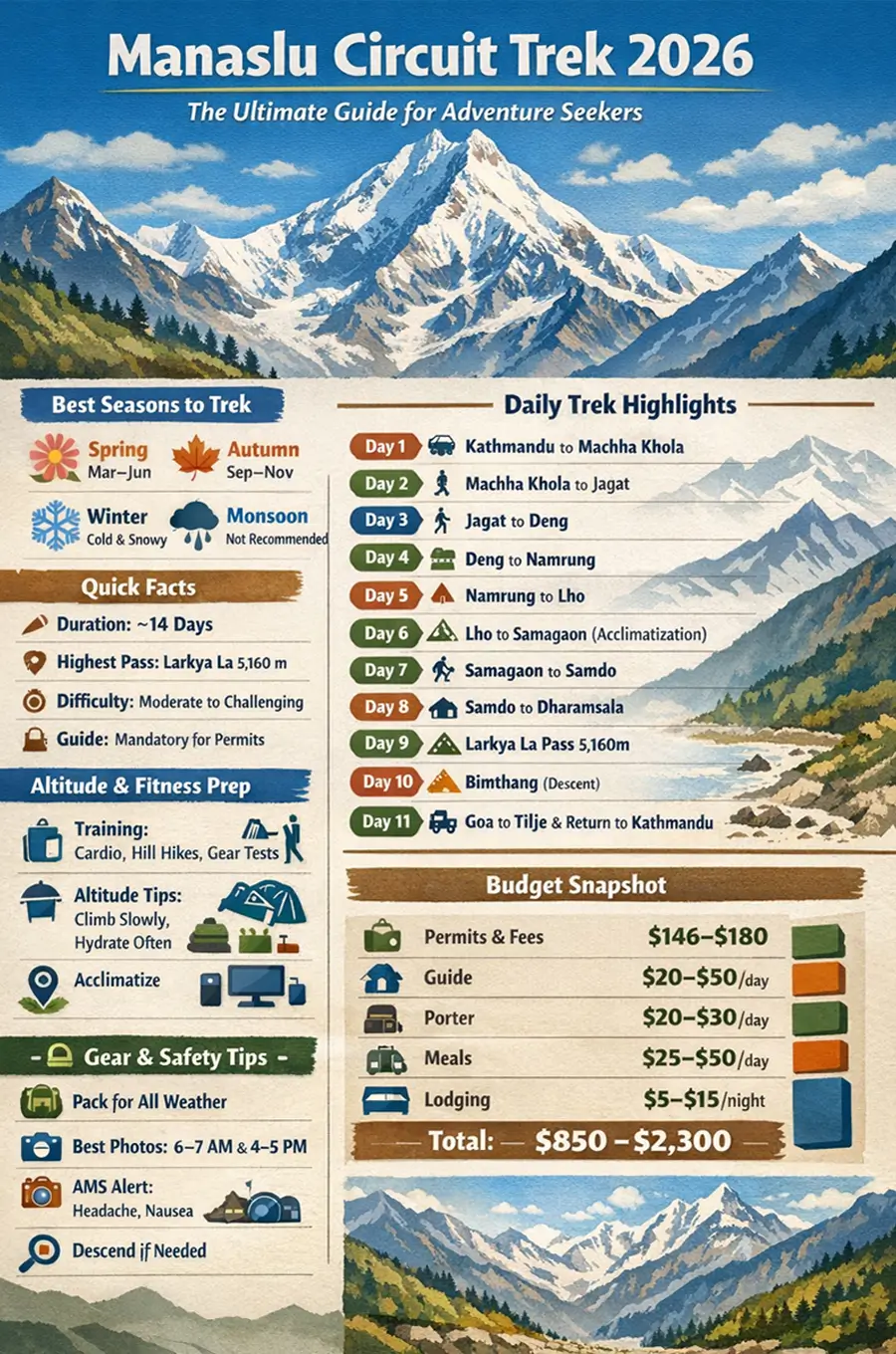
Manaslu Circuit Trek infographic covering itinerary, best seasons, altitude, and budget.
Understanding True Levels of Difficulty
In terms of difficulty level, the Manaslu Trek is placed between the Annapurna Circuit and the Everest Base Camp. You have to ascend over 4,000 meters on this trek.
The toughest part of the trek is between Samagaon and Samdo, and then while heading to Larkya La Pass at 5,160 meters. However, the climb is not technical. You require good cardiovascular health and strong psychological strength.
We recommend acclimatization training of at least 12 weeks before embarking on the adventure, which should involve hill walking with a backpack.
For most trekkers, success is achieved while averaging 6-7 hours of trekking per day with a daypack while porters carry the rest of their luggage.
The most difficult part of the trek is Larkya La Pass, which is more about high altitude rather than technical sections. You will usually cross it early in the morning when the snow is most frozen.
Groups usually start at 3-4 AM. It takes about 4-5 hours to climb to Larkya La. Then it is a 6-7 hour descent to Bimthang.
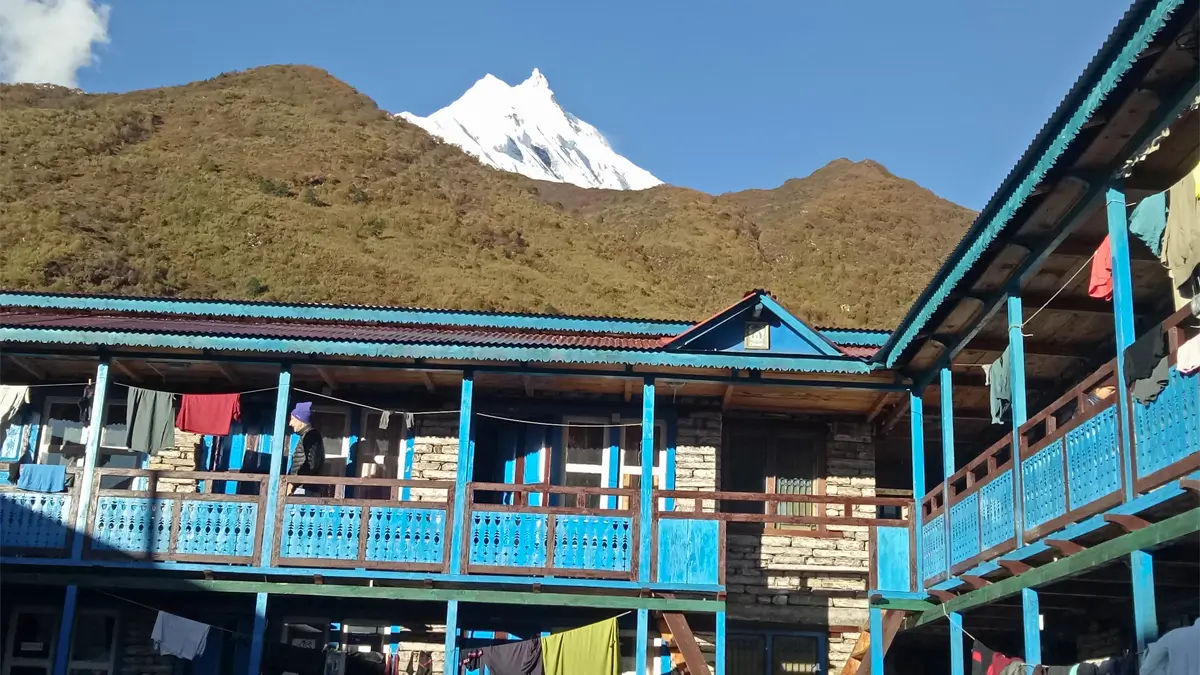
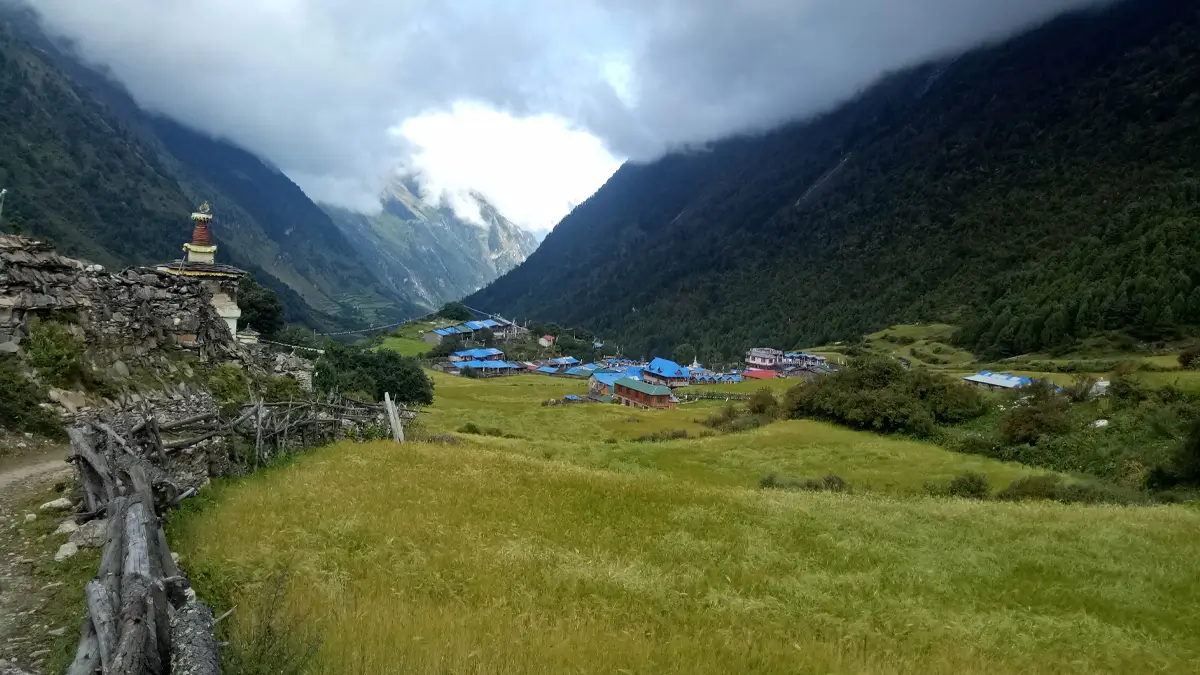
View from a teahouse in Samagaon
Best Seasons for Manaslu Trek 2026
Spring (March to May): This season has favorable weather and the resulting clear views, with temperatures ranging from 15° to 20°C in the low regions. The temperatures in the higher camps vary from -5°C to 5°C, and the best time to witness the Rhododendrons in bloom is in April.
Fall (September to November): The climate is cool, with very clear skies, making it ideal for photography. The skies are particularly clear after the monsoon rains. October is the busiest month for trekkers, so it is advised to book teahouse accommodations well in advance for an October trek.
Also doable in winter (December to February), it entails lots of snowfall and very cold temperatures. The Larkya La Pass may be blocked by massive snowfall following a storm, but solitude was encountered on winter treks.
It is not recommended to visit Monsoon (June to August) due to leeches, landslides, and obscured routes. The routes become slippery and the teahouses are closed.
Immersion in culture is what makes this trek unique
People of the Gurung and Tamang groups live in the Manaslu region. Tibetans who had to leave Tibet in 1959 also moved here.
Along the whole way, you'll see old Buddhist monasteries. Sacred places are marked with prayer wheels that spin and bright flags. As you get closer to the Tibetan border, the culture experience gets richer and as you go up, you can see how the language and architecture change.
People love to visit Pungyen Gompa, which is close to Samagaon. Elderly monks offer tourists butter tea as a warm welcome. We always tell people to stay longer here. Don't rush through these important culture experiences.
During the trip, the scenery changes in big ways. It goes from subtropical woods to alpine meadows and then to high-altitude desert.
Manaslu Circuit Trek Itinerary, Day by Day
This itinerary reflects the typical 14-day journey. There are days built into the plan for proper acclimatization.
The actual trekking time depends with fitness level. The weather also has a big effect on daily progress.
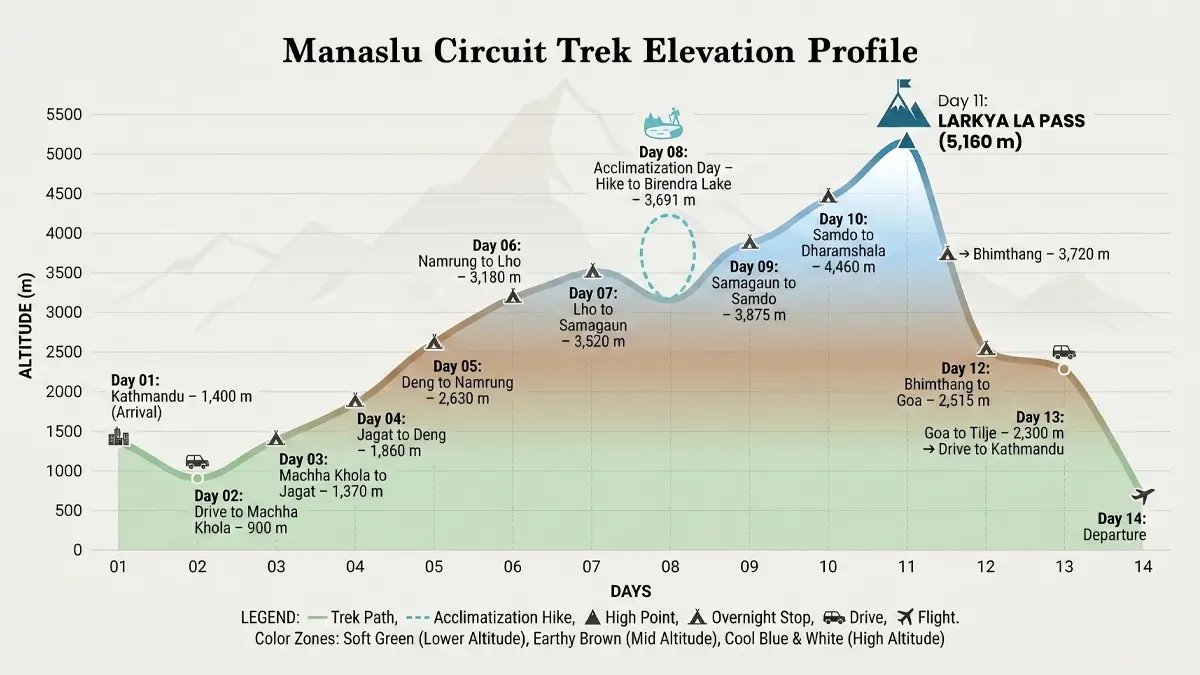
Day 1: Get to Tribhuvan International Airport in Kathmandu (1,400m)
Someone will meet you at the airport and take you to your hotel. Most of the time, your accommodation is in Thamel or a surrounding location. After traveling abroad, take this day to relax. Before you start, you need to get over your jet lag.
Before the hike, you will meet your guide. You will look over the itinerary, permits, and gear together.
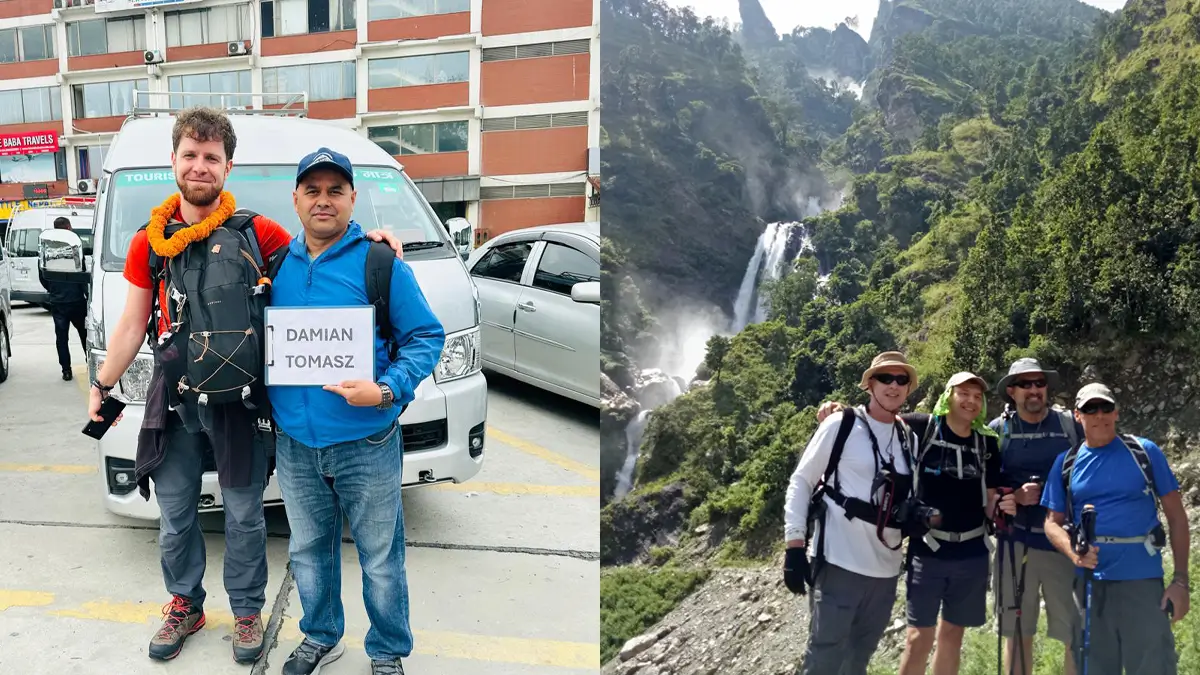
Arrival in Kathmandu and Manaslu Trek Start
Day 2: Drive from Kathmandu to Machha Khola (900m) for 9 to 10 hours
You will leave Kathmandu early in the morning, between 6 and 7 AM. This gives you the most time to drive during the day on rough roads.
At first, the path follows the Prithvi Highway. You'll drive past terraced farms and villages by the river.
Arughat is the settlement that leads to the Manaslu region. You'll stop here to eat before continuing on. The road past Arughat gets difficult and uneven. You will closely follow the Budhi Gandaki River upstream.
In Nepali, "Machha Khola" means "fish river." You will be staying in a modest teahouse for your first night.
This long trip day gets you ready mentally. From here, the demanding trip begins.
Day 3: Machha Khola to Jagat (1,370 meters) - 6/7 hours
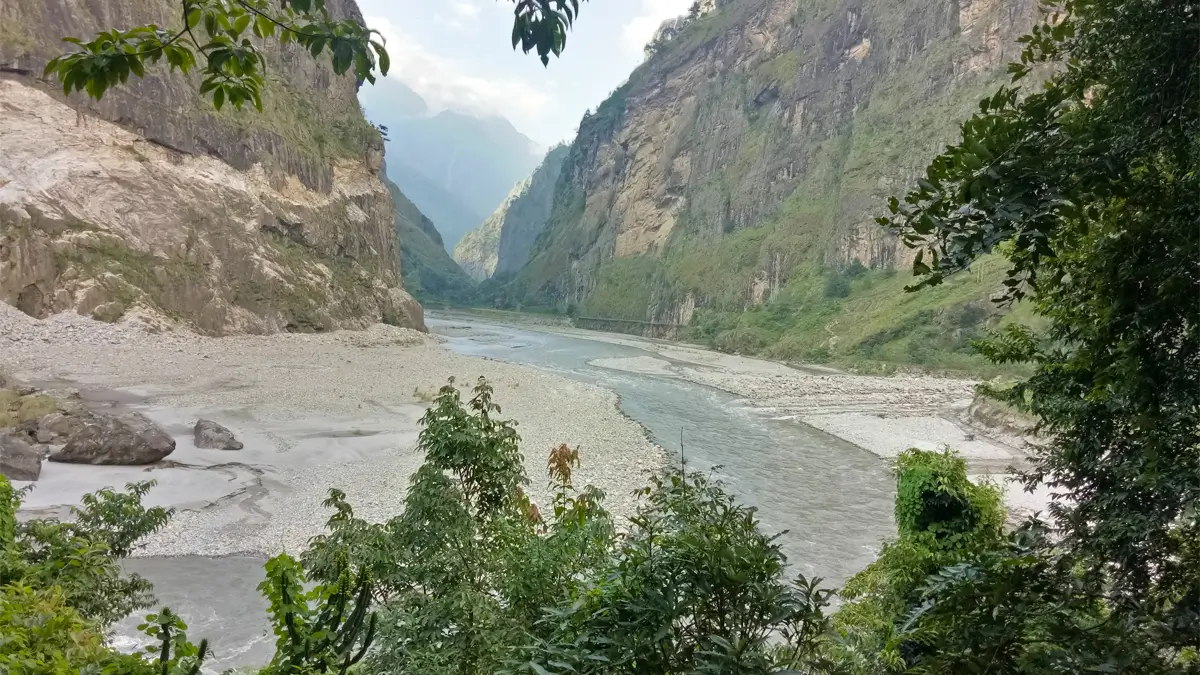
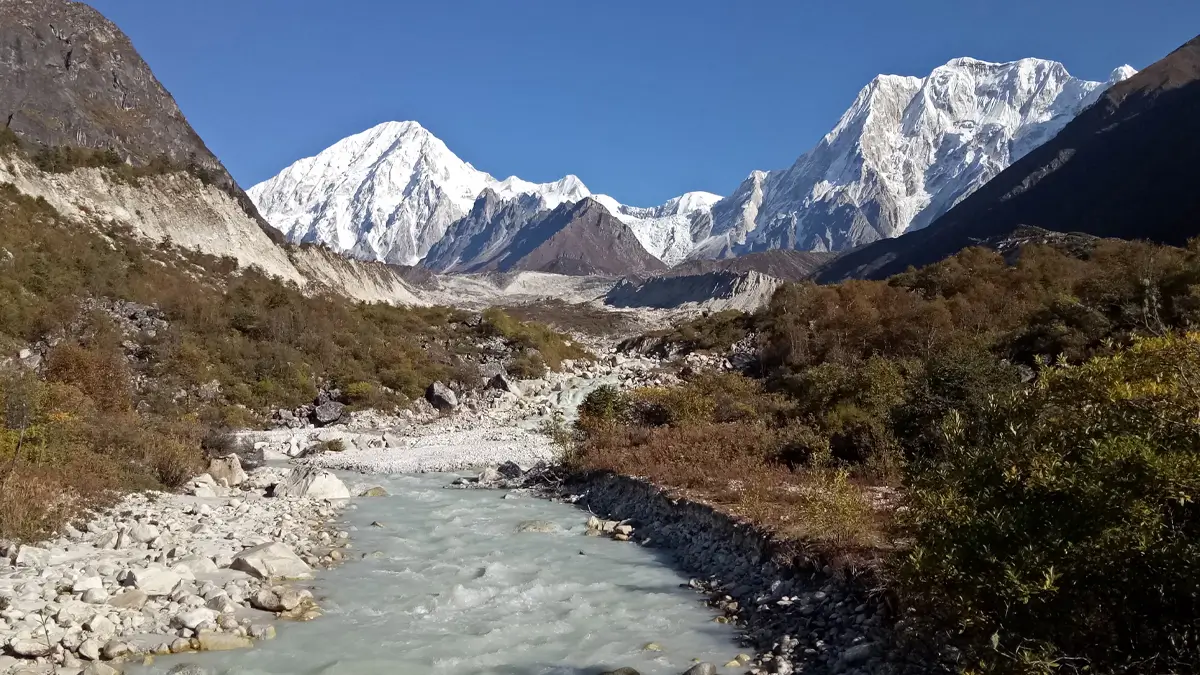
The path goes along the fast-moving Budhi Gandaki River. You will travel through little communities and subtropical woodlands.
There are plenty of suspension bridges that cross the river more than once. There are stone steps carved onto the sides of cliffs all over. There are constant ups and downs in the landscape. The valley gets narrower as it goes ahead, turning into a stunning gorge.
Tatopani has natural hot springs that you can visit while you hike. You can soak your sore muscles here for a short while.
Jagat is the official route to get into the Manaslu Conservation Area. At the checkpoint, they will examine your permits.
Photography tip: The Budhi Gandaki Gorge is breathtaking in the morning light. For drama, take pictures of suspension bridges with mountains in the background.
Trekking the Budigandaki Valley
Day 4: From Jagat to Deng (1,860m) in 6 to 7 hours
The landscape starts to change from Hindu lowlands to Buddhist highlands. From now on, Tibetan culture has a bigger impact.
You'll see mani walls and prayer flags pop up. The change is marked by carved Buddhist mantras and chortens. The trail goes up steadily through forests of pine and rhododendron trees. You need to be careful when you cross the river every now and again.
There are more and more villages along the way. Tibetan-style structures start to show up in towns. Deng is a small town with a few teahouses. Lodges that are comfortable serve full meals and are quite welcoming.
Now, at night, the temperature lowers a lot. Get ready for warmer clothing during the morning and evening.
Day 5: Deng to Namrung (2,630m) – 7/8 hours
Today you'll gain about 770 meters, which makes this one of the more strenuous ascents of your trek. You'll pass through forests of pine, juniper, and bamboo, which give way to more expansive views.
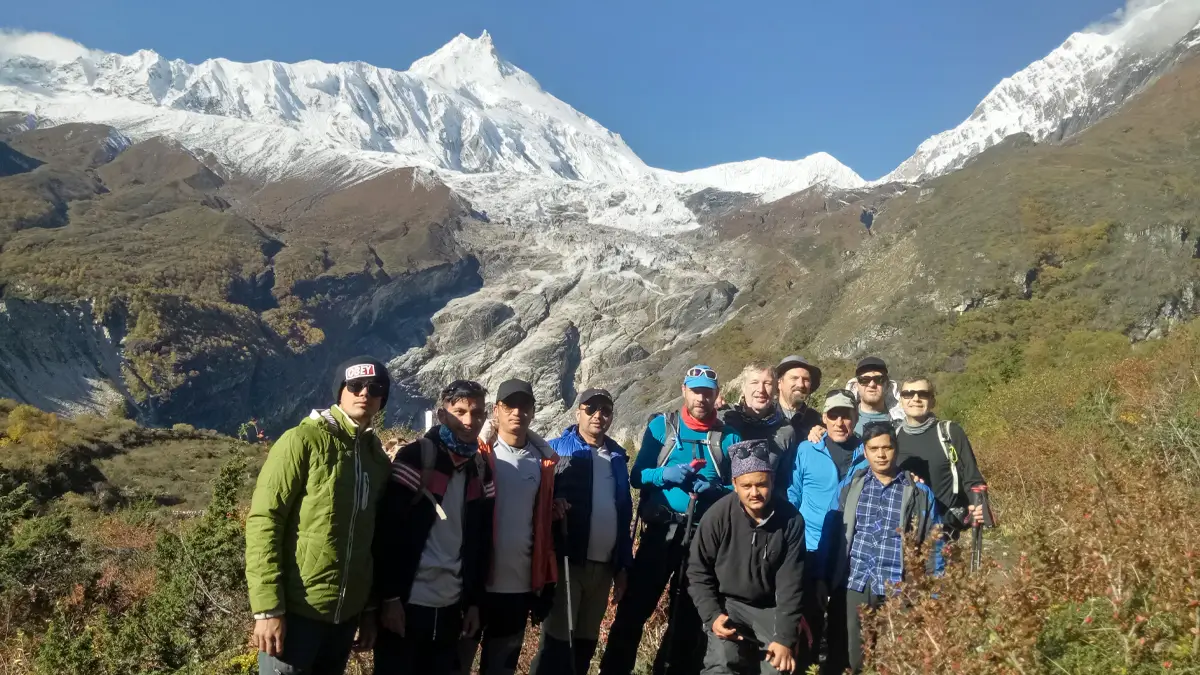
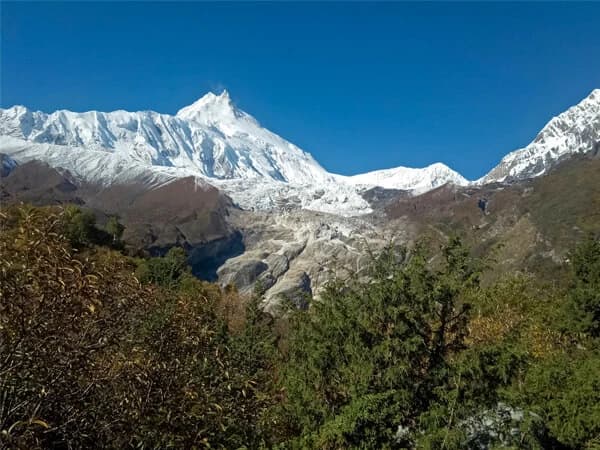
You'll be greeted by Namrung with your first good view of Manaslu's snowy peak, which is a spectacularly prominent feature of the skyline. Now the village is composed entirely of Tibetan-style stone buildings, which are topped with flat roofs adorned with prayer flags.
At times, the most important trekking advice is to simply stop to fully appreciate the experience.
Namrung to Lho Village
Day 6: Namrung to Lho Village (3,180m) – 6/7 hours
The ascent goes on through the village of Lihi, with mountain scenery becoming progressively breathtaking with every step upwards. The village of Lho provides stunning views of Manaslu's north face, set against a backdrop of mountains forming a dramatic amphitheater.
Situated on a plateau with panoramic views in all directions, the village of Lho feels almost like a mountain balcony, with Manaslu North and the surrounding mountains dominating all aspects. The village contains the historic monastery of Ribung Gompa, a visit to which would be enlightening and photograph-worthy.
Thin air will be encountered here, and some altitude sickness may be experienced by some trekkers.
Day 7: Lho to Samagaon (3,520m) - 5/6 hours
This is a relatively short trekking day, which will help you acclimate to the altitude. The trek is a gentle climb over rolling hills, with the peaks, including Manaslu, to keep you company all the way.
Samagaon is a large Tibetan village, complete with teahouse, bakery, and internet cafes. This will be the base for the next day's acclimatization.
The village provides fabulous views of the Manaslu Glacier. And, if you're feeling the need for a treat, you can get apple pie and cinnamon rolls at several teahouse restaurants, which will hit the spot after several days of eating dal bhat.
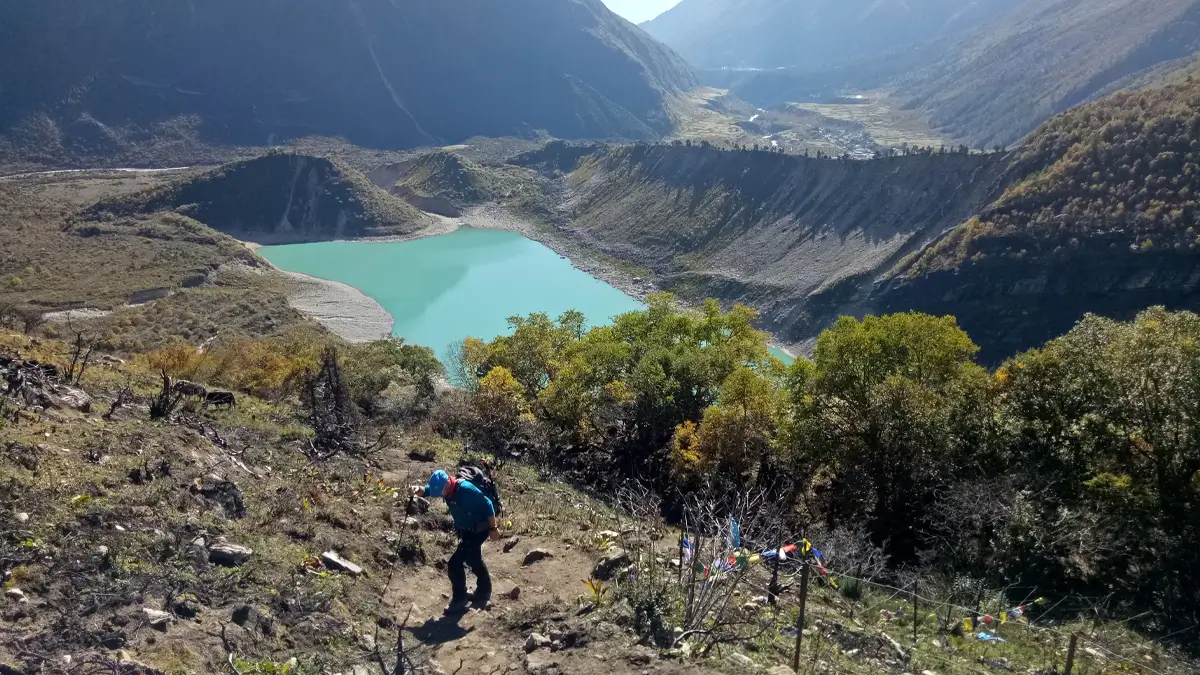
Birendra Lake near Samagaon
Day 8: Acclimatization hike to Birendra Lake (3,691 m)
This is one important rest day that must never be missed. It is critical for the success of the pass crossing that follows. The key to this is the 'climb high and sleep low' rule. This will help your body to develop higher levels of red blood cells.
Birendra Lake is 3,691 meters above sea level. It offers excellent acclimatization opportunities without being subjected to harsh conditions. This takes between 4 to 5 hours round trip. The lake offers perfect reflections of the majestic silhouettes of the Manaslu peaks.
Options for the day include visiting the monastery of Pungyen Gompa or heading towards the Manaslu Base Camp. Get back to Samagaon early in the afternoon to have some time to relax and gear up for the days that follow.
Our guides will have a pulse oximeter that will check the oxygen level. This will show how well the body is acclimatizing. Values below 80% indicate that the body may have acclimatization issues.
In case acclimatization appears to be inadequate, the day should be approached with extreme care or postponed.
Acclimatization Hike to Birendra Lake
Day 9: Samagaon to Samdo (3,875m) – 3/4 hours
This shorter day also helps in the process of acclimatization, with an ascent of about 355 meters only. The trail moves along the valley of the Budhi Gandaki river, and the land becomes drier and barren.
Samdo is on the border of Tibet and has long been an important trading center. The village appears quite isolated, with strong winds in the afternoons. The Tibetan cultural identity reaches its peak here, with many families claiming pure Tibetan lineage.
This day should be utilized in taking a complete rest.
Day 10: Samdo to Dharamsala/Larkya Phedi (4,460m) – 3 to 4 hours
You will have to climb a total of 585 meters to reach the high camp, where you will camp before crossing the pass the next day. The accommodation available in the high camp is quite primitive, with stone shelters and mattresses and sleeping bags.
The altitude will make it difficult for you to have a good night's sleep, so you may not get a good night's rest.
We always advise to drink plenty of water, not to consume alcohol at all, and to have light dinners. The sunset in the Tibetan plateau is simply spectacular, and in spite of the difficult environment, it is beautiful.
It is a good idea to sleep early, at about 7-8 PM, so you can get up at about 2-3 AM to cross the pass.
Day 11: Dharamsala to Bimthang via Larkya La Pass: 3,720m – about 10 to 11 hours
It's the longest and hardest day on this trek, requiring both psychological and physical strength. This will be an early start, in the darkness, between 3 and 4 AM, crossing the pass under the best possible frozen conditions, before the winds pick up.
This will take about 4 to 5 hours, with the trail being rocky, then snow and ice appearing, especially in spring. However, crampons will not be needed for this part, but trekking poles will definitely be needed.
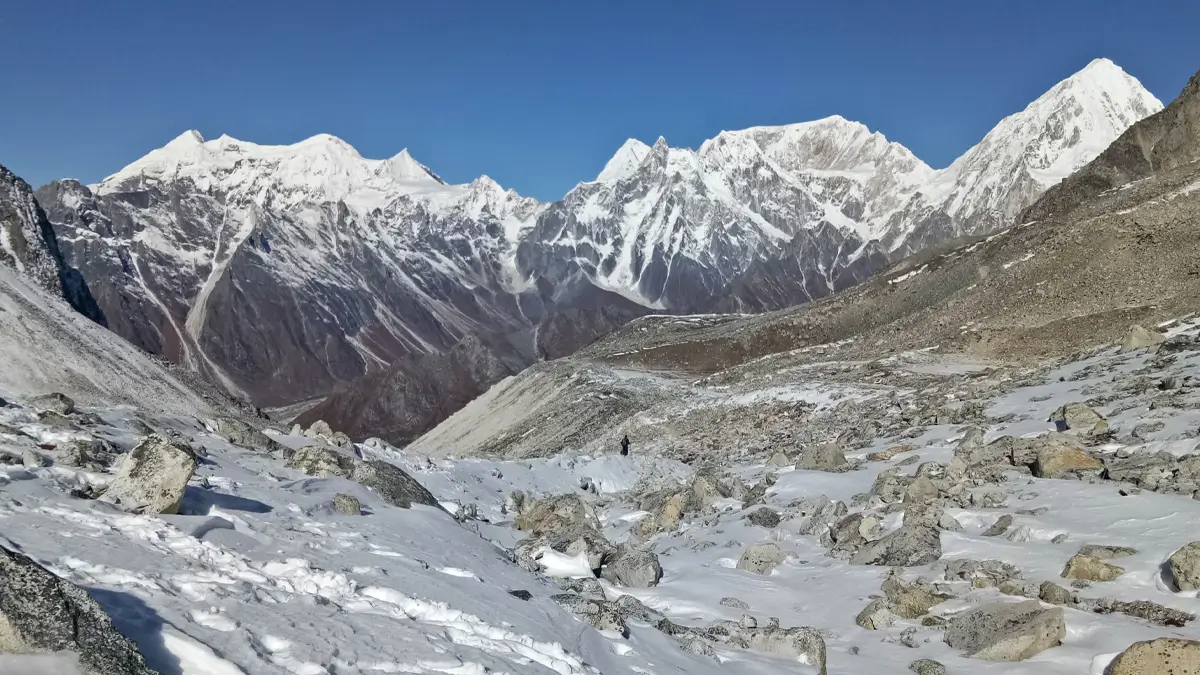
The experience of reaching the top of the Larkya La Pass during the early morning hours is nothing short of magical. Over two dozen peaks above 6,000 meters encircle you, and these include Himlung Himal (7,126m), Cheo Himal (6,820m), and Kang Guru (6,981m).
It's a long way to Bimthang, with a significant descent of about 1,440 meters, which will take about 6-7 hours.
Last October, I saw a Canadian, aged 65, accomplish this trek. She had been training for three years to accomplish this. She used to practice climbing apartment building stairs while wearing a heavy vest. This is one of the reasons why I love doing this work.
Day 12: Bimthang to Goa (2,515m) - 6/7 hours
It is a relief to be descending to lower ground. For several days, you have been above 4,000 meters, and the oxygen is plentiful. Today, you trek down 1,205 meters through rhododendron trees, which lead you to the pine-covered slopes below.
In Bimthang, there are comfortable lodges with hot showers—a luxury to indulge in, coming as it does after the austerity of the high camp. The trek passes through the village of Karche before descending towards the village of Goa.
Then your body starts healing from altitude stress very quickly when you move down towards these lower elevations.
Day 13: Goa to Tilje (2,300m) 1 Hour Trek, then drive to Kathmandu – 8/9 Hours
Then you trek for only an hour to Tilje, where the road starts. It is here that you join the Annapurna Circuit, and you realize you are not alone anymore, as you were in Manaslu. At Tilje, private jeeps or buses are waiting to take you back to Kathmandu.
It passes through the villages of Dharapani and Besisahar, then rejoins the main Kathmandu road. This is the stage when most trekkers feel a mixture of relief and a pang of sadness, leaving the mountains behind.
You'll arrive at Kathmandu in the evening. There, a hot shower and a comfortable bed are waiting.
Day 14: Leaving Kathmandu/Buffer Day
This buffer day will help counter any delays due to weather, and a slower trekking pace is also not a problem at all. If you finished the trek on schedule, you can use this day for shopping, and the area around Thamel has good shopping options for souvenirs.
Other alternatives are the UNESCO World Heritage sites. Boudhanath Stupa and Swayambhunath are highly recommended.
The international flights depart either in the evening or at night. Thus, a whole day is available to spend in Nepal.
Manaslu Circuit Trek Elevation Profile
Essential Permits & Regulations - 2026
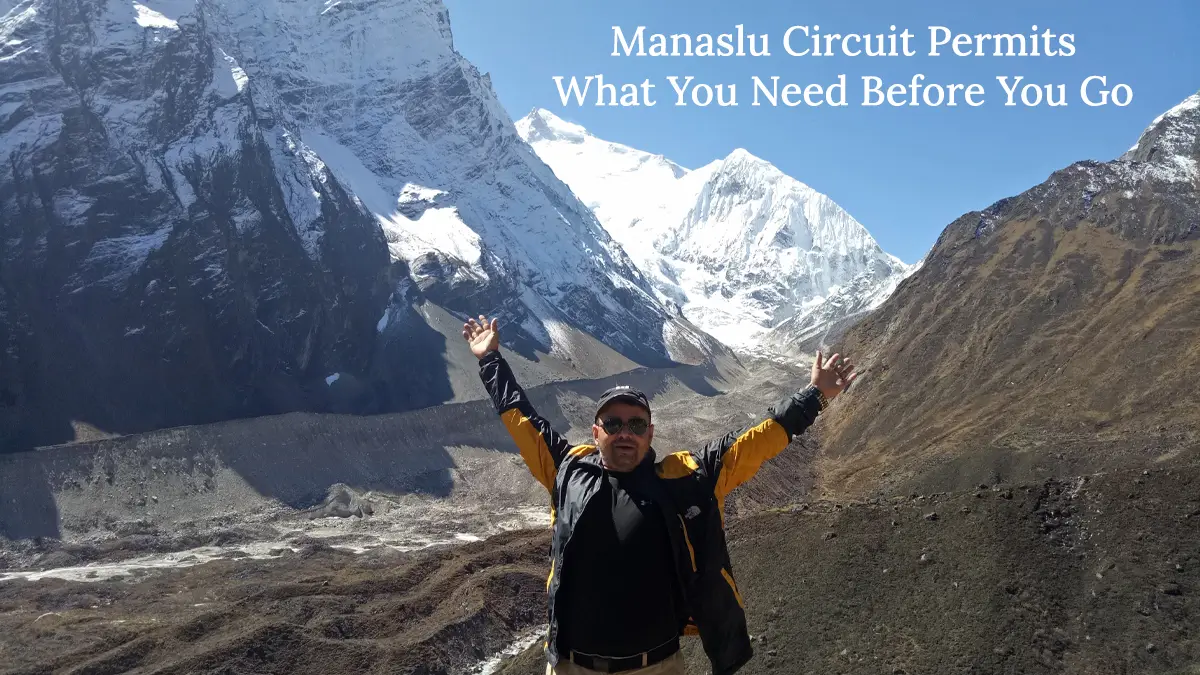
The Manaslu region is a restricted area. Permits are needed for trekking. The rules and regulations updated in 2025 are applicable. Minor changes in fees for trekking permits for 2026.
Required Permits and Current Cost
Permit Type
September-November
December-August
Notes
Manaslu Restricted Area Permit
$100 (first 7 days) + $15/day after
$75 (first 7 days) + $10/day after
Must trek with registered guide
Manaslu Conservation Area Permit (MCAP)
NPR 3,000 (~$23)
NPR 3,000 (~$23)
Valid for entire trek
Annapurna Conservation Area Permit (ACAP)
NPR 3,000 (~$23)
NPR 3,000 (~$23)
Required after joining Annapurna Circuit
2026 Update: You can trek solo with a registered trekking agency and guide.
Getting Your Permits Efficiently
Permits must be organized via trekking agents in Nepal—no exception. This normally takes 1-2 days in Kathmandu. You will need to submit copies of your passport, photos, and your trekking itinerary. It is pointless to try to organize your permits yourself, as mistakes are often made in these situations.
Permits are checked at several points on the journey. Make sure that your documents are in waterproof pouches.
Latest 2026 Regulation Updates
Environmental conservation has become more important to Nepal's tourism officials. In 2026, protecting culture is becoming more important. The new norms state that all trash must be packed in portable bags, and all trekking groups must carry non-biodegradable trash. Some teahouses have adopted a system of separating trash, but the lack of infrastructure in the remote regions remains a problem.
The government has also made stricter regulations regarding guide certifications, particularly when it comes to restricted area treks. Make sure that your guide has up-to-date certifications from the Nepal Mountaineering Association, and it is also a must that he or she has training in wilderness first aid.
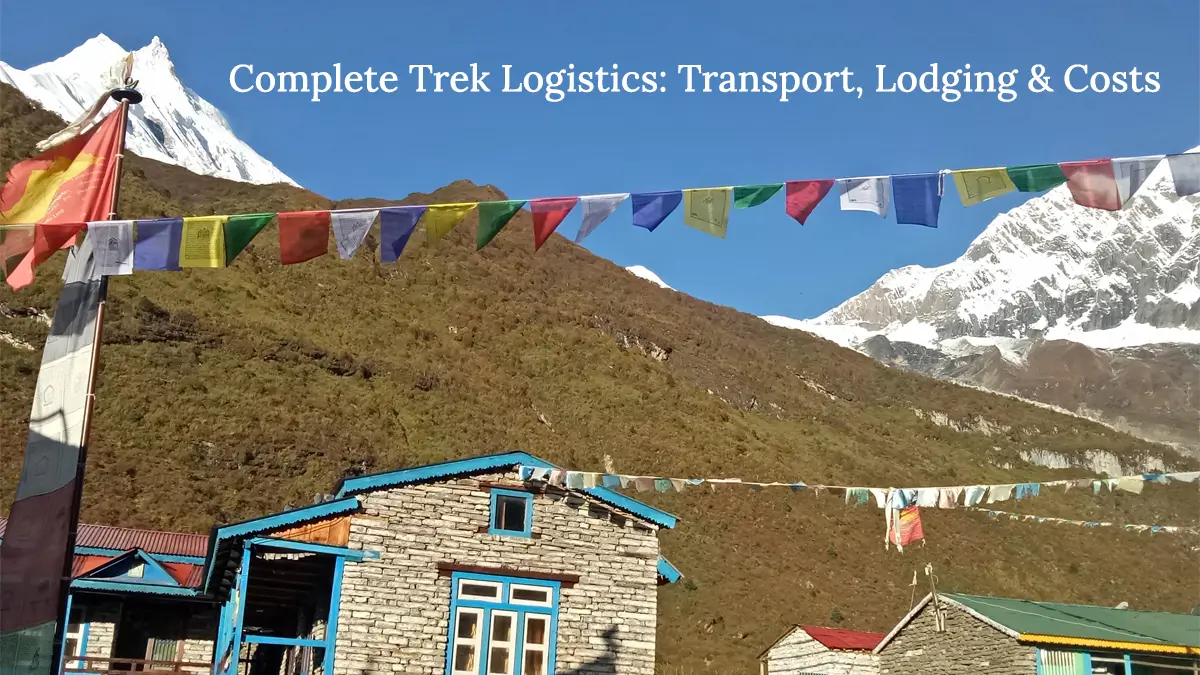
Manaslu Trek Logistics
Complete Logistics: Transportation, Accommodation, and Budgeting
Access to the Manaslu Circuit Trailhead
From Kathmandu to Machha Khola: The highway leads to Arughat along the Prithvi Highway, and then a rough mountain road leads to Machha Khola. Public transport leaves Machha Pokhari bus station in Kathmandu daily at 7 AM, costing $5-$8. This will take 10 to 12 hours with very uncomfortable seating.
However, we highly recommend private transportation by jeep. This normally costs $180-$200 for the jeep and takes around 9-10 hours. There are also agencies that provide helicopter services to Samagaon, and this can skip the whole trekking experience by six days. This service normally costs $3,000-$4,000 per helicopter and can carry five persons.
Upon request, we can provide private helicopter services to Samagaon.
Returning from Tilje/Dharapani:
Local transport, which is the buses, operate daily from Besisahar to Kathmandu, and the journey takes around 8 to 9 hours, with the fare being $8 to $10. Jeeps can take you there in a much shorter time, with the fare being $15 to $20 per person.
Most trekking groups use private vehicle services organized through agencies due to the need for flexibility that comes after a long day of trekking.
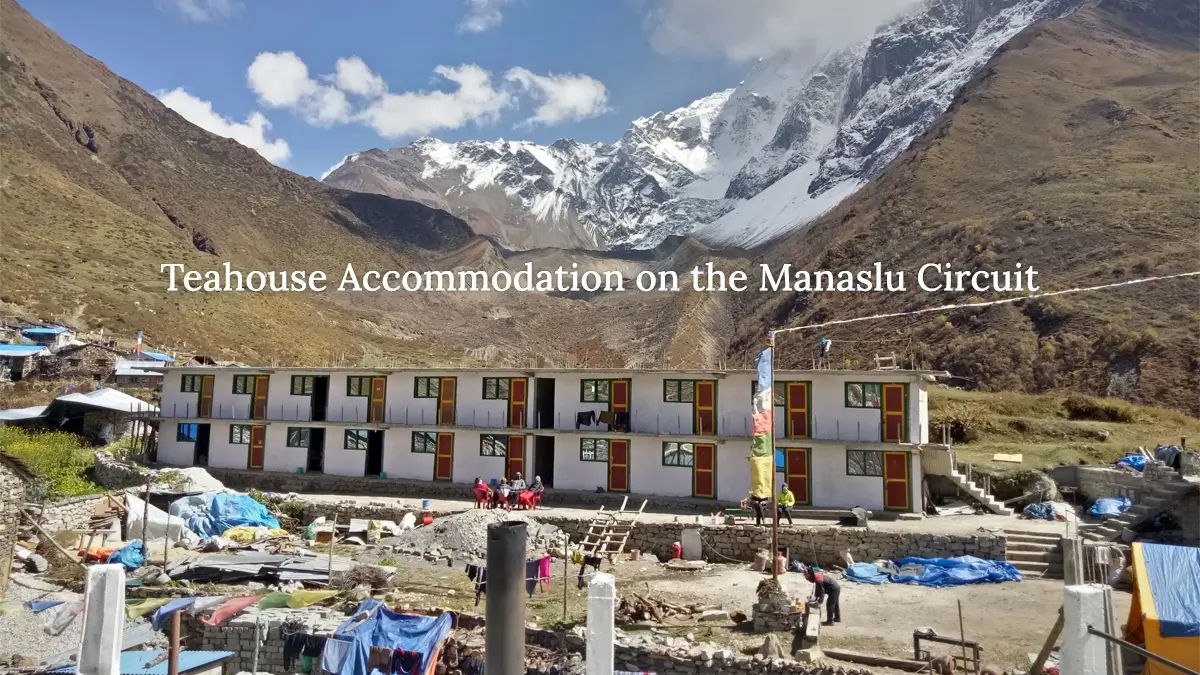
Teahouse accommodations on the Manaslu Trail
Accommodation: Realistic Expectations Along the Trail
The teahouse treks on the Manaslu Circuit are relatively more basic. These must be compared carefully with the routes to Everest and Annapurna.
Typical rooms are basic and come with twin beds and shared bathrooms. There are hot showers for $3 to $5, and solar showers may not be working during clouded weather.
Lower Valley (Machha Khola to Namrung): Prices: $3-5/night
Decent facilities available, including a few with toilets, and good common areas with wood-burning stoves to heat the room at night.
The middle section (from Lho to Samdo): the guest houses are simpler, with thinner walls and colder rooms. You can expect to pay $5 to $8 a night. There is little electricity, and charging your electronic devices is possible only at set times.
High Camps (Dharamsala): very basic stone huts. Sleeping is dormitory style, with prices around $10-15 per person because of limited space.
It is not possible to book in advance in most of these teahouses, as they do not have access to the internet. Your guide will call them to book rooms. This is possible in larger villages, as there are phones. During peak season (October), capacity becomes scarce, and Samagaon and Samdo get filled.
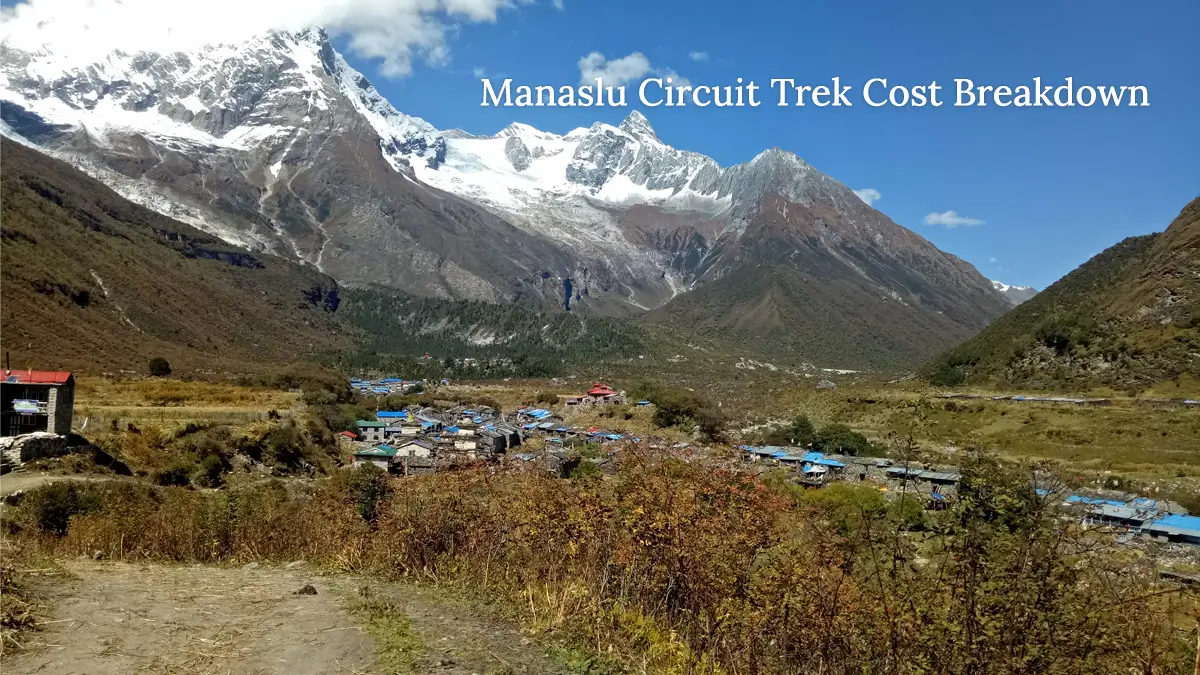
Realistic Budget Breakdown for 2026
Expense Category
Budget Range
Mid-Range
Comfort
Permits & Fees
$146-180
$146-180
$146-180
Guide (per day)
$20-30
$25-35
$35-50
Porter (per day)
—
$20-25
$25-30
Accommodation
$5-8/night
$5-8/night
$10-15/night
Meals (3/day)
$25-30/day
$30-40/day
$40-50/day
Hot showers
$3-5 each
$3-5 each
$3-5 each
Device charging
$2-3/device
$2-3/device
$2-3/device
Tips
10-15% wages
10-15% wages
15-20% wages
14-Day Total
$850-1,100
$1,300-1,650
$1,850-2,300
These prices do not include accommodation in Kathmandu or international flights, nor does travel insurance. The prices of eating out vary with elevation. A meal of dal bhat, typically $8-$10 in Dharamsala, costs $3-$4 in Machha Khola. We always advise budgeting $200-$300 more, as delays due to weather or other emergencies are always a possibility. There's comfort in knowing that one has a safety net. One should not skimp on budgets when it comes to mountain treks.
Packing for the Manaslu Circuit Trek
The Essential Packing List by Season
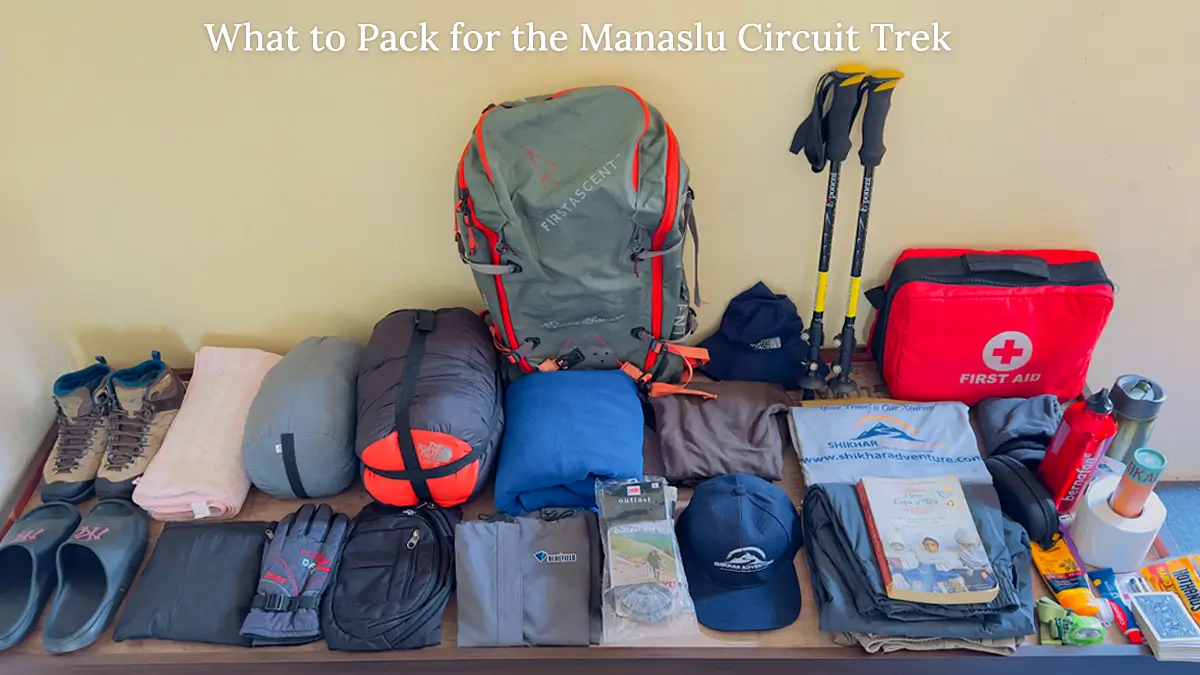
Spring/Autumn Core Gear:
Sleeping bag rated to at least -15°C (teahouse blankets won't be enough)
Four-season trekking boots with ankle support, well broken in
Trekking poles for descent stability and crossing streams
Down-filled parka rated -15°C or colder
Waterproof & Windproof Shell Jacket & Pants
Base layers (3 sets), Fleece jacket for mid-layer, Thermal underwear
Warm hat, sun hat, buff/neck gaiter, liner gloves, insulated gloves
Quality sunglasses with UV400 protection (Category 3-4 lenses)
Headlamp and extra batteries (the batteries drain quickly in cold weather)
Bottled water (1-2 liter) and water purification tablets or Steripen
First-aid kit with altitude sickness drugs (Diamox)
High SPF sunscreen and lip balm with protection from the sun's ultraviolet rays
Winter Additional Items:
Warmer sleeping bag (-20°C)
Insulated or down trousers for high camps and pass days
Warmer gloves with waterproof outer shell
Face mask or balaclava to protect against the wind when climbing to higher elevations
Hand warmers and toe warmers for pass-crossing days
Photography Equipment Recommendations:
Pack spare batteries because the cold weather drains them quickly and can shorten battery life by 50 to 70 percent.
A polarization filter increases the contrast in both snow and sky and is therefore extremely useful in mountainous terrain photography.
In the case of landscapes, wide-angle lenses (16-35mm) are preferred, and telephoto lenses (70-200mm)
In between shots, keep your cameras inside your jacket to avoid condensation when you move from a cold location to a warmer one.
The best light is during "golden hour," which is approximately 6-7 AM and 4-5 PM.
Money and Communication on the Trail
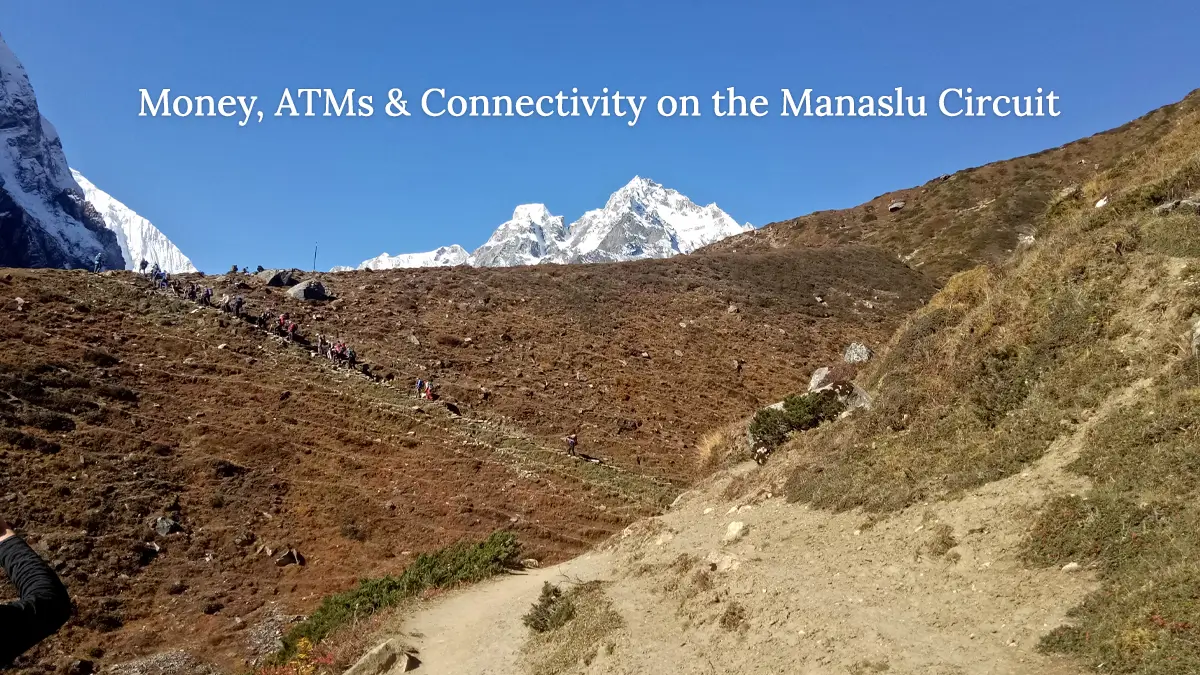
ATMs are available only in Kathmandu and larger towns; they are not on the circuit.
Take sufficient Nepalese rupees with you in small denominations. Teahouses accept money in denominations of 100s or 500s.
Most teahouses do not accept credit cards, and the exchange rate deteriorates as one moves further into the countryside.
Network reception varies along the route, and the bigger villages of Samagaon and Samdo have Ncell reception. WiFi, if available, will cost between $3-5 a day, and it is slow and unreliable for uploading.
It is recommended that a local SIM card be purchased in Kathmandu for the purpose of emergency communication.
The satellite phones provide effective means of communication during emergencies at all times. However, calls are at a cost of $8-15 per minute. It is always a good idea for your guide to have one on hand for serious emergencies, such as evacuation organization, which necessitates immediate communication.
Safety, Preparation, and Altitude Acclimatization on the Manaslu Circuit
Understanding Altitude Sickness
Acute Mountain Sickness (AMS) occurs in between 20% and 30% of trekkers. It is not consistently associated with fitness levels or age. Headaches, nausea, dizziness, and exhaustion are common complaints, and sleep problems at high altitudes are very common.
HAPE and HACE are less common but more hazardous disorders that can kill you and require you to descend right away. The most important thing to do to avoid problems is to climb slowly and carefully, following the golden rule of altitude increase.
Practical guidelines: Do not climb more than 500 meters per day if you are above 3,000 meters. This is the reason for acclimatization days.
Learn to spot the signs:
If you have mild AMS symptoms, you can simply get better by resting, drinking a lot of water, and taking it easy.
Associated symptoms include confusion, loss of coordination, and marked dyspnea.
Productive cough with pink, frothy sputum: This requires urgent attention, and the only way to treat it is to descend immediately. Our guides carry a oximeter that they use to track oxygen levels. Low readings below 80% indicate poor acclimatization. In such a case, it is important to take immediate action that may include descending.
It is essential that each qualified guide has this necessary equipment, and interpreting the results accurately is vital.
Diamox (Acetazolamide): Usage and Considerations
Most trekkers take Diamox prophylactically 24 hours before embarking on the trek, especially if they have a substantial gain in altitude. The dosage is 125 mg taken twice a day, although some trekkers take 250 mg according to the advice of their physicians. This medicine promotes acclimatization by increasing the breathing rate and can significantly lower disturbances during sleep at high altitudes.
Adverse reactions include tingling sensations in the fingers and toes, frequent urination, and altered taste for carbonated liquids. It is always best to consult a physician before embarking on the trek. Diamox is contraindicated for those with sulfa allergies.
We have seen that Diamox has made a real-world difference for comfort, and it is effective at enhancing overall success rates when taken properly. It is not, however, a means of replacing acclimatization procedures; do not use it as a reason to go higher than advised.
Evacuation and Insurance Requirements in Cases of Emergency
The cost of evacuation from Manaslu Circuit through a helicopter can be between $3,000 and $6,000. The cost will be determined by the point of evacuation and prevailing weather conditions.
If it is bad weather, helicopters will not be able to fly beyond 5,000 meters. Additionally, strong winds may not allow flight above 5,000 meters.
Your travel insurance must include trekking above 5,000 meters, and evacuation fees must be covered. This is because your insurance may not cover trekking above 5,000 meters. It is important to read the fine print before purchasing your insurance.
It is also important to have your insurance and policy numbers in water-resistant pouches and to make sure that your guide has all your insurance details. When there is a serious emergency, approval for evacuation is normally given in hours, and this is after confirmation by your insurance.
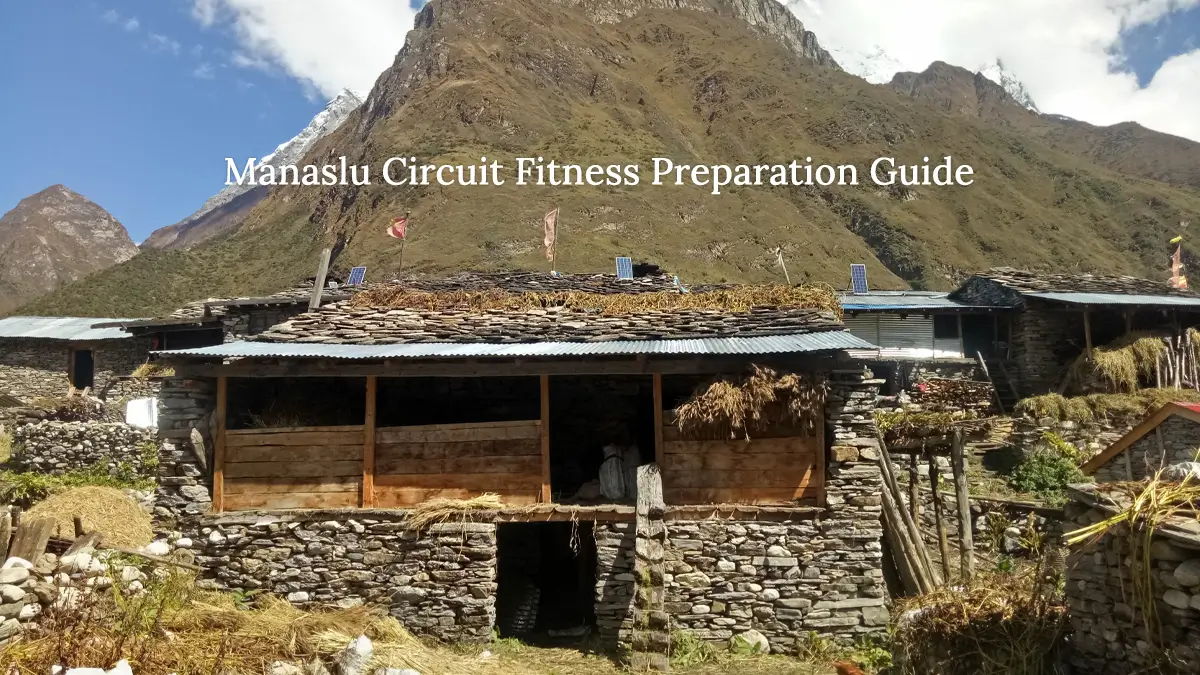
Physical Preparation Timeline (12-Week Program)
Weeks 1-4: Establishing a Foundation of Cardiovascular Fitness
The objective is to maintain consistent cardiovascular fitness with 3 to 4 training sessions a week, with a moderate level of effort. The activities will include 45 to 60 minutes of hiking, running, or cycling. Stair climbing is also a useful activity for strengthening the legs by utilizing the technique of progressive increase.
Weeks 5–8: Increased Intensity and Load
Practice carrying a weighted backpack (begin with 5-8kg) while hill walking and increase the load with your growing strength. Prolong your weekend treks to 2-3 hours to simulate an actual day's trekking. Include two strength training exercises per week with a focus on leg exercises while retaining endurance in your upper body and core.
Weeks 9–12: Trek Simulation and Gear Testing
Embark on a minimum of 3-4 long hikes of 4-6 hours with a full trek pack, with exactly the same weight that you will be carrying while trekking. This will help in testing your knee strength on varied terrain, which includes ups and downs. Test your equipment thoroughly, rather than while trekking.
More Training Tips:
Swimming and yoga are exercises that improve cardiovascular strength and at the same time promote flexibility and control over breathing.
Stair climbing with a heavy pack is a good way to simulate mountain climbing and is much more effective than hiking.
Psychological preparation is equally important to physical training. Train yourself to use positive self-talk during difficult training exercises.
Solo Trekkers vs. Guided Group Experiences
A guide is mandatory on the Manaslu Circuit trek, but the trekking groups tend to vary greatly depending on the trekking option you choose.
On private treks, you have complete flexibility, should you want it—that is, it is up to you to decide the pace you want to keep. Yet you will still meet other trekkers at the teahouse each evening, so you will get the benefit of company as it happens, rather than being part of a predetermined group dynamic.
Group treks, ranging from 8 to 12 participants, also mean camaraderie and splitting expenses. Having social support can be very helpful during more challenging days, but you are bound by the pace and time of the group, thereby limiting your adaptability. There could also be interpersonal conflicts, particularly during stressful times and when altitude sickness is involved.
For treks, small group sizes with approximately 4-6 people are just about right. You get the benefit of social support without having to deal with the hassle of managing large group logistics, and small group treks always seem to develop a strong, natural camaraderie.
Commonly Asked Questions About the Manaslu Circuit Trek
How does the Manaslu Circuit compare to the Everest Base Camp Trek in terms of difficulty?
Nevertheless, the Manaslu Trek is slightly more difficult. The infrastructure development and the 5,160-meter high pass add to this difficulty. Both treks require the same level of physical fitness, but Manaslu tends to be more remote and demanding. If you are embarking on your first high-altitude trek in Nepal, you might want to hire a guide.
Is a guide necessary for trekking in Manaslu in 2026?
Yes. Independent trekking is now permitted in 2026. It is mandatory for all trekkers on the Manaslu Circuit to have registered guides. This makes the remote regions much safer and helps the local economy. Solo trekkers must have a minimum of one certified guide to enable them to get the required permits.
What is the best time to do the Manaslu Circuit Trek in 2026?
The best time for a trek is October when there are clear skies and pleasant weather. March and April are also very good options when rhododendrons are in bloom and it is less crowded. If you are planning a trek in October, you should book your guides well in advance because their availability becomes very limited.
How much money in cash should I carry on a 14-day trekking adventure?
Budget around $400 to $700 in Nepalese rupees for food, extra charges for lodging, hot showers, charging facilities, and tips. It is a good idea to bring cash in small denominations, as change may not always be available at many of the teahouse lodges on the trek. Also, ATMs will not be available until you return to Kathmandu.
Is altitude sickness common on the Manaslu Circuit?
Yes. Approximately 20-30% of trekkers will develop some sort of symptom of altitude sickness during the trek. This risk can be dramatically lowered by proper acclimatization and gradual ascent. Never trek with altitude sickness—only going down will cure it.
What will happen in case I require an emergency evacuation while on the trek?
Helicopter evacuation is available from most trekking points, subject to the prevailing weather conditions. Your guide will facilitate the rescue operation with the rescue agencies as well as the insurance company. Before you leave Nepal, it is important to ensure that the insurance you have covers trekking above 5,000 meters as well as helicopter rescue services.
How does the Manaslu Circuit compare culturally with the Annapurna Circuit?
The Manaslu region offers a much more authentic experience of Tibetan Buddhist culture because there are very few trekkers. You will get a chance to explore a much higher level of traditional villages and very few commercialized places on your way. For most trekkers, experiencing the culture is one of the biggest highlights.
Your Manaslu Circuit Adventure Awaits
The Manaslu Circuit Trek offers what true trekkers are searching for: spectacular scenery, genuine cultural experiences, and a sense of personal achievement. This trek has the ability to change you for the better, with memories that will last a lifetime, including watching the sunrise over Larkya La Pass and spending evenings with Tibetan families.
Success is dependent on a realistic assessment of one's abilities, proper preparation, as well as a deep respect for the mountain and the altitude.
We are taking bookings for our 2026 spring season (March to May) and autumn season (September to November). We maintain a small group size and offer flexibility while employing expert guides who have done the circuit over 30 times.
Looking to begin planning a Manaslu Circuit Trek? Let us help you begin planning your trip today. We have itineraries available that we would be happy to share with you.