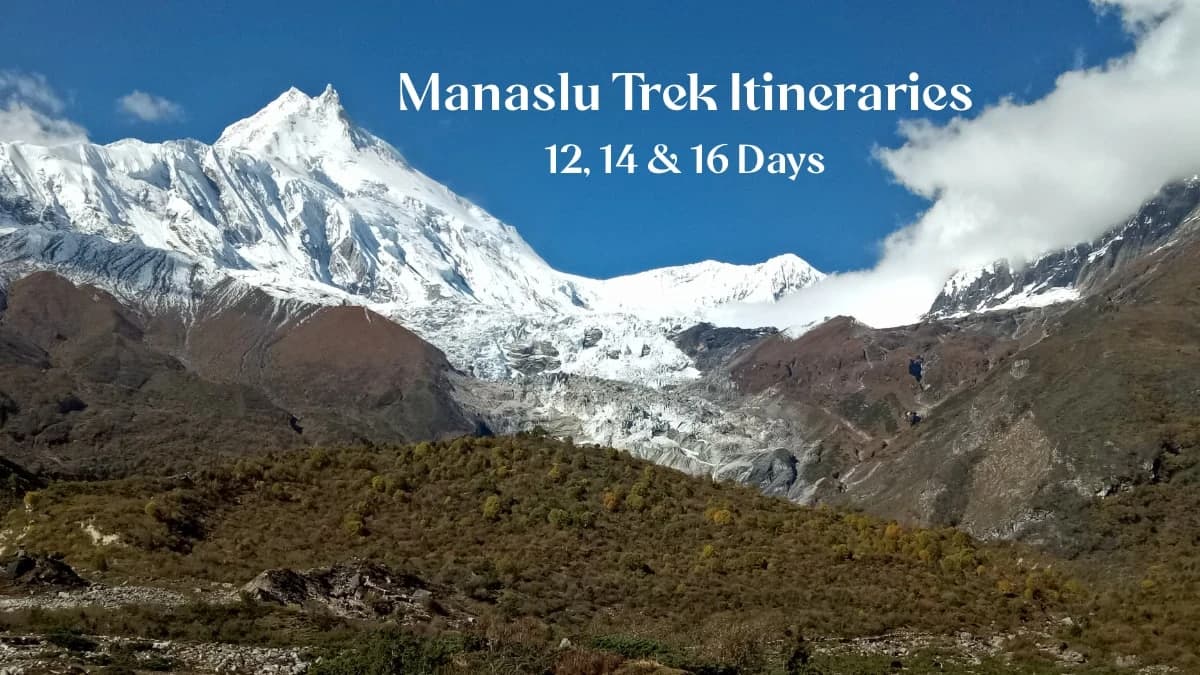
Planning the Manaslu Circuit in 2026? This complete guide covers all three itineraries: the 12-day fast route, the 14-day plan with Manaslu Base Camp acclimatization, and the 16-day Tsum Valley extension. Get day-by-day breakdowns, 2026 permit requirements, Larkya Pass crossing advice, and budget estimates from a senior guide with 20 years on the route.
Which Manaslu Circuit Itinerary Is Right for You?
Let me answer the three questions I get asked most before anything else. The 12-day Manaslu Circuit itinerary is the fastest safe route and suits fit trekkers with limited time.
The 14-day adds a Manaslu Base Camp side trip and an extra acclimatization day, which makes the high-altitude section considerably safer. The 16-day goes through the Tsum Valley and is a completely different experience that combines high-altitude trekking with one of Nepal's most culturally intact regions.
Is the Manaslu Circuit harder than Everest Base Camp? Yes, in several ways. The trail is more remote, the road to the trailhead is rougher, and the Larkya Pass crossing at 5,160 m is a longer and more exposed day than anything on the EBC route. The restricted area regulation means you cannot trek here without a licensed guide. That is not a drawback. It is exactly why Manaslu stays less crowded and more rewarding than most Nepal treks.
I have been guiding trekkers on the Manaslu Circuit since 2006. I have crossed Larkya Pass in every season, in every condition, with groups of all fitness levels. What follows is not a recycled itinerary list. It is the guide briefing I give every group the night before we leave Kathmandu.
Guide's Note: Last autumn I had a group of four from Canada who chose the 12-day plan thinking they could push through. They were strong hikers at home. By Day 9 at Dharamshala, two of them were showing early signs of acute mountain sickness. We held them there an extra half day before attempting the pass. They made it, but it was close. The 14-day plan exists for good physiological reasons. - Dambar Thapa, Senior Trek Leader
By the end of this guide you will know exactly which Manaslu Circuit itinerary matches your situation, what permits you need for 2026, what to expect on Larkya Pass day, and how to prepare your body for the hardest crossing in the region.
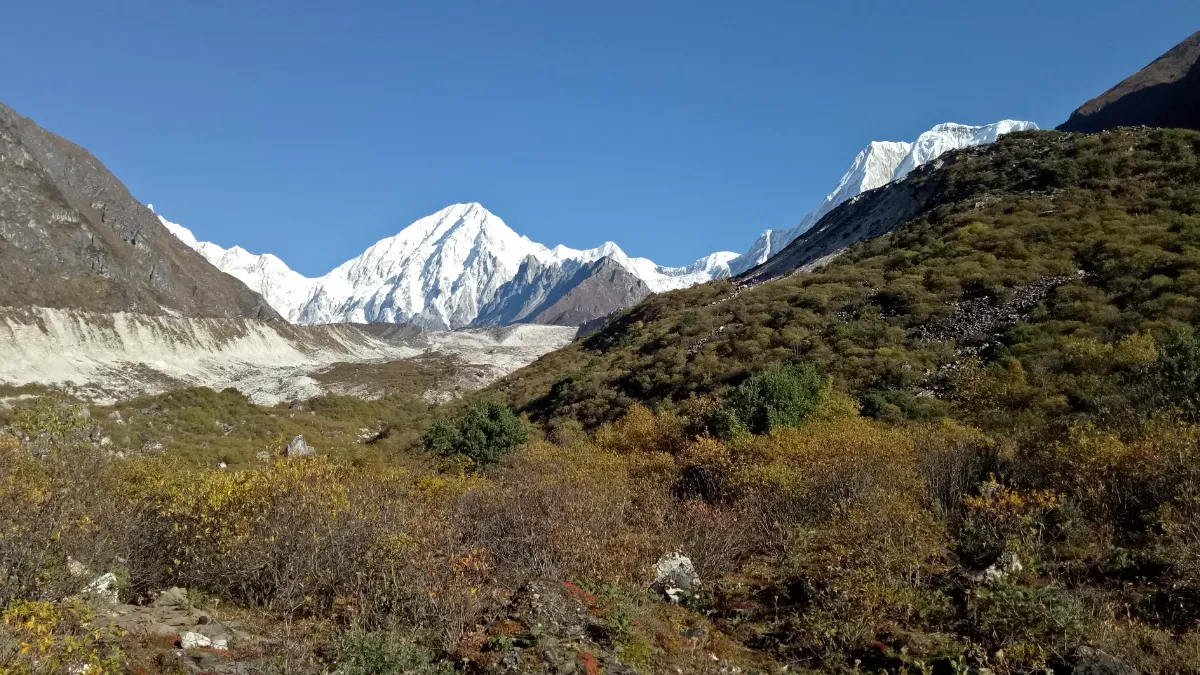
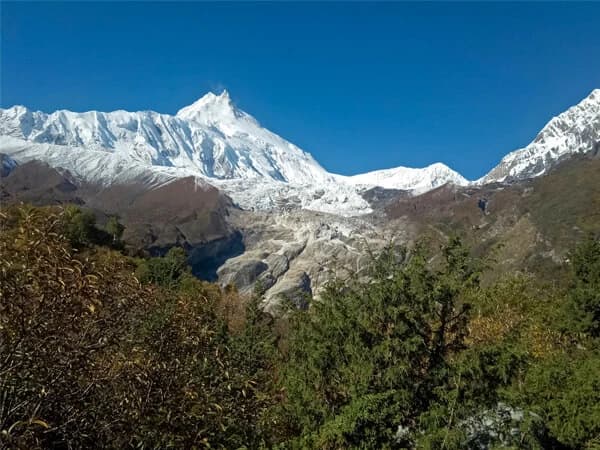
Mt. Manaslu (8,163m) - The eighth highest mountain in the world.
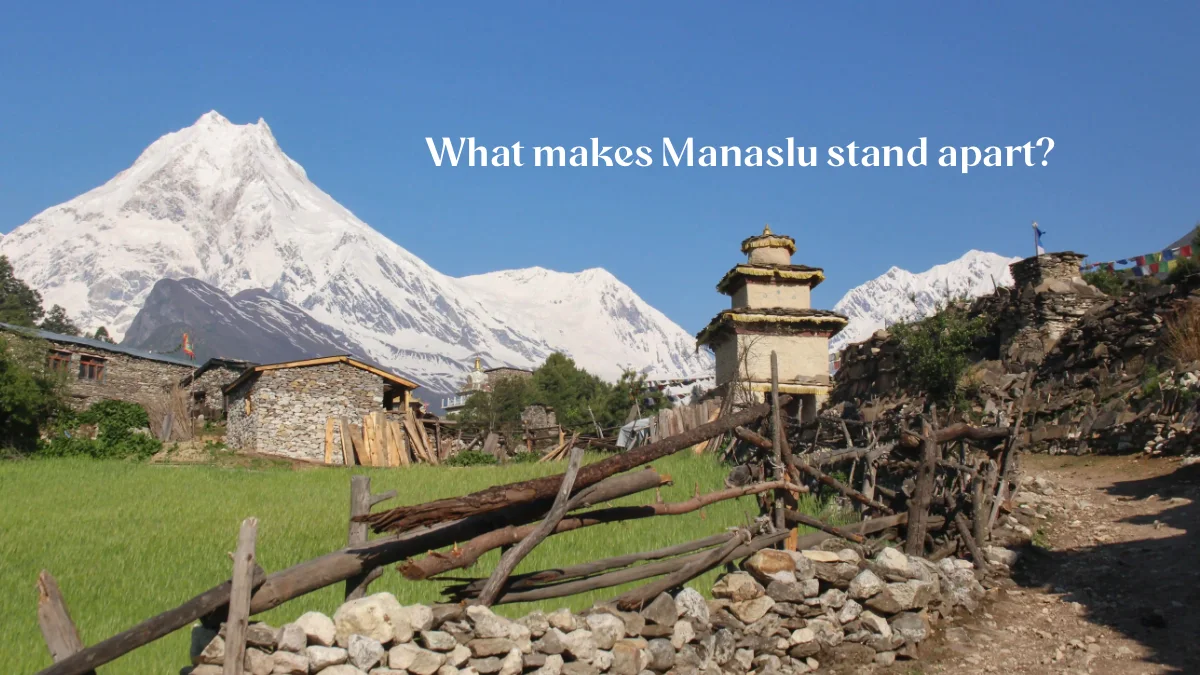
Why the Manaslu Circuit Stands Apart
Difficulty Rating
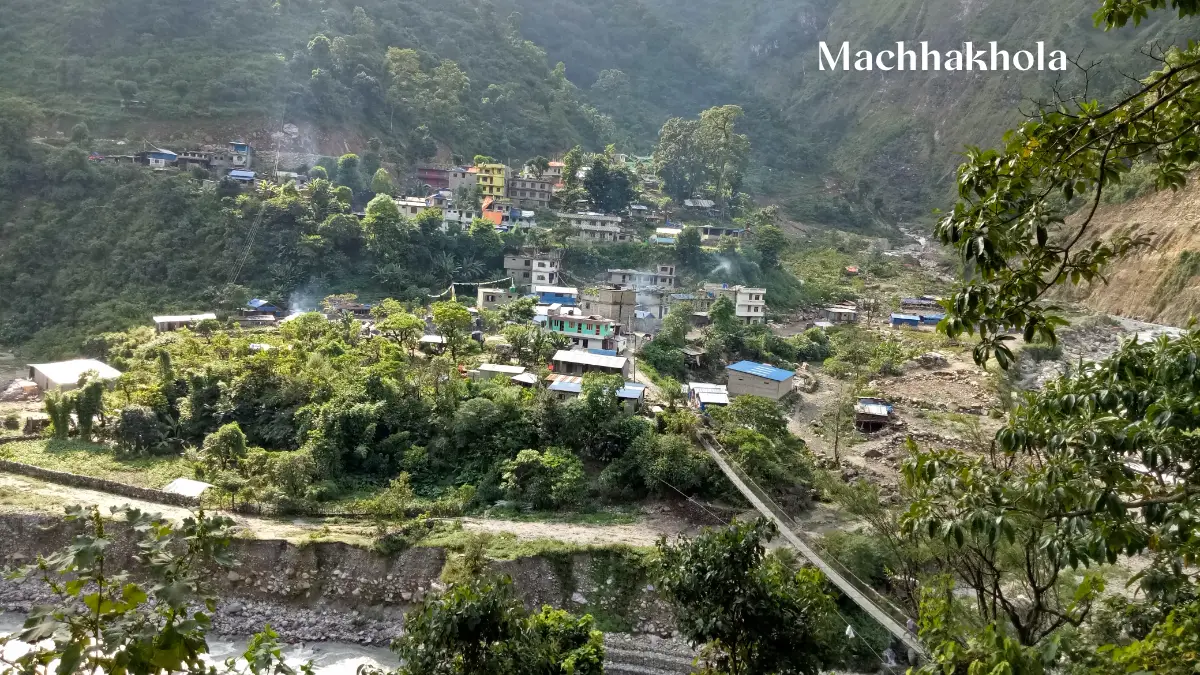
The Manaslu Circuit trek is rated strenuous. The daily elevation gains are manageable on most days, but three factors make this harder than it looks on paper. First, the road to Machha Khola is 9 to 10 hours of rough, unsealed driving before you take a single step. Second, the route climbs from 900 m to 5,160 m, meaning acclimatization is not optional. Third, the Larkya Pass crossing is a 10 to 11 hour push starting before dawn. No other day on any popular Nepal trek comes close to that in combined effort and exposure.
Previous high-altitude trekking experience above 4,000 m is strongly recommended. Trekkers with no altitude background should choose the 14-day or 16-day plan and consider adding an extra rest day at Samagaun if they have any doubt about their acclimatization response.
Best Seasons for 2026
Season
Months
Rating
Conditions
Spring
March to May
Excellent
Stable weather, rhododendron bloom below 3,500 m, good Larkya visibility. March and April are the sweet spot. May brings pre-monsoon clouds.
Autumn
September to November
Excellent
Crystal skies, sharp mountain views, stable Larkya conditions. October is the single best month. November brings early cold at Dharamshala and the pass.
Monsoon
June to August
Poor
Leeches, landslides, flooded trails, and reduced teahouse services at altitude. The route is open but not recommended.
Winter
December to February
Avoid
Larkya Pass frequently blocked by snow. Very cold nights above 3,500 m. Only for experienced winter mountaineers.
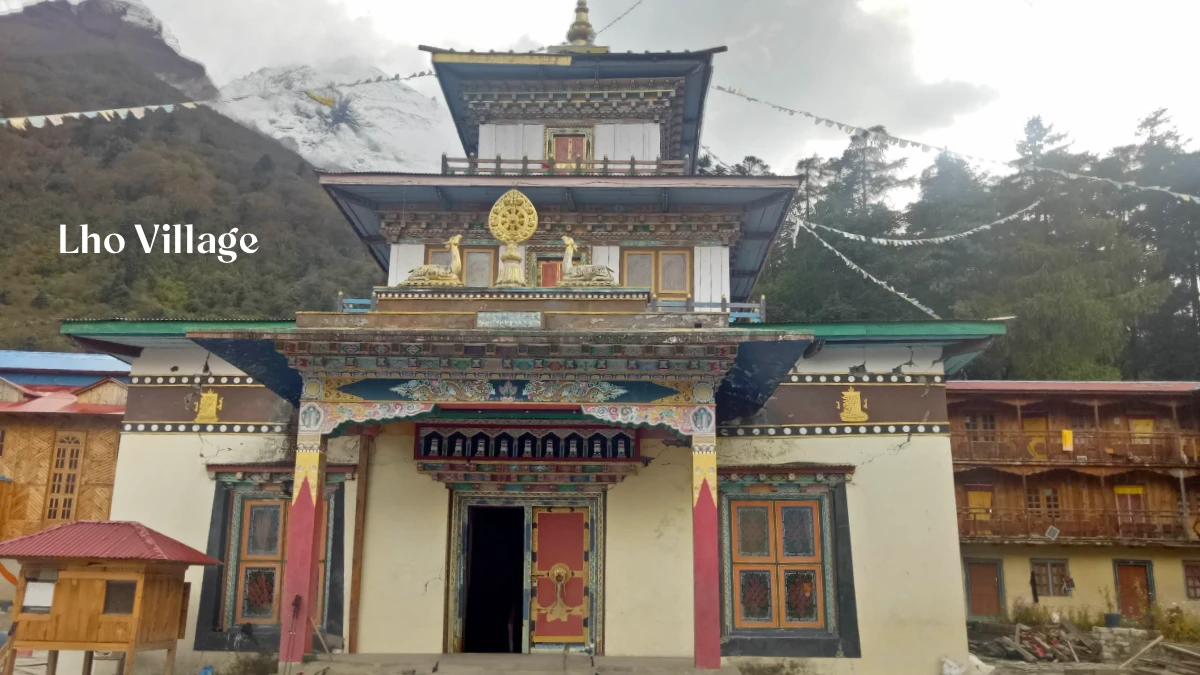
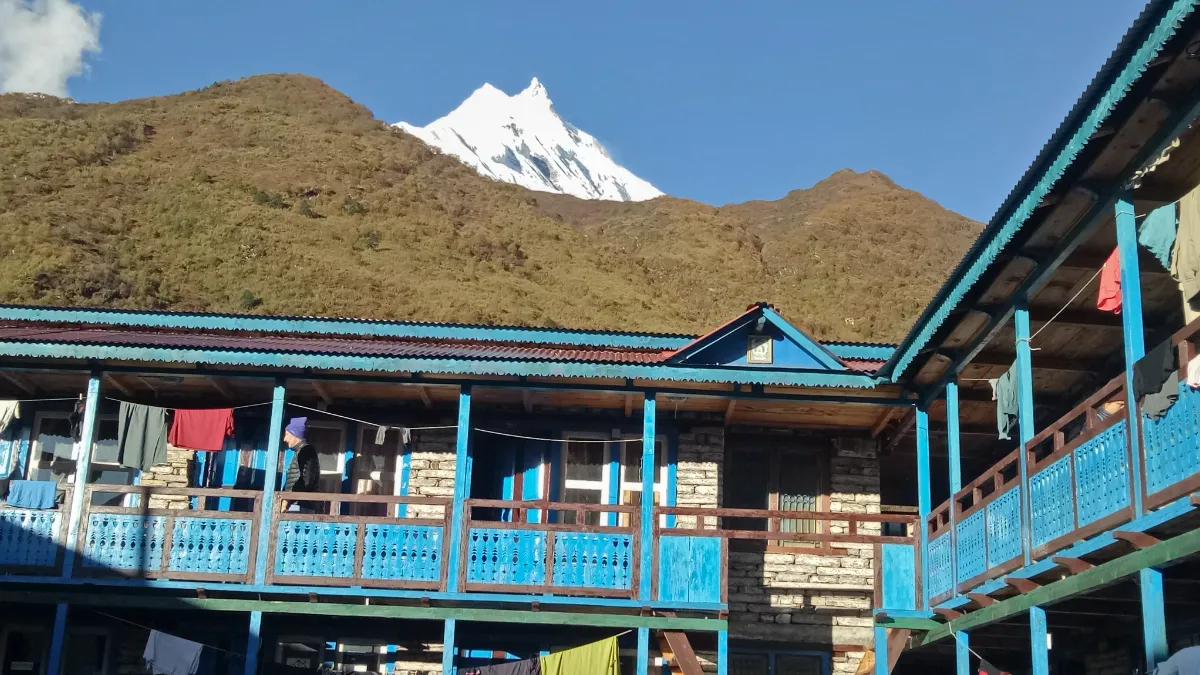
Lho Village (3,180m) with Ribung Gompa - Most photogenic village on the Manaslu Circuit beneath Mt. Manaslu.
What Makes This Route Unique
Restricted area access: The Manaslu Conservation Area is a restricted zone. You must trek with a licensed guide and a minimum group of two people. This regulation keeps the trail quiet and the culture intact.
Mt. Manaslu views: At 8,163 m, Manaslu is the eighth highest mountain in the world. You walk beneath its south face for three consecutive days around Samagaun.
Tibetan Buddhist culture: The villages of Lho, Samagaun, and Samdo are ethnically Tibetan. The gompas, mani walls, and local festivals here are unlike anything on the Annapurna or EBC circuits.
Low crowd levels: The Manaslu Circuit sees roughly one-tenth of the foot traffic of the Annapurna Circuit. In October you may share a teahouse with a handful of other groups at most.
Tsum Valley (16-day only): The hidden valley north of Jagat is one of the most culturally preserved areas in Nepal. Mu Gompa at 3,700 m is a living monastery with resident monks. This extension requires a separate permit and transforms the trek into a true expedition.
At a Glance: Comparing the Three Manaslu Circuit Itineraries
Feature
12 Days
14 Days
16 Days
Tsum Valley Included
No
No
Yes
Manaslu Base Camp
No
Yes (Day 8)
No
Acclimatization Days
1
2
2 plus Mu Gompa exposure
Larkya Pass Day
Day 10
Day 11
Day 14
Exit Point
Tilje to Kathmandu
Chamje to Besisahar to Kathmandu
Tilje to Kathmandu
Extra Permits
RAP + MCAP + ACAP
RAP + MCAP + ACAP
RAP + MCAP + ACAP + Tsum Valley RAP
Relative Difficulty
Hard
Hard+
Hard+ (more total distance)
Best For
Fit, time-limited trekkers with prior altitude experience
Trekkers wanting safety margin and Base Camp experience
Culture-focused trekkers who want Tsum Valley as core part of the trip
Machha Khola (900m) - Official starting point of the Manaslu Circuit trek after 9-10 hours drive from Kathmandu.
12-Day Manaslu Circuit Itinerary
The 12-day plan is the minimum safe itinerary for this route. It suits trekkers with strong cardiovascular fitness, prior experience above 4,000 m, and genuine time constraints. There is no buffer for a bad weather day or a slow acclimatization response. Choose this plan with clear eyes about what you are committing to.
Day
Route
Elevation
Duration
Notes
Day 01
Kathmandu to Machha Khola
900 m
9/10 hrs drive
Rough road through river gorges. Bring motion sickness tablets if needed.
Day 02
Machha Khola to Jagat
1,370 m
6/7 hrs trek
First permit checkpoint at Jagat. Trail crosses multiple suspension bridges.
Day 03
Jagat to Deng
1,860 m
6/7 hrs trek
Gorge narrows. Multiple river crossings. Trail becomes noticeably quieter.
Day 04
Deng to Namrung
2,630 m
7/8 hrs trek
Longest climbing day in the lower valley. Pace yourself. First clear views of high peaks.
Day 05
Namrung to Lho Village
3,180 m
6/7 hrs trek
Ribung Gompa above the village with Mt. Manaslu directly behind. Best light before 3 PM.
Day 06
Lho to Samagaun
3,520 m
5/6 hrs trek
Last large village before the high route. Stock up on supplies. Cold nights from here.
Day 07
Acclimatization: Birendra Lake
3,691 m
3/4 hrs return
KEY DAY. Climb high, sleep low. Walk to 3,691 m and return to Samagaun. Critical for pass preparation.
Day 08
Samagaun to Samdo
3,875 m
3/4 hrs trek
Short day. Arrive early, rest, hydrate. First night above 3,800 m.
Day 09
Samdo to Dharamshala
4,460 m
3/4 hrs trek
Rest. Eat well. Sleep as early as possible. 3 AM wake-up tomorrow.
Day 10
Dharamshala over Larkya Pass to Bhimthang
5,160 m pass / 3,720 m sleep
10/11 hrs trek
CRUX DAY. Pre-dawn start by headlamp. 700 m ascent, then 1,440 m descent. Trekking poles essential.
Day 11
Bhimthang to Goa
2,515 m
6/7 hrs trek
Long descent through rhododendron forest. Take it slow, protect your knees.
Day 12
Goa to Tilje, drive to Kathmandu
2,300 m
1 hr trek + 8/9 hrs drive
Book return jeep in advance through your agency.
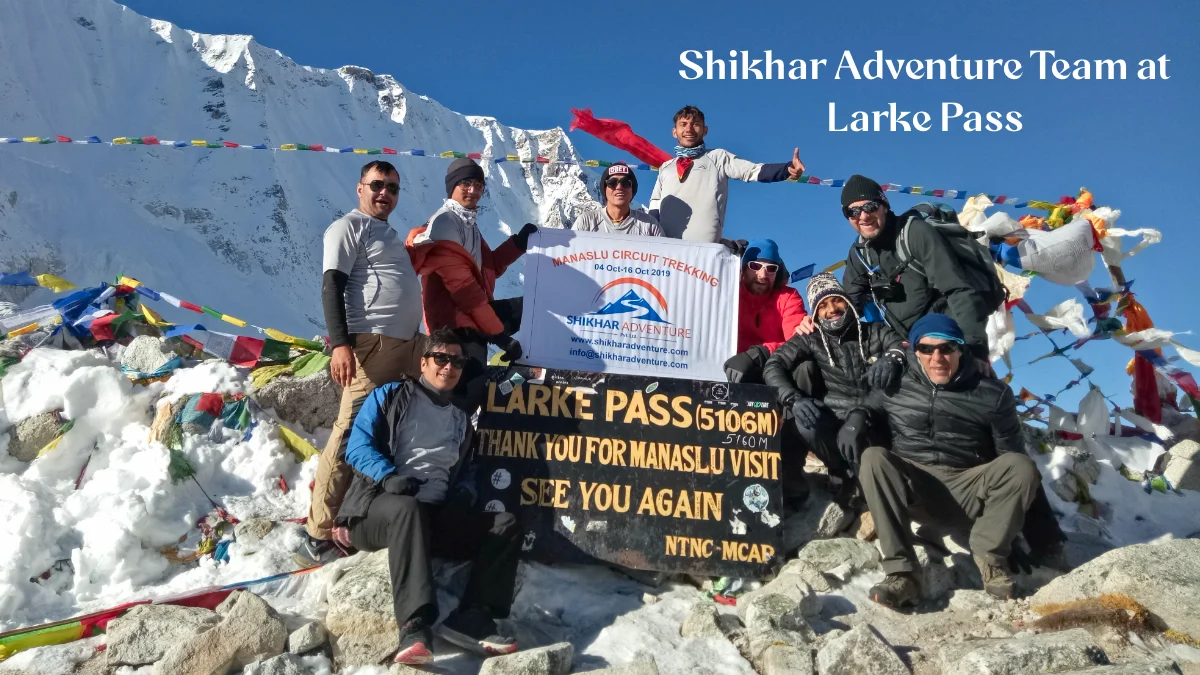
Guided group crossing Larkya Pass - Licensed guides are mandatory for the Manaslu Circuit restricted area.
14-Day Manaslu Circuit Itinerary
The 14-day plan is the most recommended option. The extra two days at Samagaun give your body significantly more time to adjust before Larkya Pass. Day 8 adds a side trip to Manaslu Base Camp at 4,800 m, which is both the physiological and emotional highlight of this itinerary. Standing beneath the south face of the eighth highest mountain in the world is unlike any other experience on a Himalayan trek.
Day
Route
Elevation
Duration
Notes
Day 01
Kathmandu to Machha Khola
900 m
9/10 hrs drive
Same opening drive as 12-day. Rough roads, river gorges.
Day 02
Machha Khola to Jagat
1,370 m
6/7 hrs trek
First permit checkpoint. Trail follows Budi Gandaki river north.
Day 03
Jagat to Deng
1,860 m
6/7 hrs trek
Gorge narrows. Multiple river crossings.
Day 04
Deng to Namrung
2,630 m
7/8 hrs trek
Longest climbing day in the lower valley. Pace carefully.
Day 05
Namrung to Lho Village
3,180 m
6/7 hrs trek
Most photogenic village on the circuit. Ribung Gompa photo opportunity.
Day 06
Lho to Samagaun
3,520 m
5/6 hrs trek
Main hub of the upper valley. Last chance to stock up on supplies.
Day 07
Acclimatization: Birendra Lake
3,691 m
3/4 hrs return
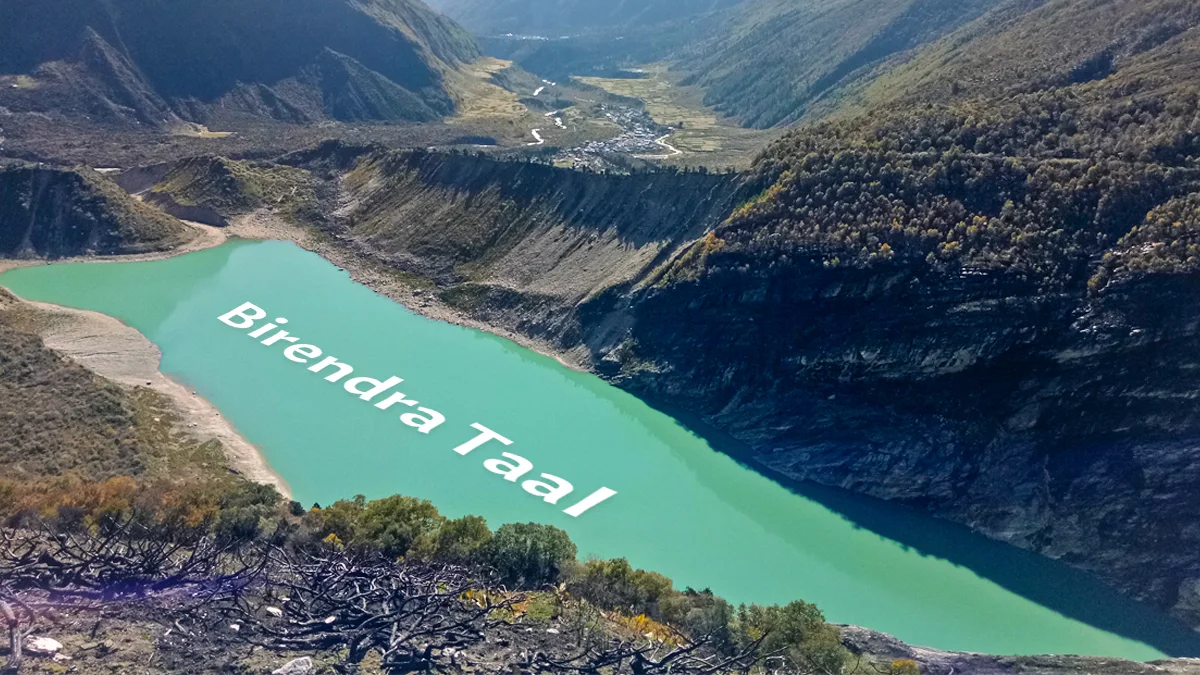
KEY DAY. Glacial lake above Samagaun. Climb high, sleep low. Essential, not optional.
Day 08
Samagaun to Manaslu Base Camp and back
4,800 m
7/8 hrs total
KEY DIFFERENTIATOR for 14-day plan. Glacial amphitheater below Manaslu's south face. Best acclimatization tool on any Manaslu itinerary.
Day 09
Samagaun to Samdo
3,875 m
3/4 hrs trek
Short day. Rest and hydrate. Body now pre-acclimatized to 4,800 m.
Day 10
Samdo to Dharamshala
4,460 m
3/4 hrs trek
Rest. Eat. Sleep early. 3 AM start tomorrow.
Day 11
Dharamshala over Larkya Pass to Bhimthang
5,160 m pass / 3,720 m sleep
10/11 hrs trek
CRUX DAY. Prior Base Camp acclimatization makes this crossing meaningfully safer than on the 12-day plan.
Day 12
Bhimthang to Goa
2,515 m
6/7 hrs trek
Long descent. Use trekking poles. Enjoy thickening air.
Day 13
Goa to Chamje
1,430 m
5/6 hrs trek
Full descent day into the lower Marsyangdi valley.
Day 14
Chamje to Besisahar by jeep, drive to Kathmandu
Exit
8/9 hrs total
Smoother exit than the Tilje route. Better road network via Annapurna Circuit.
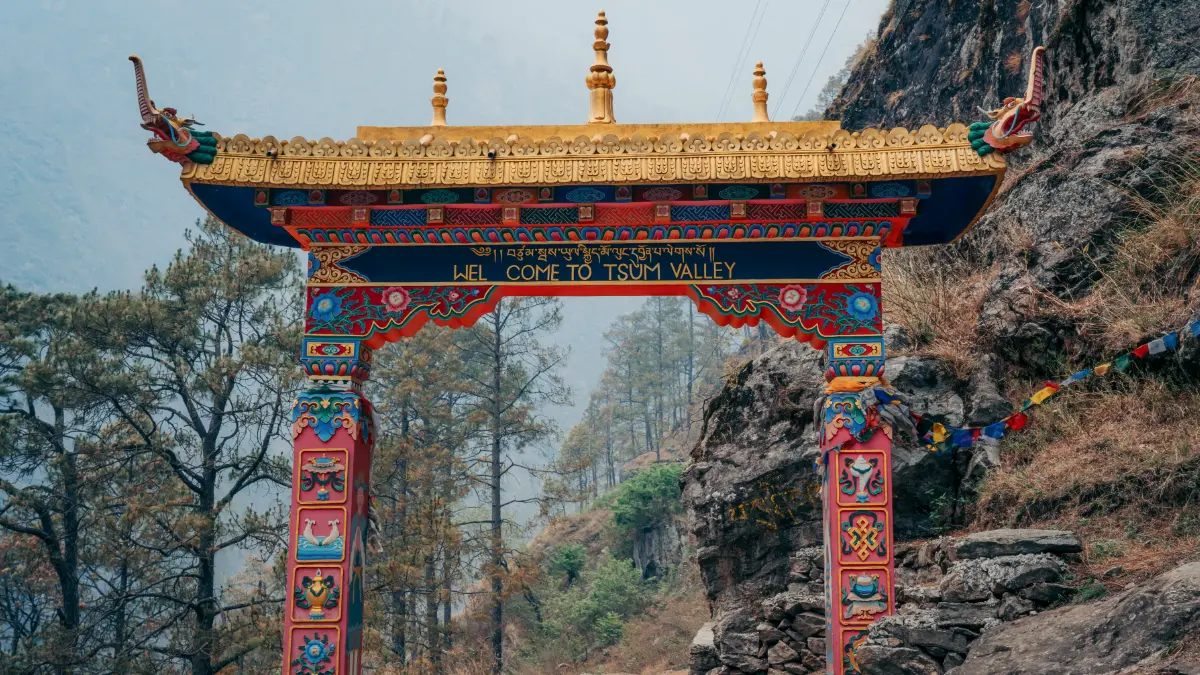
Tsum Valley entry gate at Jagat - Separate restricted area permit required for the 16-day Manaslu Circuit route.
The 16-day route is a different trek. The first seven days travel through the Tsum Valley, a hidden valley branching north from the main circuit at Jagat. Mu Gompa at 3,700 m is an active monastery that has been continuously occupied for centuries. The cultural depth of Tsum Valley combined with the physical challenge of Larkya Pass makes the 16-day the most complete Himalayan trekking experience in Nepal.
Important: This route requires an additional Tsum Valley Restricted Area Permit on top of the standard Manaslu permits. This is a separate document from the standard Manaslu RAP and must be arranged in Kathmandu before departure.
Note on Day 01: The Kathmandu to Machha Khola drive (9/10 hours) should be completed the day before Day 01 begins. Confirm this with your agency when booking, as this itinerary starts trekking from the Machha Khola overnight point.
Day
Route
Elevation
Duration
Notes
Day 01
Machha Khola to Jagat
1,370 m
6/7 hrs trek
TSUM VALLEY START. Branch north at Jagat toward Tsum. Very few trekkers beyond this point.
Day 02
Jagat to Lokpa
2,040 m
6/7 hrs trek
Leave main Manaslu Circuit trail and head into Tsum Valley via Siyar Khola river.
Day 03
Lokpa to Chhokangparo
3,010 m
6 hrs trek
Valley opens dramatically as you gain altitude. Entering the upper Tsum culture zone.
Day 04
Chhokangparo to Mu Gompa
3,700 m
6 hrs trek
CULTURAL HIGHLIGHT. Active monastery with permanent monk community. Butter lamps, thangka paintings, genuine silence. Spend real time here.
Day 05
Rest Day at Mu Gompa
3,700 m
Rest/acclimatize
Acclimatization rest. Walk the monastery circuit, visit the nearby nunnery, prepare for the days ahead.
Day 06
Mu Gompa to Chumling
2,386 m
7/8 hrs trek
Leave Tsum Valley and descend back toward the main Manaslu Circuit.
Day 07
Chumling to Deng
1,860 m
7/8 hrs trek
Rejoin the main Manaslu Circuit at Deng. From here, route follows same path as 12 and 14-day plans.
Day 08
Deng to Namrung
2,630 m
7/8 hrs trek
Longest climbing day in the lower valley. You know how to pace by now.
Day 09
Namrung to Lho
3,180 m
6/7 hrs trek
Ribung Gompa and first close views of Mt. Manaslu.
Day 10
Lho to Samagaun
3,520 m
5/6 hrs trek
Main hub. Stock up on supplies.
Day 11
Rest / Hike to Birendra Lake
3,691 m
3/4 hrs return
Your prior Mu Gompa altitude exposure means your acclimatization is already more advanced. Still do this hike.
Day 12
Samagaun to Samdo
3,875 m
3/4 hrs trek
Short day. Rest and hydrate.
Day 13
Samdo to Dharamsala
4,460 m
3/4 hrs trek
Sleep early. Everything from the first 13 days builds to tomorrow.
Day 14
Dharamsala over Larkya Pass to Bhimthang
5,160 m pass / 3,590 m sleep
10/11 hrs trek
CRUX DAY. Pre-dawn start by headlamp. Prior high-altitude Tsum Valley exposure gives 16-day trekkers a meaningful physiological advantage here.
Day 15
Bhimthang to Goa
2,515 m
6/7 hrs trek
Long descent. Take it slow.
Day 16
Goa to Tilje, drive to Kathmandu
2,300 m
1 hr trek + 8/9 hrs drive
Book return jeep in advance.
Birendra Lake (3,691m) - Key acclimatization day on the Manaslu Circuit. Climb high, sleep low.
Permits, Costs, and Logistics for 2026
Permits Required
The Manaslu Circuit is a restricted trekking area. You cannot enter without a licensed guide and a minimum group of two people. All permits must be arranged in Kathmandu before departure. Permits are not available at trailhead checkpoints.
Permit
Required For
Where to Obtain
Notes
Manaslu Restricted Area Permit (RAP)
All three itineraries
Nepal Tourism Board, Kathmandu
Mandatory licensed guide + minimum 2 trekkers. Priced per week of trekking.
Manaslu Conservation Area Permit (MCAP)
All three itineraries
Nepal Tourism Board or TAAN, Kathmandu
Standard conservation area entry permit.
Annapurna Conservation Area Permit (ACAP)
All three itineraries
Nepal Tourism Board or TAAN, Kathmandu
Required for the Bhimthang to exit section which enters the ACAP zone.
Tsum Valley Restricted Area Permit
16-day itinerary ONLY
Nepal Tourism Board, Kathmandu
SEPARATE permit from standard Manaslu RAP. Required for all Tsum Valley access. Must be arranged in advance. Do not confuse with the Manaslu RAP.
Important: Permit fees are subject to annual revision by the Government of Nepal. Confirm current 2026 fees directly with the Nepal Tourism Board or through your licensed trekking agency before booking.
Transportation
Kathmandu to Machha Khola (12-day and 14-day Day 01): 9 to 10 hours by jeep or shared vehicle on rough road. Arrange through your agency. A long, bumpy drive through narrow river gorges. Bring motion sickness tablets if needed.
Exit via Tilje (12-day and 16-day): Tilje to Kathmandu by jeep, approximately 8 to 9 hours. Book in advance through your agency.
Exit via Chamje (14-day): Jeep from Chamje to Besisahar, then onward to Kathmandu. The most comfortable exit option as it uses the better-maintained Annapurna Circuit road network.
Cash note: There are no ATMs after Arughat, the last town before the trailhead area. Carry sufficient Nepali Rupees in cash for the full duration of your trek. Your agency can advise the exact amount based on your chosen itinerary.
Approximate Budget Breakdown (2026)
Cost Item
Approximate Range (USD)
Notes
Permits: RAP + MCAP + ACAP (standard route)
$200 to $350
Depends on trek duration and current government fee schedule
Tsum Valley RAP (16-day only)
$40 to $80 extra
Separate permit, additional cost on top of standard permits
Licensed guide (per day)
$30 to $50
Mandatory. Experienced Manaslu guides cost more and are worth it.
Porter (per day, optional)
$20 to $30
Strongly recommended above 3,500 m
Teahouse accommodation (per night)
$5 to $15
Twin rooms. Basic but functional above Jagat.
Meals on trail (per day)
$20 to $35
Dal bhat, noodles, eggs, hot drinks. Prices are higher above 3,500 m.
Transportation (Kathmandu to trailhead and return)
$80 to $150
Jeep hire. Shared vehicles are cheaper.
Total estimated (excluding flights)
$1,200 to $2,200
Varies by itinerary, group size, and season.
Essential Packing List
The Manaslu Circuit has specific gear requirements driven by the Larkya Pass crossing and the pre-dawn cold at Dharamshala. This is not a standard teahouse trek packing list.
Layering System:
Down jacket, 600-fill minimum
Insulated mid-layer, fleece or synthetic
Waterproof shell jacket and pants
Merino wool base layers x 2
Warm gloves and liner gloves
Wool hat and balaclava
Essential Gear:
Trekking poles - mandatory for the Larkya Pass descent
Headlamp with spare batteries - 3 to 4 AM start on pass day
Sleeping bag liner
Water purification tablets or filter
Gaiters for snow on and near the pass
Microspikes if trekking in March or November
Health and Safety:
Altitude sickness medication - consult your doctor before departure
Basic first aid kit
Blister treatment and foot tape
Electrolyte sachets
Sunscreen SPF 50 and lip balm
Documents and Finance:
Passport and permit copies, minimum two sets
Travel insurance documents with helicopter evacuation cover
Sufficient cash in Nepali Rupees
Emergency contact card
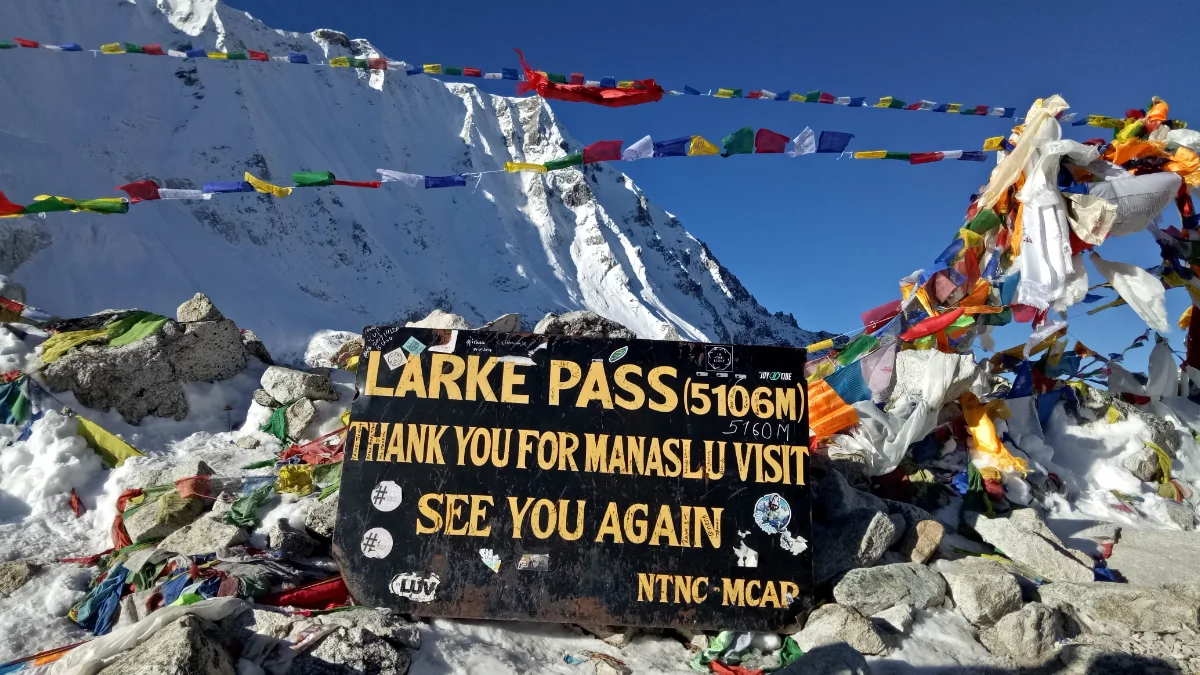
Larkya La Pass (5,160m) - The crux of the Manaslu Circuit. A 10-11 hour day crossing the highest point on the trek.
Larkya Pass, Acclimatization, and Staying Safe
Acclimatization Strategy by Itinerary
Plan
Acclimatization Days
Highest Point Before Pass
Risk Assessment
12-Day
1 (Birendra Lake, 3,691 m)
3,875 m at Samdo
Adequate for fit trekkers with prior high-altitude experience. No buffer for slow acclimatization responders.
14-Day
2 (Birendra Lake + Base Camp at 4,800 m)
4,800 m at Manaslu Base Camp
Recommended. The Base Camp day is the most effective acclimatization preparation available on any Manaslu itinerary.
16-Day
2 formal plus Mu Gompa exposure at 3,700 m
3,875 m at Samdo, after prior 3,700 m Tsum Valley exposure
Best acclimatization profile of the three plans due to early altitude exposure in Tsum Valley first week.
Acute Mountain Sickness: Know the Signs
AMS can affect anyone regardless of fitness level. Symptoms above 3,500 m to watch for include headache that does not respond to paracetamol, nausea or vomiting, loss of appetite, extreme fatigue, and difficulty sleeping. If two or more symptoms appear together, tell your guide immediately. The rule on the Manaslu Circuit is simple: never ascend with AMS symptoms. Descend if symptoms worsen overnight.
Do not compress the 12-day further. It is the minimum safe itinerary for this route. Some operators advertise 10 or 11-day Manaslu plans. These are not physiologically sound and are not recommended by experienced Manaslu guides.
Larkya Pass: The Crux
The Larkya Pass crossing at 5,160 m is the defining experience of every Manaslu Circuit itinerary. On all three plans it is a 10 to 11 hour day starting at 3 to 4 AM. Here is what to expect:
Pre-dawn ascent (3 AM to approximately 7 AM): You leave Dharamshala by headlamp. The trail is rocky and steep in the upper section. Temperature at the pass can be minus 10 to minus 20 Celsius on autumn mornings. Down jacket, gloves, and balaclava are not optional.
The pass itself: A wide, wind-exposed col at 5,160 m. On a clear day the views of Himlung (7,126 m), Cheo Himal (6,820 m), Kang Guru (6,981 m), and Annapurna II (7,937 m) are extraordinary. Do not linger too long in cold or wind.
The descent to Bhimthang: 1,440 m of descent over 4 to 5 hours. Hard on the knees. Trekking poles and a slow, deliberate pace are essential.
Weather windows: Your guide makes the call on whether conditions are safe to cross. If the pass is blocked by fresh snow or high winds, you wait at Dharamshala. Build at least one contingency day into your travel plans back to Kathmandu.
Fitness Preparation Timeline
3 months before departure: Build cardiovascular base. Run, cycle, or stair-climb 4 to 5 days per week. Target 45 to 60 minutes of sustained moderate-intensity effort per session.
6 weeks before departure: Add weighted pack hikes on hilly terrain. Start at 8 kg and work up to 12 to 14 kg. Aim for 3 to 4 hour hikes twice a week.
3 weeks before departure: Reduce intensity, maintain frequency. Sleep and nutrition become your priority. Address any blisters or foot issues before you leave home.
Emergency Protocols
Helicopter rescue: Available from Samagaun and Bhimthang with good weather. All trekkers must carry travel insurance that explicitly covers high-altitude helicopter rescue above 5,000 m. This is non-negotiable. Confirm your policy covers this before you leave home.
Medical facilities: There are no hospitals or clinics on the Manaslu Circuit above Arughat. Your guide carries a basic emergency kit. All serious medical situations require evacuation to Kathmandu.
Satellite communication: Your guide should carry a satellite communicator or Thuraya phone for emergency contact. Confirm this before departure.
Guide's Note: I have had to call for a helicopter three times on the Manaslu Circuit in twenty years. Each time the trekker recovered fully. Each time the evacuation cost between USD 3,000 and 5,000. Each time the trekker had insurance. The one group I guided without proper coverage had to arrange emergency funds by phone from Samagaun. It added enormous stress to an already difficult situation. - Dambar Thapa
Trekking the Manaslu Circuit - One of Nepal's most remote and rewarding Himalayan trekking routes.
Frequently Asked Questions
Which Manaslu Circuit itinerary is right for me: 12, 14, or 16 days?
Choose the 12-day if you have strong fitness, prior experience above 4,000 m, and a genuine time constraint. Choose the 14-day if you want the safest acclimatization profile and a Manaslu Base Camp experience. Choose the 16-day if the Tsum Valley and cultural immersion matter as much to you as the Larkya Pass crossing. Contact us to discuss which plan fits your specific situation.
Do I need a guide for the Manaslu Circuit trek?
Yes. The Manaslu Conservation Area is a restricted zone under Nepal government regulation. A licensed Nepali guide is mandatory for all trekkers on every Manaslu Circuit itinerary, including the 16-day Tsum Valley route. Solo trekking without a guide is not permitted and your permits will reflect this requirement.
Is the Manaslu Circuit harder than the Everest Base Camp trek?
In most respects, yes. The Larkya Pass crossing at 5,160 m is a longer, harder day than any single day on the EBC route. The trailhead drive is rougher. The trail infrastructure is less developed. The restricted area means fewer trekkers, which creates a more isolated experience with less readily available rescue infrastructure.
When is the best time to do the Manaslu Circuit in 2026?
October is the single best month for the Manaslu Circuit trek in 2026. Skies are clear, temperatures are stable, and Larkya Pass conditions are at their most reliable. March and April are the next best option for spring trekkers. Avoid June through August due to monsoon conditions including leeches, landslides, and flooded trails.
What permits do I need for the Manaslu Circuit in 2026?
All three itineraries require the Manaslu Restricted Area Permit (RAP), the Manaslu Conservation Area Permit (MCAP), and the Annapurna Conservation Area Permit (ACAP). The 16-day route additionally requires a Tsum Valley Restricted Area Permit, which is a completely separate document from the standard Manaslu RAP. All permits must be obtained in Kathmandu before you begin trekking.
Can I do the 16-day route without entering the Tsum Valley?
The 16-day itinerary is specifically designed around the Tsum Valley loop. If you want a longer Manaslu Circuit without Tsum Valley, the 14-day plan with added rest days at Samagaun or Samdo is the better structure. Talk to our team about customising your itinerary.
What happens if Larkya Pass is closed due to weather?
You wait at Dharamshala. Your guide will assess conditions each morning and make the call based on weather reports and direct observation. Most closures are temporary, lasting 12 to 36 hours after fresh snowfall. Build at least one extra day into your post-trek travel schedule before any international flights.
Samagaon (3,520m) - Main hub of the upper Manaslu Circuit. Last chance to stock up on supplies before the high route.
Final Word
The Manaslu Circuit is one of the finest trekking routes in the world. The 12-day plan is the efficient choice for experienced, time-constrained trekkers. The 14-day gives you the safest acclimatization and the Manaslu Base Camp experience. The 16-day gives you the Tsum Valley, and a depth of cultural experience that is genuinely rare in Himalayan trekking.
Larkya Pass changes the people who cross it. Not in a vague, inspirational way. In a specific, physical way. You climb to 5,160 m in the dark, cross a high-altitude col with the Himalayas on every horizon, and descend into Bhimthang knowing you did something genuinely hard. That feeling does not leave you.
Spring and autumn 2026 spots on the Manaslu Circuit fill by January. The restricted area regulation limits total trekker numbers, which means popular departure dates book out early. If you are planning a 2026 Manaslu trek, now is the time to confirm your itinerary.
Check availability for spring and autumn 2026 departures at: Manaslu Circuit Trek