High pass treks cross one or more mountain passes between valleys instead of walking up and back down the same trail. That means longer days, earlier starts and more time at altitude than on a standard trek, but also bigger views and the feeling of having covered real ground. They are best for trekkers who have already done at least one multi-day trek and want something harder.
We offer four high pass treks, from the Lauribina La in Langtang at 4,610 m to the Everest Three Passes, which crosses three passes above 5,300 m.
High Pass Treks Compared
| Trek | Days | Pass(es) | Highest point | Difficulty | Starts with |
|---|---|---|---|---|---|
| Langtang Circuit | 14 | Lauribina La (4,610 m) | 4,773 m (Kyanjin Ri) | Moderate to challenging | Drive to Syabrubesi |
| Gokyo Cho La Pass with EBC | 16 | Cho La (5,420 m) | 5,545 m (Kala Patthar) | Strenuous | Flight to Lukla |
| Annapurna Circuit with Tilicho Lake | 17 | Thorong La (5,416 m) | 5,416 m (Thorong La) | Strenuous | Drive to Jagat |
| Everest Three Passes | 18 | Kongma La (5,535 m), Cho La (5,420 m), Renjo La (5,360 m) | About 5,550 m (Kala Patthar) | Strenuous | Flight to Lukla |
What Is a Pass Day Really Like?
Pass days are the hardest days of any trek. You usually wake at 3 or 4 am, start walking by headtorch, and aim to reach the top by mid-morning before the wind picks up. The climb is slow because the air is thin, and the descent on the other side is often steep, loose and long. Most pass days take eight to nine hours.
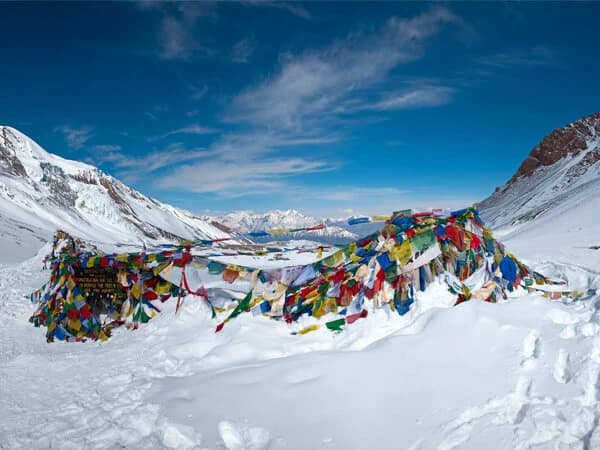
They are also the days people remember. Standing on a prayer-flag-covered pass at sunrise, with a new valley opening up below, is the reason most trekkers choose these routes. Our itineraries build in acclimatisation days before every pass, and our guides decide on the morning whether conditions are safe to cross.
Langtang Circuit: The Gentlest High Pass Trek
The Langtang Circuit Trek is the best introduction to pass trekking. It starts with a drive to Syabrubesi, follows the Langtang Valley up to Kyanjin Gompa, and includes a climb to Kyanjin Ri at 4,773 m for views of Langtang Lirung. You then cross over to the sacred Gosaikunda lakes at 4,380 m, a pilgrimage site for Hindus and Buddhists, before crossing the Lauribina La at 4,610 m.
The route ends by walking back toward Kathmandu through the Helambu region, finishing at Sundarijal on the edge of the valley. There are no flights involved, and the pass is lower than the others on this page, which makes it a good first high pass trek for fit trekkers.
Gokyo Cho La Pass Trek with EBC: Two Valleys, One Pass
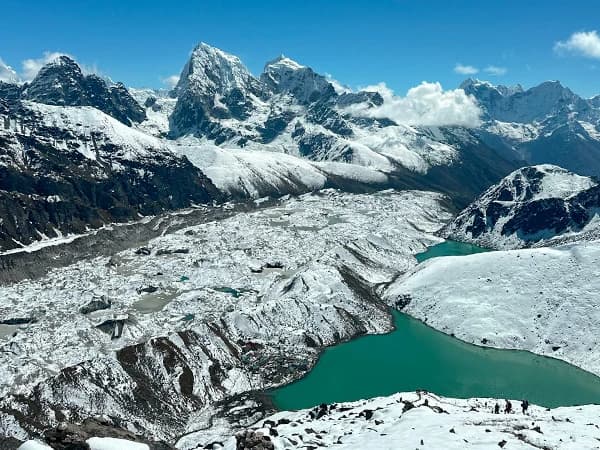
The Gokyo Cho La Pass Trek with EBC combines Everest Base Camp and the Gokyo Lakes in one trip. You follow the classic route to Everest Base Camp and climb Kala Patthar at 5,545 m, then cross the Cho La at 5,420 m into the Gokyo Valley and finish with a sunrise on Gokyo Ri.
The Cho La includes a short section over a glacier near the top, which can be icy, so your guide may ask you to wear microspikes. If you want Everest Base Camp but also want more than an out-and-back trek, this is the route we recommend.
Annapurna Circuit with Tilicho Lake: The Long Way Round
The Annapurna Circuit with Tilicho Lake Trek adds a side trip to Tilicho Lake at 4,919 m, often called one of the highest lakes in the world, before the main crossing of the Thorong La at 5,416 m.
The route starts with a drive to Jagat, climbs through the Marsyangdi Valley to Manang for acclimatisation, and then heads to Tilicho Base Camp. The trail to base camp crosses steep scree slopes, so it needs a steady pace and dry weather. After returning from the lake, you go over the Thorong La from High Camp and drop more than 1,600 m to the temple town of Muktinath. This is a long, varied trek with two very different highlights.
Everest Three Passes: The Hardest Trek in the Khumbu
The Everest Three Passes Trek is the most demanding trek we run in the Everest region. It crosses the Kongma La (5,535 m), Cho La (5,420 m) and Renjo La (5,360 m), and also visits Everest Base Camp, Kala Patthar and Gokyo Ri.
In 18 days you see almost every major viewpoint in the Khumbu, including Ama Dablam from Chhukung and the Gokyo Lakes with Everest behind them from the Renjo La. Most days involve six to nine hours of walking. We only recommend this trek to people with previous high-altitude experience.
Which High Pass Trek Is Right for You?
- Your first high pass trek: Langtang Circuit.
- You want Everest Base Camp plus a pass: Gokyo Cho La Pass Trek with EBC.
- You want lakes, desert landscapes and a famous pass: Annapurna Circuit with Tilicho Lake.
- You want the biggest challenge in the Everest region: Everest Three Passes.
- You'd rather not fly to Lukla: Langtang Circuit or Annapurna Circuit with Tilicho Lake.
How Fit Do You Need to Be?
You should be comfortable walking six to eight hours a day for several days in a row, including steep climbs and descents. For the three treks above 5,400 m, we strongly recommend having trekked above 4,500 m before. Start training two to three months ahead with long hikes, stair climbing and loaded walks, and practise walking downhill, which is often harder on pass days than going up.
When Is the Best Time for High Pass Treks?
Spring (March to May) and autumn (September to November) are the only reliable seasons for high pass treks. October and November bring the most stable weather and clearest views. In winter, heavy snow can close the Cho La, Kongma La, Renjo La and Thorong La for days at a time. During the monsoon, cloud and rain make the passes slippery and views unlikely.
Even in season, a fresh snowfall can delay a crossing. Our itineraries allow for this, and we never push a group over a pass in unsafe conditions.
Frequently Asked Questions
Which is the hardest high pass trek in Nepal?
Of the treks we offer, the Everest Three Passes is the hardest. It crosses three passes above 5,300 m in 18 days, with the Kongma La at 5,535 m the highest.
Is the Cho La Pass dangerous?
The Cho La isn't technical, but it includes a short glacier section and steep, rocky descents that can be icy early in the morning. With a guide, the right footwear and good weather, it is very manageable for experienced trekkers.
Do I need climbing equipment for these passes?
No ropes or climbing skills are needed. Microspikes are useful on the Cho La and on the Thorong La after fresh snow, and trekking poles help a lot on the descents.
Can a first-time trekker do a high pass trek?
The Langtang Circuit is possible for a fit first-timer. For the other three, we recommend completing a trek above 4,500 m first, such as Everest Base Camp or Annapurna Base Camp.
What happens if a pass is closed by snow?
Your guide will wait for conditions to improve or take an alternative route. That's why our itineraries include spare days, and why we recommend keeping your international flight flexible.
Plan Your High Pass Trek
Tell us which trek interests you, when you want to go and what trekking you've done before. We'll give you an honest view of whether it's the right fit, and handle permits, flights, teahouses and the timing around each pass. Contact us to start planning.