How Much Does the Annapurna Circuit Trek from Pokhara Cost?
The Annapurna Circuit Trek from Pokhara costs US$625 to US$745 per person with Shikhar Adventure, depending on group size. The price covers your guide, porter support for groups, nine teahouse nights, 28 meals on the trail, the ACAP permit and public transport both ways.
| Group size |
Price per person |
| 1 person |
US$745 |
| 2 to 4 people |
US$695 |
| 5 to 8 people |
US$645 |
| 9 to 12 people |
US$625 |
The price per person falls as the group grows because the guide's wages, meals and insurance are shared among more trekkers. A solo traveller pays the guide's full cost alone, and the solo price includes a guide but no porter.
What changes the price
- Private jeep upgrade: US$350 in total for a solo traveller, or US$150 per person for groups, covering both Pokhara to Dharapani and Muktinath to Pokhara.
- Extra days: an added acclimatisation day, a weather day at High Camp or a Tilicho Lake side trip.
- Porter for a solo traveller: USD 25 Per Day.
On-trail spending (approx., paid directly)
| Item |
Typical cost |
| Hot shower |
US$2-4 each |
| Device charging |
US$2-4 each |
| Wi-Fi |
US$2-4 each |
| Boiled or filtered water refill |
approx. US$2-3 per litre, higher near the pass |
| Extra drinks and snacks |
Rises with altitude |
| Tips for guide and porter |
Customary (10% of trip recommended) |
Carry all of this in Nepali rupees, since cards are rarely accepted on the trail.
How Difficult Is the Annapurna Circuit Trek from Pokhara?
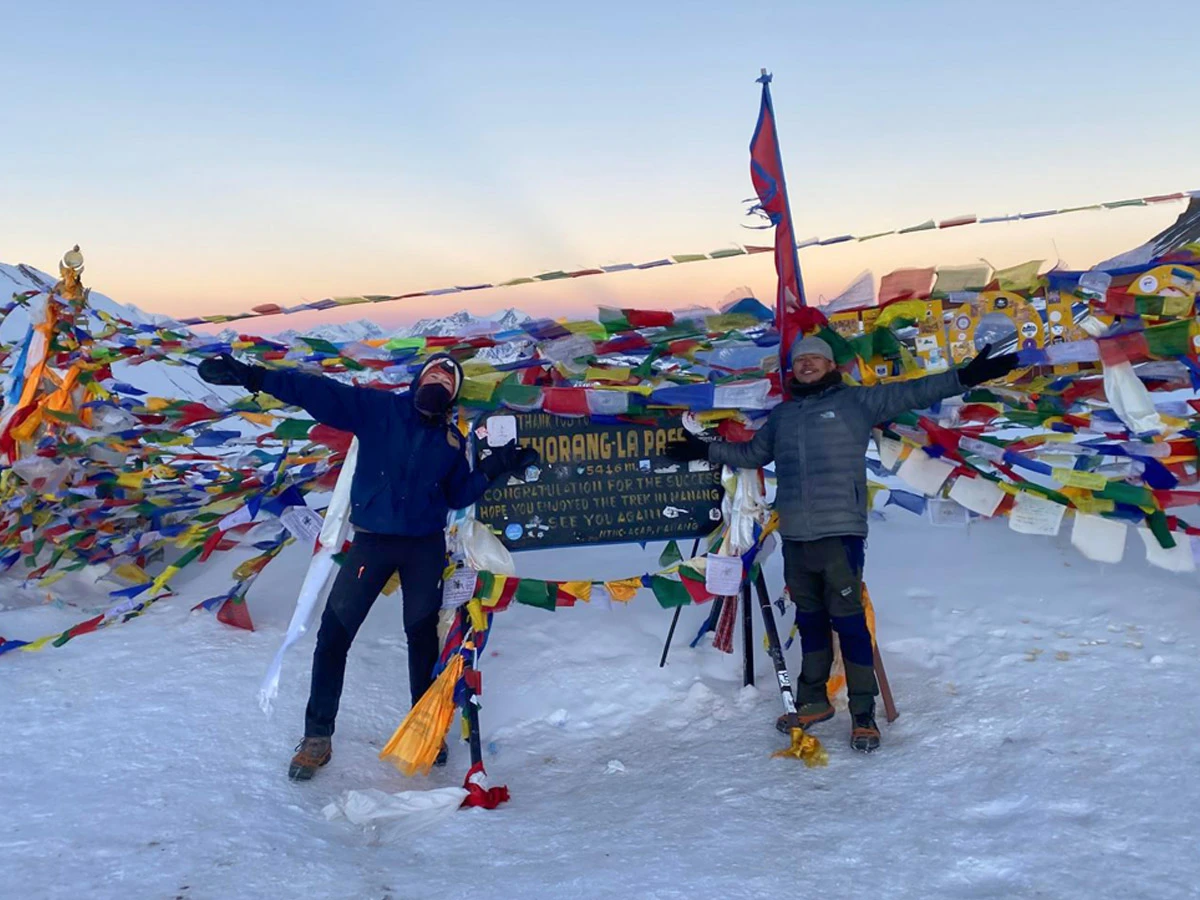
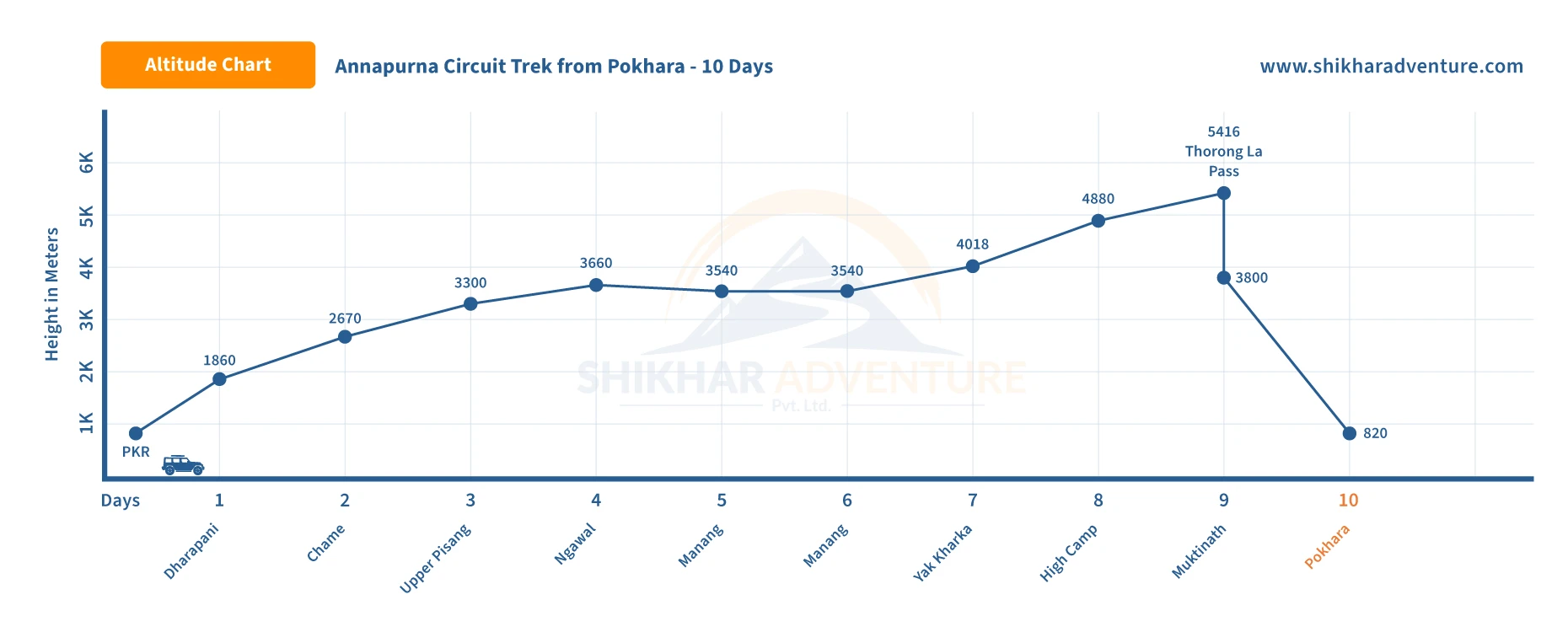
This trek is strenuous. The trail needs no technical climbing skills. The challenge is eight walking days in a row, a night at 4,880 m and a 5,416 m pass, with less spare time than longer versions, so altitude is the main difficulty.
| |
Annapurna Circuit from Pokhara |
Annapurna Circuit Trek (13 days) |
| Walking days |
8 |
8 |
| Longest day |
Pass day, 8-9 hrs |
Pass day, 8-9 hrs |
| Acclimatisation days |
1 (Manang) |
1 (Manang) |
| Drive days |
2 |
3, plus arrival and departure days |
| Hotels |
None |
Kathmandu and Pokhara |
| Grade |
Strenuous |
Strenuous |
The hardest hours are the climb from Thorong Phedi to High Camp on Day 8 and the long descent to Muktinath on Day 9. Our guide to the dangers on the Annapurna and Manaslu circuits covers the real risks.
Altitude and Acclimatisation
Altitude sickness is the main risk on this trek, and most serious problems come from climbing too fast. The itinerary controls this with a high night at Ngawal, a lower night in Manang, a rest day in Manang and a short day to Yak Kharka.
The weak point is Day 8, when sleeping altitude rises by 862 m to High Camp. We manage it by walking slowly, stopping for lunch at Thorong Phedi and checking everyone before the final climb. If you want more margin, add a second night in Manang or sleep at Thorong Phedi and cross the pass from there.
Symptoms to report to your guide straight away:
- Headache that does not go away with water and rest
- Nausea, vomiting or loss of appetite
- Dizziness, unusual tiredness or poor balance
- Breathlessness while resting
- Confusion or a cough with frothy sputum
Our rule is simple: if symptoms get worse, you do not go higher, and if they are severe, you go down. Talk to your doctor before the trip about acetazolamide (Diamox); your guide cannot prescribe it.
Trek Distance and Daily Walking Hours
You walk about 87 km / 54 miles over eight days, and drive about 335 km / 208 miles on Days 1 and 10. Distances on mountain trails are estimates, and the hours matter more than the kilometres.
| Day |
Walking time |
Terrain |
| 2 |
6-7 hrs |
Forest, steep climb to Timang |
| 3 |
6-7 hrs |
Cliff trail and valley floor |
| 4 |
4-5 hrs |
Steep climb to Ghyaru, then level |
| 5 |
3-4 hrs |
Gentle descent |
| 6 |
2-3 hrs |
Short lake hike |
| 7 |
3-4 hrs |
Steady climb above the tree line |
| 8 |
5-6 hrs |
Narrow slope, steep final climb |
| 9 |
8-9 hrs |
Pass climb, long steep descent |
A Typical Day on the Trail
Most days follow the same simple rhythm, and knowing it helps you pace yourself.
- 6:30 to 7:30 AM: wake up, pack your duffel for the porter, breakfast.
- 7:30 to 8:00 AM: start walking with your daypack.
- Late morning: tea break in a village.
- 12:00 to 1:00 PM: lunch at a teahouse on the trail.
- Afternoon: arrive at the overnight stop, wash, rest, walk around the village.
- 6:00 to 7:00 PM: dinner in the warm dining room, briefing for tomorrow.
- 8:00 to 9:00 PM: sleep.
Pass day is the exception, with a start between 4 and 5 AM.
Accommodation and Food
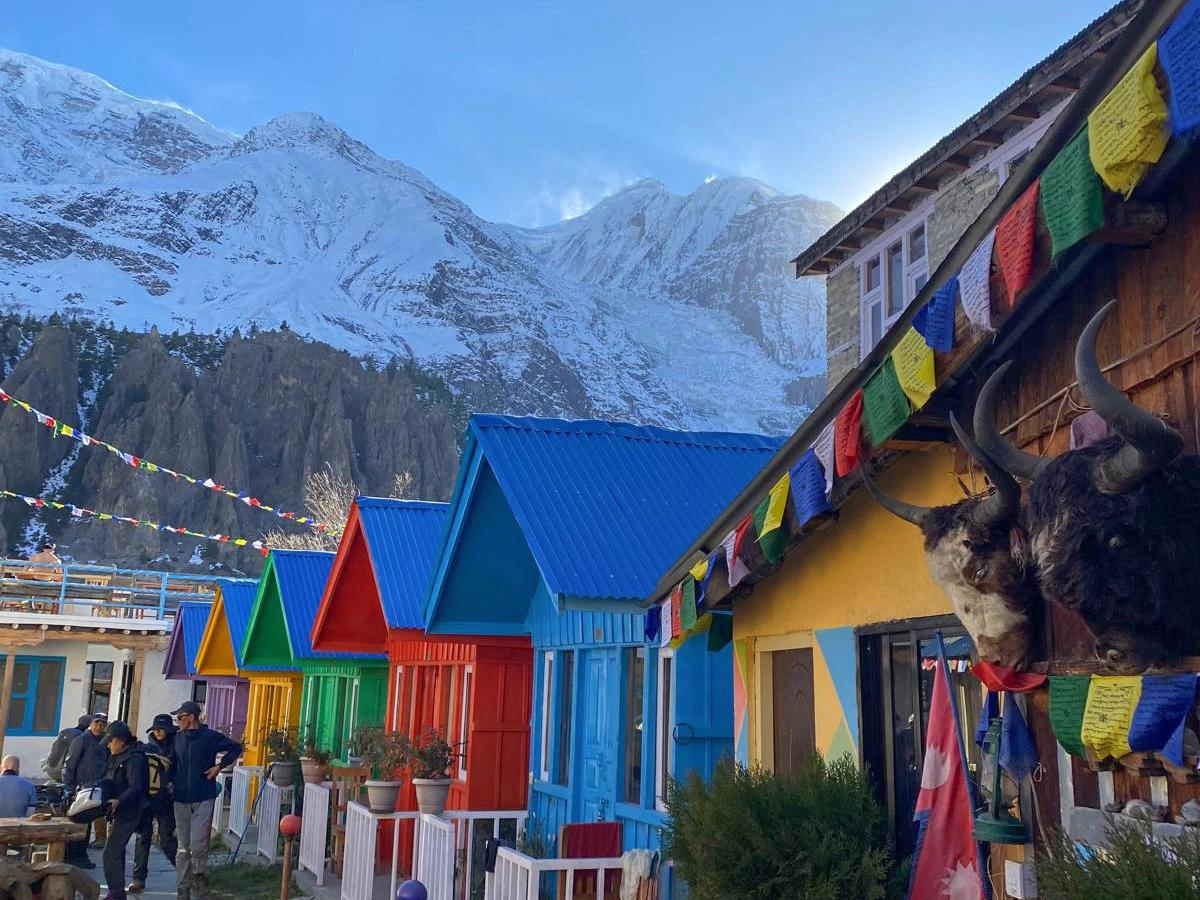
You stay nine nights in teahouses, the family-run lodges along the trail. Rooms are simple twin rooms with beds, a pillow and a blanket. Food comes from the teahouse menu, and each included meal is one main dish with a tea or coffee.
| Stop |
Rooms |
Toilets |
Hot shower |
Charging and Wi-Fi |
| Dharapani, Chame |
Twin rooms, some attached bathrooms |
Western and squat |
Usually available, paid |
Usually available, paid |
| Upper Pisang, Ngawal |
Twin rooms |
Mostly shared |
Sometimes, paid |
Paid, can be slow |
| Manang |
Best lodges on the upper route |
Some attached |
Usually available, paid |
Paid, fairly reliable |
| Yak Kharka |
Basic twin rooms |
Shared |
Limited |
Paid, patchy |
| High Camp |
Very basic, cold |
Shared, often squat |
Rarely |
Paid, unreliable |
| Muktinath (Ranipauwa) |
Comfortable lodges |
Some attached |
Usually available, paid |
Usually available, paid |
Dal bhat (rice, lentils and vegetables) is the best-value dish, and many teahouses offer a free second helping. Menus also carry noodles, fried rice, soups, momo, pasta and potatoes. Vegetarian food is easy; vegan and gluten-free options are limited, so tell us before the trek.
Transportation
This package uses public transport to keep the price low. A private jeep is the optional upgrade.
| Leg |
Included mode |
Approx. time |
Upgrade |
| Pokhara hotel to Besisahar |
Public bus or Hiace |
4-5 hrs |
Private jeep |
| Besisahar to Dharapani |
Shared jeep |
3-4 hrs |
Private jeep |
| Muktinath to Pokhara |
Public local bus, often via Jomsom |
6-7 hrs, often longer |
Private jeep |
Permits for the Annapurna Circuit Trek from Pokhara
You need one permit: the Annapurna Conservation Area Permit (ACAP). We arrange it for you, and it is included in the price. Permit fees as of September 2026:
| Permit |
Fee |
Who needs it |
Where it is checked |
| ACAP |
NPR 3,000 (approx. US$22) |
Foreign nationals |
Besisahar, Dharapani, Manang, Jomsom and other ACAP posts |
| ACAP |
NPR 1,000 (approx. US$7) |
SAARC nationals |
Same |
| ACAP |
Free |
Children under 10 |
Same |
The ACAP is a single-entry permit with a flat fee, whatever the number of days. Trekkers who reach a checkpoint without one are reported to pay double. Carry the printed permit and your passport; phone photos are not always accepted.
TIMS in 2026: some agencies still list a TIMS card for the Annapurna Circuit. As of September 2026, checkpoints on this route check the ACAP, and the TIMS card is not mandatory here. Our Annapurna permits and TIMS update for 2026 has the details.
Guides: every Shikhar booking includes a licensed guide. Reports differ on whether a guide is legally required inside the Annapurna Conservation Area since Nepal's April 2023 rule, so we include one regardless.
Best Time for the Annapurna Circuit Trek from Pokhara
The best time is October to mid-November, with March to May a close second. Both give stable weather and an open pass on most days.
| Season |
Months |
Conditions |
Our view |
| Autumn |
September to November |
Clear skies, cold nights, busiest trails |
Best, book early |
| Winter |
December to February |
Very cold, snow can close Thorong La |
Only with extra days |
| Spring |
March to May |
Warmer, rhododendrons lower down, some afternoon cloud |
Very good |
| Monsoon |
June to August |
Rain and landslides on the roads; Manang is drier |
Possible, expect delays |
Approx. temperatures in October and November:
| Place |
Daytime |
Night |
| Pokhara |
20–25°C (68–77°F) |
12–15°C (54–59°F) |
| Chame |
12–18°C (54–64°F) |
0–5°C (32–41°F) |
| Manang |
8–15°C (46–59°F) |
-5–0°C (23–32°F) |
| High Camp |
0–8°C (32–46°F) |
-10°C (14°F) or colder |
| Thorong La before sunrise |
|
-10 to -15°C (5 to 14°F) with wind chill |
Our best time for the Annapurna Circuit guide covers each month.
Fitness and Preparation
You should start training 8 to 12 weeks before the trek. The goal is to walk 6 to 7 hours with a light pack, then do it again the next day.
- Weeks 1 to 4: three 45 to 60 minute walks or runs a week, plus two leg strength sessions (squats, lunges, step-ups).
- Weeks 5 to 8: one long hike each weekend of 4 to 6 hours with hills and a 5 to 7 kg pack.
- Weeks 9 to 12: back-to-back long hikes on Saturday and Sunday, plus stair climbing for the descent to Muktinath.
- Every week: stretch your calves and hips, and break in your boots on the long hikes.
If you have heart, lung or blood pressure conditions, see your doctor before booking.
Packing List
Pack light: the porter carries your duffel within a set weight, and you carry a daypack.
Clothing - Thermal base layers, top and bottom - Fleece or light insulated jacket - Warm down jacket for High Camp and the pass - Waterproof and windproof jacket and trousers - Trekking trousers and quick-dry shirts - Warm hat, sun hat, buff, liner gloves and insulated gloves - Wool trekking socks
Footwear - Broken-in waterproof trekking boots with ankle support - Sandals or light shoes for teahouse evenings - Microspikes in winter and early spring
Gear - 25 to 35 litre daypack with rain cover - Trekking poles - Headtorch with spare batteries - Two 1 litre water bottles and purification tablets or a filter - Sunglasses (category 3 or 4) and SPF 50 sunscreen
Personal - Personal medicines and blister care - Toilet paper, wet wipes, hand sanitiser - Power bank - Printed copies of your passport and insurance
What we provide on loan: a sleeping bag rated to -10°C (14°F) and a duffel bag, both returned after the trek.
Safety on the Annapurna Circuit Trek from Pokhara
Your guide checks every trekker each morning and evening for signs of altitude sickness, and decides the pace. The safety rules below apply on every departure.
- Daily checks: your guide asks about headache, appetite, sleep and breathing, and watches how you walk.
- Turnaround rule: worsening symptoms mean no further ascent; severe symptoms mean immediate descent.
- Pass day timing: we leave High Camp by 5 AM and do not linger at the top, because wind and cold increase in the late morning.
- First aid: your guide carries a basic first aid kit.
- Evacuation: if someone must be flown out, your guide contacts our Kathmandu office, and we arrange a helicopter through your insurer. That is why your insurance must cover helicopter evacuation up to 5,500 m or higher; see our travel insurance page.
If Plans Change
Things do go differently in the mountains. Here is what happens in the common cases.
- Thorong La closed by snow or high wind: we wait at High Camp or drop to Manang and try again. If the pass stays closed, we walk back down the Marsyangdi and drive to Pokhara. Extra days cost [MISSING: per-day cost].
- Road delays on Day 1: the Besisahar to Chame road has short closures for paving and landslide clearing, including a day-time closure at Dharapani in September 2026. We wait it out or overnight lower down and adjust the plan.
- Road delays on Day 10: landslides on the Kali Gandaki road can stop buses. This is why we ask you to keep a spare day in Pokhara.
- Illness or injury: you descend with your guide or a porter. The rest of the group continues with the guide's arrangement [CONFIRM: support staff plan when a group splits].
- Leaving early: you can end the trek early, but unused days are not refunded [CONFIRM], and extra transport or hotel nights are your cost.
Guides and Porters
Your guide is licensed, speaks English and knows this route well. For groups of two or more, one porter carries the duffels of every two trekkers, up to [CONFIRM: x] kg per trekker. Please keep your duffel within that limit.
We pay our guides and porters fair wages, and we cover their meals, beds and insurance for every day of the trek. Tipping is expected in Nepal but is your choice; most trekkers tip at the end of the trek, giving the guide and each porter their share directly.
Responsible Travel and Local Culture
The upper Marsyangdi is home to Gurung and Manangi communities with strong Tibetan Buddhist traditions. Small habits make a difference.
- Walk clockwise around mani walls, chortens and prayer wheels.
- Ask before photographing people, especially inside monasteries.
- Remove shoes and hats when entering a monastery.
- Refill water bottles instead of buying plastic ones.
- Carry your rubbish down, including wrappers and batteries.
- Dress modestly at Muktinath Temple, which is sacred to Hindus and Buddhists.
Money, Connectivity and Charging
Carry enough Nepali rupees for the whole trek, and do not rely on ATMs above Besisahar. Change money in Pokhara before Day 1.
Mobile signal is patchy above Chame and very weak near the pass. Most teahouses sell Wi-Fi and charging for a few dollars each, and both get slower and less reliable as you climb. A power bank is the easiest way to keep your phone going. Nepal uses Type C and Type D sockets at 230V.
Travel Insurance
Travel insurance is mandatory for this trek. It must cover trekking up to at least 5,500 m, helicopter evacuation, and medical treatment in Nepal. Send us your policy details before the trek; we cannot buy a policy on your behalf. Read more on our travel insurance page.
Solo, Group, Private and Family Trips
You can book this trek alone, as a private group or on a join-group departure. Solo trekkers pay US$745 and walk with their own guide, without a porter unless added. Private groups set their own dates and pace. Families with teenagers who have trekked before do well on this route; we do not recommend it for young children because of the altitude.
Optional Add-Ons
- Private jeep on Day 1 and Day 10 (US$350 for 1 pax; US$150 per person for groups).
- Extra acclimatisation day in Manang: USD 50 Per person per day
- Tilicho Lake side trip from Manang; see the Annapurna Circuit with Tilicho Lake Trek.
- Pokhara hotel nights before or after the trek(can be arranged upon request).
How to Book
Booking takes a few messages. You can start on WhatsApp or through the booking button on this page.
- Send us your dates and group size through the Book This Trip button or WhatsApp at +977 9841869254.
- We confirm availability and your price per person, including any upgrades.
- Pay your deposit [MISSING: deposit percentage] using one of the methods on our How to Make Payment page. Our Risk-Free Booking Policy explains changes and cancellations.
- Send a passport copy and a photo so we can issue your ACAP permit.
- Meet your guide in Pokhara for a briefing the evening before Day 1 [CONFIRM].
- Pay the balance upon your arrival in Pokhara.
- We pick you up from your hotel on the morning of Day 1.
Before You Book
- You can walk 6 to 7 hours a day for several days in a row.
- Your insurance covers trekking to 5,500 m and helicopter evacuation.
- You have a spare day in Pokhara after Day 10 before any flight.
- Your passport is valid for at least six months.
- You have told us about dietary needs and medical conditions.
- You have compared this trek with the 13-day version if this is your first high trek.
Frequently Asked Questions
What is the Annapurna Circuit Trek from Pokhara?
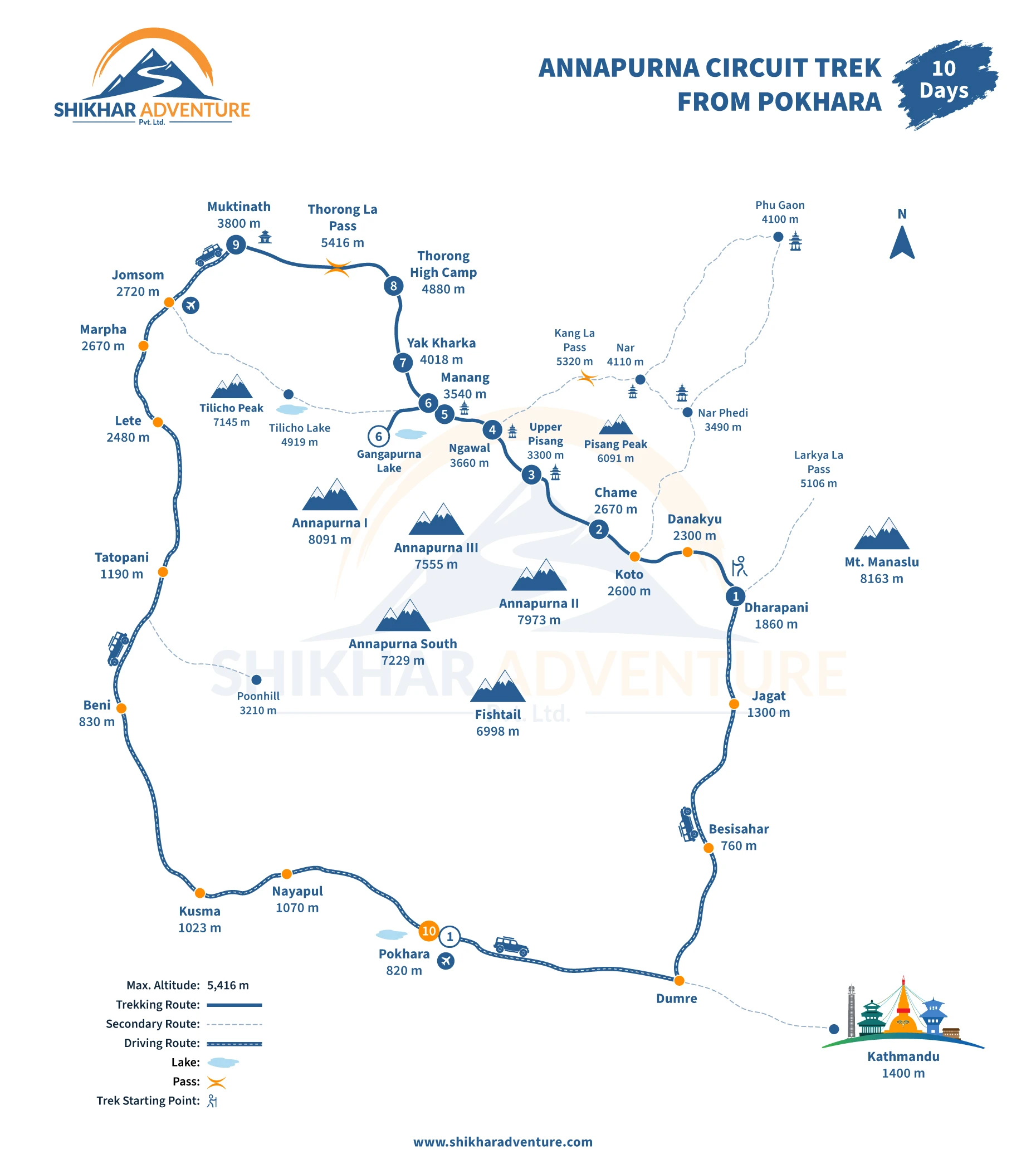
It is a 10-day version of the Annapurna Circuit that starts and ends at your hotel in Pokhara. You drive to Dharapani, walk through Chame, Upper Pisang, Ngawal and Manang, cross Thorong La at 5,416 m / 17,769 ft, then drive back from Muktinath. It covers the high section of the circuit without Kathmandu days.
How is this 10-day trek different from your 13-day Annapurna Circuit Trek?
Both cross Thorong La. The 10-day trek starts and ends in Pokhara, uses public transport and includes no hotels. The 13-day Annapurna Circuit Trek starts and ends in Kathmandu with hotel nights in Kathmandu and Pokhara, and costs from US$995. Choose the longer trip if this is your first high-altitude trek.
Is 10 days enough to do the Annapurna Circuit safely?
Yes, for fit trekkers who follow the acclimatisation plan. This itinerary includes a high night at Ngawal (3,660 m / 12,008 ft), a rest day in Manang and a short day to Yak Kharka. The tight point is the climb to High Camp on Day 8. If you want more margin, we can add a second night in Manang.
How much does the Annapurna Circuit Trek from Pokhara cost?
It costs US$745 for one person, US$695 per person for 2 to 4 people, US$645 for 5 to 8 people and US$625 for 9 to 12 people. That includes a licensed guide, porter support for groups, nine teahouse nights, 28 meals on the trail, the ACAP permit and public transport both ways.
Why does a solo trekker pay more?
A solo trekker pays the guide's full wages, meals and insurance alone, while a group shares them. The solo price of US$745 includes a licensed guide and no porter. You can add a porter for an extra charge, or pack light and carry your own bag.
How much extra money should I carry on the trek?
Plan for hot showers, charging and Wi-Fi at around US$2 to 4 each, drinking water refills, extra snacks and drinks, and tips. Many trekkers budget US$15 to 25 a day in Nepali rupees. Cards are rarely accepted and ATMs are unreliable above Besisahar, so bring cash from Pokhara.
How difficult is the Annapurna Circuit Trek from Pokhara?
It is strenuous. The trail needs no technical skills. You walk eight days in a row, sleep at 4,880 m / 16,010 ft at High Camp and cross a 5,416 m pass. Day 9 is the hardest, with 7 to 8 hours on the trail and a steep descent of about 1,700 m to Muktinath.
What is the highest point of the trek?
The highest point is Thorong La at 5,416 m / 17,769 ft, crossed on Day 9. The highest place you sleep is High Camp at 4,880 m / 16,010 ft on Day 8. After the pass you descend to Muktinath Temple at 3,710 m / 12,172 ft for the night.
What happens if I get altitude sickness?
Tell your guide as soon as you feel a headache, nausea or dizziness. If symptoms get worse, you stop climbing and rest at the same altitude. If they are severe, you descend straight away with your guide or a porter. If evacuation is needed, we arrange a helicopter through your insurance.
What permits do I need for the Annapurna Circuit from Pokhara?
You need the Annapurna Conservation Area Permit (ACAP). As of September 2026 it costs NPR 3,000 (approx. US$22) for foreign nationals and NPR 1,000 for SAARC nationals, and children under 10 are free. We arrange the ACAP for you, and it is included in the package price.
Do I need a TIMS card for the Annapurna Circuit in 2026?
No. As of September 2026, checkpoints on the Annapurna Circuit check the ACAP permit, and the TIMS card is not mandatory in the Annapurna region. Some older guides and agencies still list it. We will tell you before the trek if this changes.
Do I need a guide for the Annapurna Circuit?
Every trek we run includes a licensed guide, whatever the current enforcement. Reports differ on whether a guide is legally required inside the Annapurna Conservation Area since Nepal's April 2023 rule. A guide also handles your permit, lodges, pace and any emergency.
How do we get from Pokhara to Dharapani?
We pick you up from your Pokhara hotel and take a public bus or Hiace to Besisahar, about 4 to 5 hours. At Besisahar we change to a shared jeep for the rough road to Dharapani. The day covers about 160 km / 99 miles, and a private jeep upgrade is available.
How do we get back from Muktinath to Pokhara?
We take the public local bus down the Kali Gandaki valley through Jomsom and Beni to Pokhara, about 175 km / 109 miles, and drop you at your hotel. The road is rough until Beni and buses stop often, so the day can run long. A private jeep is faster and more comfortable.
Can I upgrade to a private jeep?
Yes. A private jeep for both drives, Pokhara to Dharapani and Muktinath to Pokhara, costs US$350 in total for a solo traveller or US$150 per person for groups of two or more. It is quicker, more comfortable and leaves when your group is ready.
What are the teahouses like on the Annapurna Circuit?
Teahouses are family-run lodges with simple twin rooms, beds, pillows and blankets. Lower villages and Manang have better rooms, some with attached bathrooms. Yak Kharka and High Camp are basic and cold, with shared toilets. Hot showers, charging and Wi-Fi are usually available for a small fee.
Which meals are included?
We include 28 meals: 9 breakfasts, 10 lunches and 9 dinners. Day 1 has lunch and dinner, Day 10 has breakfast and lunch, and Days 2 to 9 have all three meals. Each included meal is one main dish from the teahouse menu with one tea or coffee.
What travel insurance do I need?
Your policy must cover trekking up to at least 5,500 m, helicopter evacuation and medical treatment in Nepal. Insurance is mandatory for this trek, and you need to send us the policy details before Day 1. We cannot buy insurance for you.
What happens if Thorong La is closed?
If snow or strong wind closes Thorong La, we wait at High Camp or return to Manang and try again when it is safe. If the pass stays closed, we walk back down the Marsyangdi valley and drive to Pokhara. Extra days and transport are an additional cost, which your guide explains on the spot.
How do I book the Annapurna Circuit Trek from Pokhara?
Send your dates and group size through the Book This Trip button or on WhatsApp at +977 9841869254. We confirm the price, you pay a deposit using our payment methods, and you send a passport copy and photo for your ACAP. We then pick you up in Pokhara on Day 1.
Can I add Tilicho Lake or extra days?
Yes. You can add an extra acclimatisation day in Manang, a Tilicho Lake side trip, or a spare day at High Camp. Each adds cost and time. Use Customize Trip or message us on WhatsApp, and we will send you an adjusted itinerary and price.
What if I cannot finish the trek?
If you cannot continue, you go down with your guide or a porter to the nearest road and on to Pokhara. The group continues with the rest of the team where possible. Transport and hotel costs from leaving early are yours, and your insurance may cover them depending on the reason.
Ready to Trek the Annapurna Circuit from Pokhara?
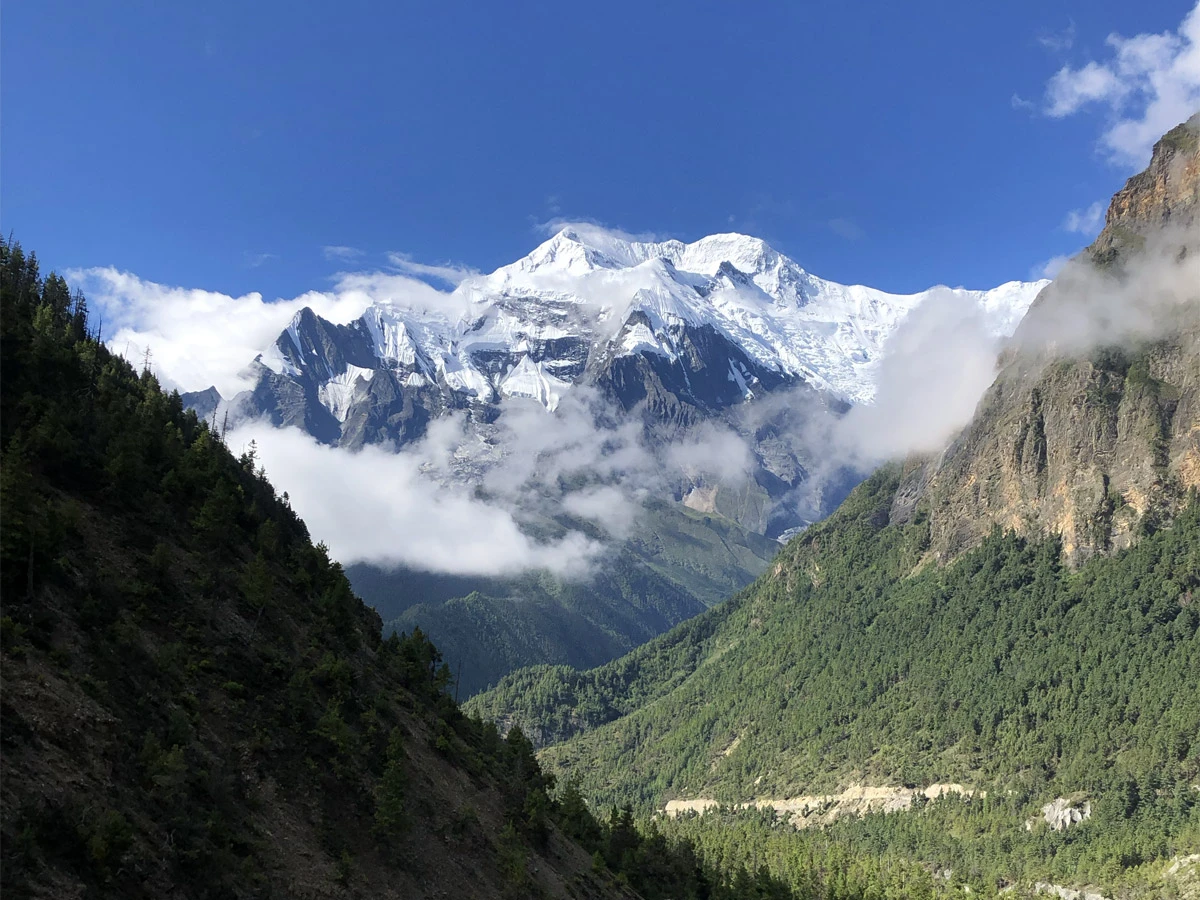
In 10 days you walk from the green Marsyangdi valley to the dry hills of Mustang, sleep in stone villages under Annapurna II and cross one of the highest trekking passes in the world. It is a hard trek with long drives at each end, and a very good one if you are fit and have limited time.
Book your dates, customise the plan or ask us a question on WhatsApp. October and early November fill first, and High Camp has only a few lodges, so earlier bookings get more choice.
WhatsApp +977 9841869254