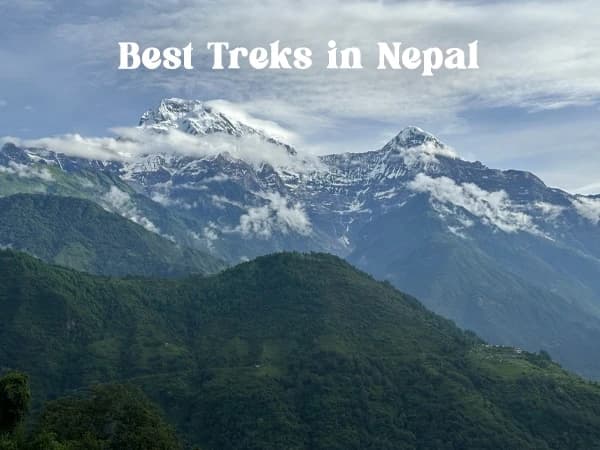
The best family-friendly treks in Nepal are short, low-altitude routes where children sleep below about 3,000 metres. Ghandruk, Australian Camp, Chisapani–Nagarkot and Ghorepani Poon Hill all fit. Children aged 10 and over can take on higher treks like Mardi Himal or Langtang Valley with proper acclimatisation. Teenagers who walk well can go as high as Annapurna Base Camp. The right route depends less on how fit your child is and more on how old they are. Age decides how far they can walk in a day, how well they can tell you they feel unwell, and how high they should sleep.
Most family trekking guides list the same four or five routes and stop there. This one is organised by your youngest child's age, because that is the person who sets the pace and the altitude limit for the whole family. It also covers something most guides skip: how altitude sickness shows up in children, and why it is easy to miss.
This guide is for parents planning a first trek in Nepal with children from babies to teenagers.
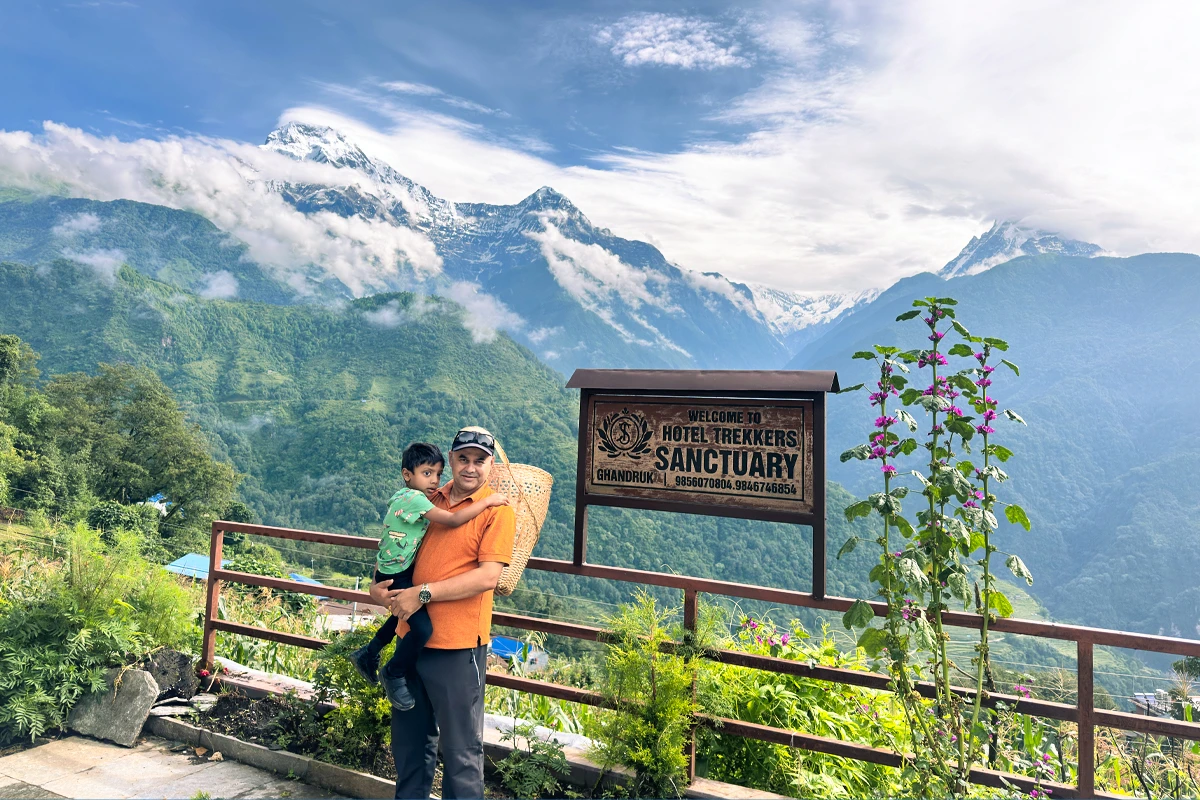
Village trails like this one near Ghandruk stay below 2,000 metres, which suits families with young children.
Family treks in Nepal at a glance
Trek
Days
Highest sleeping point
Highest point reached
Youngest age we suggest
Chisapani – Nagarkot (Kathmandu Valley rim)
2–3
About 2,200 m
About 2,200 m
Any age (babies in a carrier)
Ghandruk village loop
2–3
About 1,940 m
About 1,940 m
Any age
Dhampus – Australian Camp
2–3
About 2,060 m
About 2,060 m
3+
Ghorepani Poon Hill
4–5
About 2,860 m (Ghorepani)
3,210 m (Poon Hill)
6+
Mardi Himal (to High Camp)
5–6
About 3,580 m
About 4,200 m viewpoint
10+
Langtang Valley
7–8
About 3,870 m (Kyanjin Gompa)
About 4,770 m (Kyanjin Ri, optional)
10+
Everest View (Lukla – Namche)
5–6
About 3,440 m (Namche)
About 3,880 m
11+
Annapurna Base Camp
9–11
About 4,130 m
About 4,130 m
13+
The "youngest age" column is our own guideline from years of running family treks. It assumes a healthy child who already enjoys walking. Some younger children manage more, and some older ones will be happier with less.
Start with your youngest child's age
When parents ask us which trek to choose, our first question is always "How old is your youngest?" A fit 14-year-old and a keen 5-year-old cannot do the same trek. Their walking speed is different. So is their ability to say "my head hurts." Plan around the youngest, and the trip works for everyone.
Babies and toddlers (0–3 years): stay low and keep it short
Families do trek with babies in Nepal, and it can be wonderful. Nepali villages are full of small children, and a baby on the trail opens doors and conversations everywhere. The rules are simple: keep sleeping altitude low, keep days short, and keep the baby healthy.
Medical guidance on children at altitude is conservative for this age group. Mountain medicine specialists advise against taking newborns younger than about 4 to 6 weeks to high altitude at all. Very young children with a cold or chest infection face a higher risk too. Our rule for this age is to keep sleeping altitude below about 2,500 metres.
Good choices for this age:
Chisapani – Nagarkot: two or three days on the forested rim of the Kathmandu Valley, with Himalayan views on clear mornings and a quick road exit if you need one.
Ghandruk village loop: a large Gurung village below 2,000 metres with comfortable lodges, a small museum and views of Annapurna South and Machhapuchhre.
Village walks around Balthali and Namobuddha: homestays, terraced farms and a Buddhist monastery, all within a couple of hours of Kathmandu.
Bring a proper framed child carrier. We can also arrange an experienced porter to carry your child for part of the day. Check whether this suits your family when you book.
Young children (4–7 years): two to four days, with a hilltop to aim for
Children this age can walk more than parents expect, but in short bursts. Plan on three to four hours of walking a day, spread across morning and early afternoon. Give them a goal they can see, like a viewpoint, a suspension bridge or a monastery, rather than a distance.
Good choices:
Dhampus – Australian Camp: a short climb from near Pokhara to a grassy ridge with one of the best close-up views of the Annapurna range. Two or three days is enough.
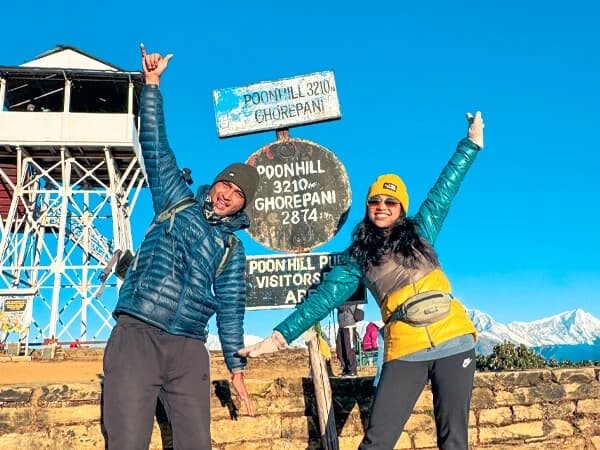
Ghorepani Poon Hill (from about age 6): the classic family trek. You sleep at about 2,860 metres in Ghorepani and climb to Poon Hill (3,210 m) before dawn for sunrise.
Be honest with yourself about Poon Hill. The climb from Tikhedhunga to Ulleri is a long staircase of stone steps, and it is the hardest part of the trek for small legs. Doing the loop in reverse, starting from Ghandruk, gives a gentler first day. Add an extra night so no day runs longer than four or five hours.
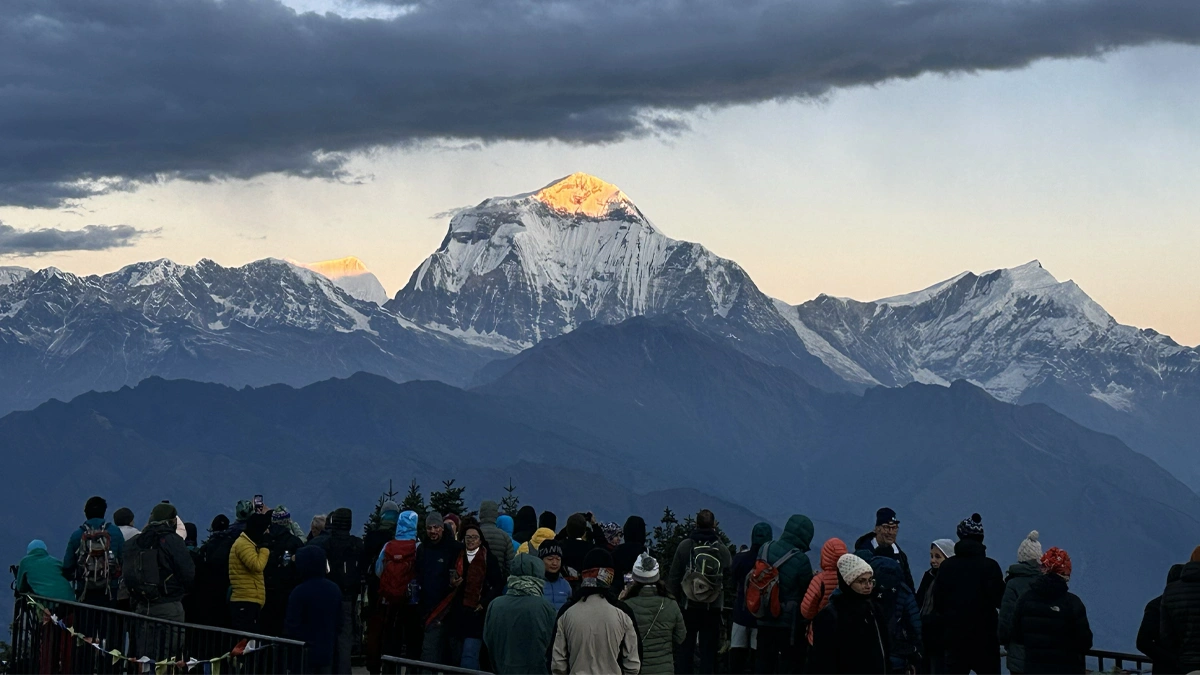
Poon Hill (3,210 m) is the high point of the trek, but families sleep lower at Ghorepani, which keeps the altitude risk modest.
Older children (8–12 years): longer treks, and the first real altitude
From about eight, most children can walk five or six hours a day. From about ten, a healthy and willing child can sleep at 3,500 to 3,900 metres, if the itinerary climbs slowly. This is the age band where altitude starts to matter, and where parents most often underestimate it.
Good choices:
Mardi Himal to High Camp (10+): a ridge trek through rhododendron forest to High Camp at about 3,580 metres, with close views of Machhapuchhre. Stop at High Camp or the upper viewpoint. The final push to Mardi Himal Base Camp at about 4,500 metres is long and exposed, and best left for teenagers.
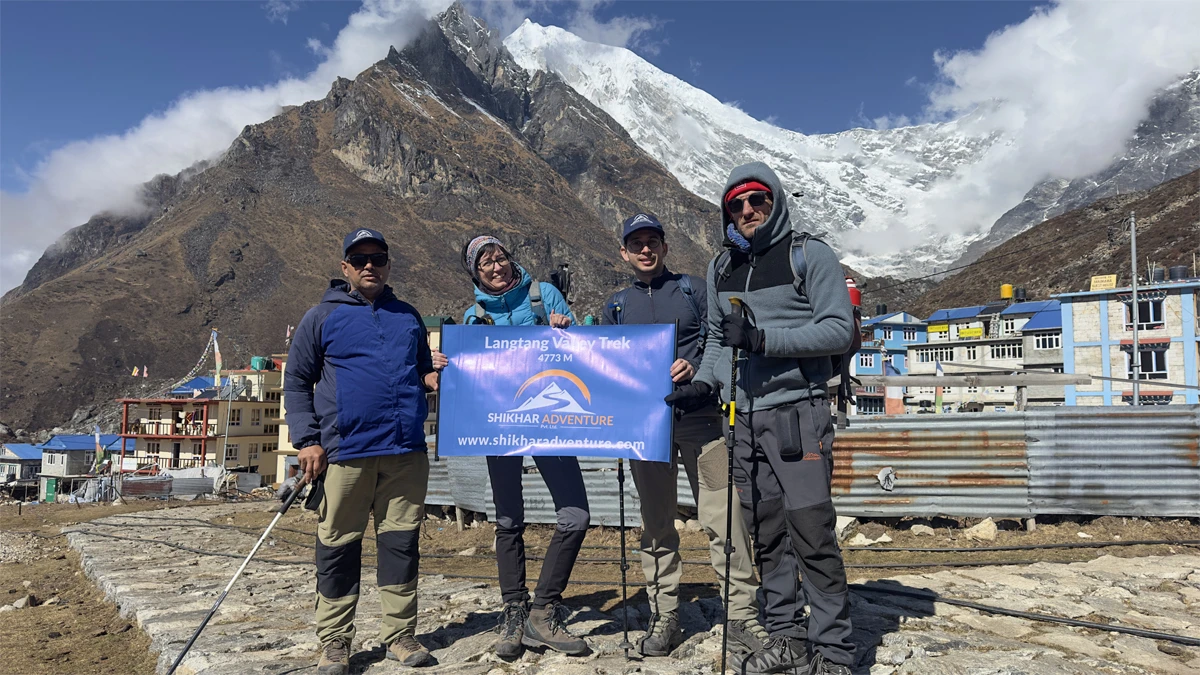
Langtang Valley (10+): a gradual valley walk to Kyanjin Gompa at about 3,870 metres, with yaks, a cheese factory and glaciers close by. Allow a rest day at Kyanjin before any side climb.
Poon Hill extended to Khopra or via Ghandruk: a quieter, longer option for children who have already done shorter treks.
A study of 197 children aged 11 and 12 who climbed from about 2,180 to 3,886 metres over three days found that about 41 percent developed altitude sickness. Most cases were mild, but one in eight was severe. Children this age are not fragile, but they are not immune either. A fast ascent affects them the same way it affects adults.
Teenagers (13+): adult routes, with adult rules
A fit teenager can do almost any standard trek in Nepal: Annapurna Base Camp, the Everest View trek, Langtang with Kyanjin Ri, even Everest Base Camp. Treat them as adult trekkers. Use the same ascent limits and the same acclimatisation days, and listen to them the same way you would listen to an adult.
Two cautions with teenagers:
They push through symptoms. Teenagers often hide a headache so they will not slow the family down or be sent back. Ask them directly every evening, and make it clear that saying "I feel bad" will not ruin anything.
They walk ahead. Fast teenagers gain height quickly and then sit at the next stop in the cold. Keep the group together, and keep the guide with the youngest.
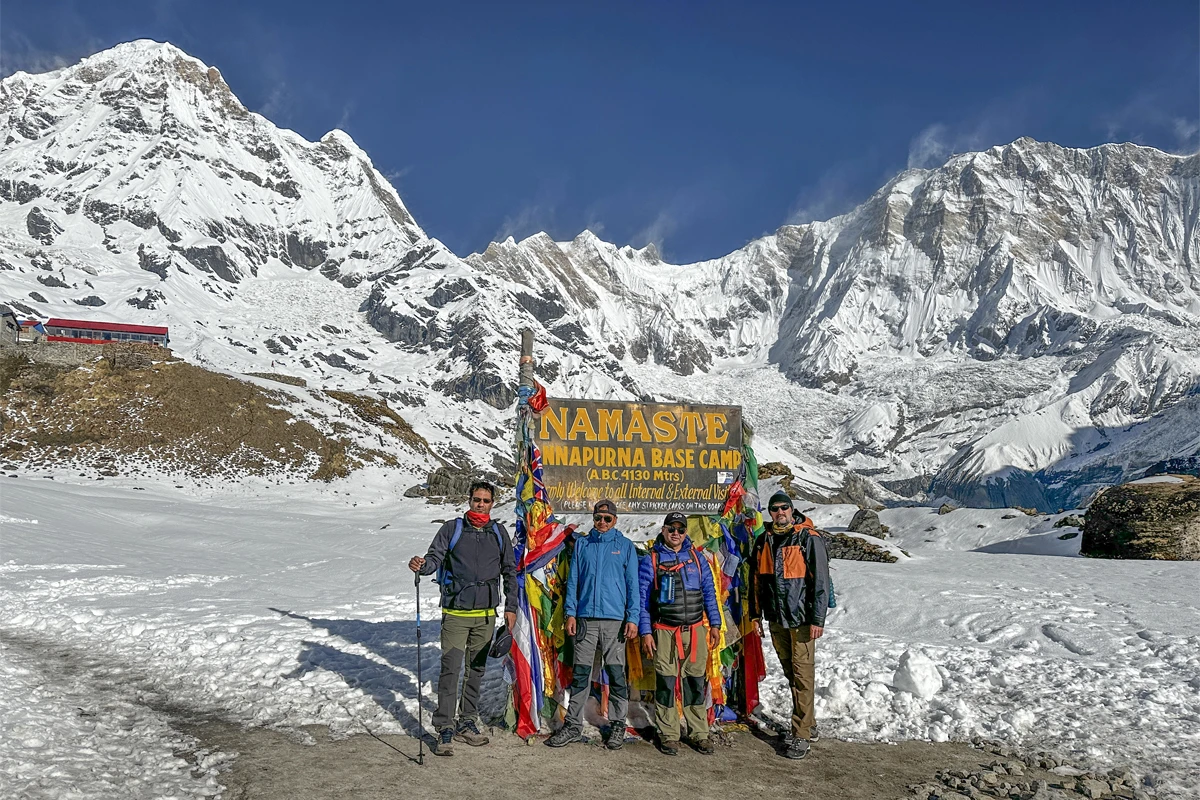
Teenagers can manage Annapurna Base Camp (4,130 m), but they follow the same acclimatisation rules as adults.
Altitude sickness in children: how it looks and how to catch it
This is the part of family trekking that matters most. It is also the part where children are most different from adults.
Children get altitude sickness about as often as adults
Research does not show that children are more likely to get acute mountain sickness (AMS) than adults. A study of children under three at moderate altitude found AMS in about 19 percent of them, compared with 24 percent of the adults. The risk is real but similar. The difference is in spotting it.
Why it is easy to miss in young children
Adults usually notice altitude sickness as a headache with nausea, tiredness or poor sleep. A toddler cannot tell you their head hurts. In young children, AMS shows up as:
Fussiness or crying with no clear reason
Less interest in playing
Poor appetite, or refusing favourite food
Nausea or vomiting
Poor sleep, or being unusually sleepy
Every one of those also happens when a child is tired, cold, bored, or missing home. That is the problem. On the trail, parents tend to blame the walk, the food or the lodge. The safe assumption is the opposite: after a gain in altitude, treat unexplained fussiness as altitude sickness until you are sure it is not.
The fussiness check for children under four
Doctors use a tool called the Children's Lake Louise Score for children too young to describe symptoms. Parents score two things: how much unexplained fussiness the child has, and how intense it is, each from 0 to 6. Then they score eating, play activity and sleep. A total of 7 or more after a recent ascent points to AMS. You do not need to score your child by the book on the trail. Knowing what the doctors look for helps you watch for the right things.
A practical version for each evening on the trek:
Has my child been fussier today than normal, without a clear reason?
Did they eat their dinner?
Did they play and explore when we arrived?
Did they sleep normally last night?
Two or more "no" answers after you have climbed means stop and wait a day before going higher.
The three rules that prevent most problems
Climb slowly above 2,500 to 3,000 metres. Increase sleeping altitude by no more than about 300 to 500 metres a day, and take a rest day every three or four days. These are the same guidelines used for adults.
Never go higher with symptoms. If your child shows signs of AMS, stay at the same altitude until they recover.
Go down if they get worse. Descending even 300 to 500 metres often brings fast improvement. Confusion, stumbling, breathlessness at rest or a wet cough are signs of serious altitude illness and need immediate descent.
Medication such as acetazolamide (Diamox) can be used in children. The dose depends on body weight and must be prescribed by your child's doctor. Talk to your doctor before the trip, not on the trail.
Ear pain and colds
Babies and young children often get ear pain from pressure changes on the drive up or on a domestic flight. Feeding a baby or giving older children something to chew during climbs and descents helps. A child with a cold, an ear infection or a chest infection is at higher risk of altitude illness. If your child gets sick just before a higher trek, change to a lower route. We would always rather swap your itinerary than see a sick child climb.
How far can a child walk in a day?
Plan on children taking about one and a half times the standard walking times shown on maps and itineraries. Here are the daily limits we use when planning family treks:
Age
Walking time per day
Notes
Carried (0–3)
3–5 hours for the adult carrying
Stop every hour for feeding, play and nappy changes.
4–7
3–4 hours
Split it into morning and afternoon sessions with a long lunch.
8–12
4–6 hours
Shorter days above 3,000 metres.
13+
5–7 hours
Same as an adult itinerary.
Finish early. Arriving at the lodge by 2 or 3 p.m. leaves time to play, rest and warm up before the evening cold. Tired children who arrive in the dark are where most family trips start to go wrong.
Food, water and teahouse life with children
Food
Teahouse menus on the popular routes are long. Besides dal bhat, most lodges serve fried rice, noodles, pancakes, porridge, chips, eggs and soup. Fussy eaters usually find something. Bring familiar snacks from Kathmandu for the trail. Snacks matter more than meals for keeping small children walking.
Water and hygiene
Give children only boiled, filtered or treated water. Carry a filter bottle or purification tablets, and refill from lodges. Use hand sanitiser before every meal. Stomach bugs end more family treks than altitude does.
Sleeping
Teahouse rooms are simple and unheated. Above 2,500 metres they get very cold at night from October to March. Bring a warm, child-sized sleeping bag rather than relying on lodge blankets. A dining room with a stove is where everyone gathers in the evening, and children usually love it.
Respecting local children
Your children will meet many Nepali children. Please do not hand out sweets, pens or money on the trail. It teaches children to beg from trekkers. If you want to help, give books or supplies to a school through the teacher, or ask us to arrange it.
When to trek with children in Nepal
October to November: the best season. Clear skies, dry trails and comfortable daytime temperatures. Mornings and nights are cold up high.
March to April: warmer, with rhododendron forests in flower on Poon Hill and Mardi Himal. Afternoon clouds are more common.
December to February: good for low treks like Ghandruk, Australian Camp and Chisapani. Too cold for young children above about 3,000 metres.
June to September (monsoon): leeches, slippery trails, landslides and road closures. Not a good time for family treks, except in rain-shadow areas.
School holidays often fall in July and August, during the monsoon. If you can, take children out of school for a week in October. The difference in weather is worth it.
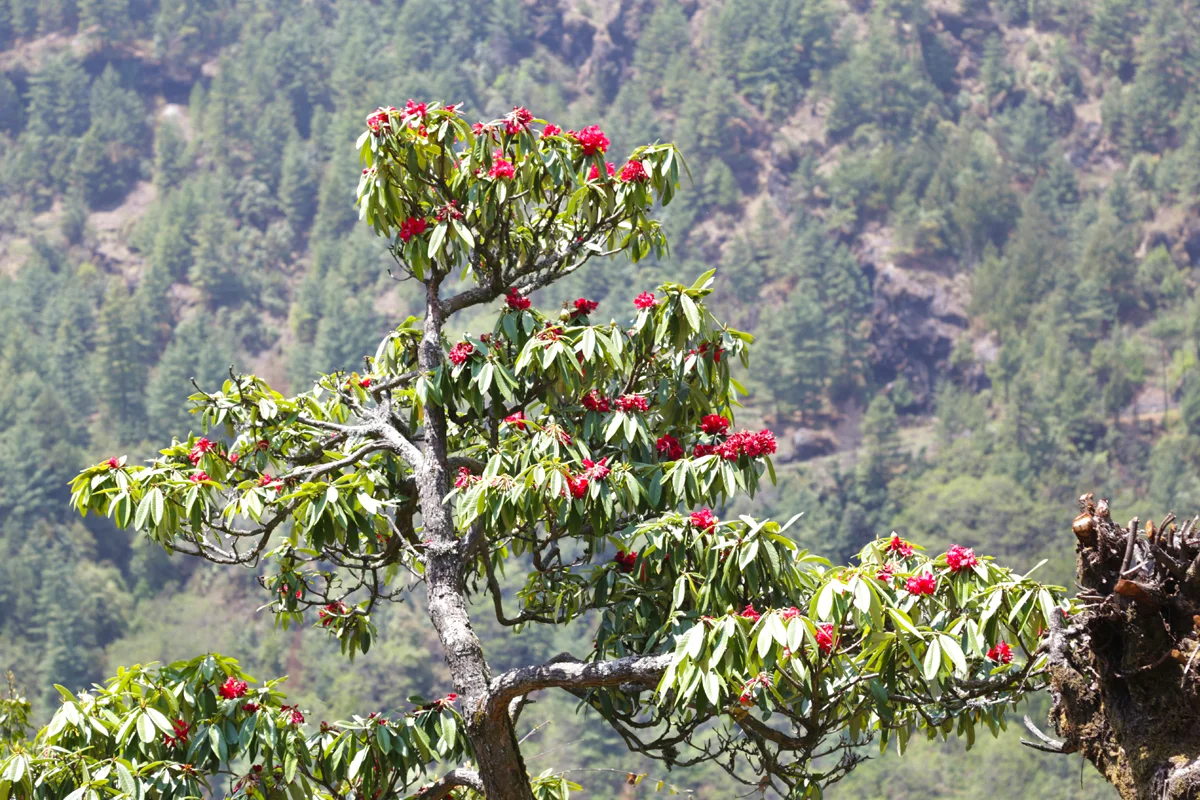
In March and April, rhododendron forests on the Poon Hill and Mardi Himal trails are in full bloom.
Packing list for children
Broken-in walking shoes or light boots (not new)
Warm down jacket and fleece layers
Child-sized sleeping bag rated to at least −5°C for treks above 2,500 m
Warm hat, sun hat, gloves and buff
Children's sunglasses with UV protection and high-SPF sunscreen
Small daypack they carry themselves, with a water bottle and snacks
Framed child carrier (for 0–3 years)
Children's first-aid kit: paracetamol or ibuprofen in children's doses, oral rehydration salts, plasters, thermometer, saline nasal spray and any prescribed altitude medication
Head torch
Cards, a small book or a notebook for evenings
Check that your travel insurance covers every child for trekking at the altitude you plan to reach, including helicopter evacuation.
Permits and costs for children
Children under 10 enter Nepal's national parks and conservation areas free, including the Annapurna Conservation Area and Sagarmatha National Park. Older children pay the same permit fees as adults. Lodges usually charge per room rather than per person, so families often share a room and save on accommodation.
For guide and porter costs, plan the same as an adult trek. With young children, budget for an extra porter, or a porter who can also help carry a child.
Parents also ask
What is the best trek in Nepal for families with young children?
For children under seven, the Ghandruk village loop and the Dhampus–Australian Camp trek are the easiest. Both stay below about 2,100 metres, take two or three days, and start close to Pokhara. Ghorepani Poon Hill suits children from about six who walk well.
What age can a child trek in Nepal?
Children of any age can do low treks below about 2,500 metres, with babies carried. From about six, children can manage Poon Hill. From about ten, healthy children can sleep at 3,500 to 3,900 metres with slow acclimatisation. Teenagers can usually do adult routes like Annapurna Base Camp.
Can children get altitude sickness?
Yes. Children get altitude sickness at roughly the same rate as adults. Young children cannot describe symptoms, so it often shows as fussiness, poor appetite, vomiting, less play and poor sleep. Never go higher with a child who has symptoms, and descend if they get worse.
Can I take a baby trekking in Nepal?
Yes, on low routes. Keep sleeping altitude below about 2,500 metres, keep days short, and use a proper child carrier. Medical guidance advises against taking babies younger than about 4 to 6 weeks to high altitude. Do not trek with a baby who has a cold or chest infection.
Is Poon Hill suitable for children?
Yes, for most children from about six who are used to walking. You sleep at about 2,860 metres and climb to Poon Hill at 3,210 metres for sunrise. The stone steps to Ulleri are the hardest part. Starting from Ghandruk and adding an extra day makes it easier.
Can kids trek to Everest Base Camp?
Fit teenagers can, with a full acclimatisation itinerary. We do not recommend EBC for children under about 13. Base camp is at about 5,364 metres, and you sleep at Gorak Shep, which is about as high. For younger children, the Everest View trek to Namche gives the views without the extreme altitude.
Do children need a permit to trek in Nepal?
Children under 10 enter Nepal's national parks and conservation areas free. Children 10 and over pay the same permit fees as adults. Your guide or agency arranges the permits with your passports.
Planning a family trek with us
The best family trek is one your youngest child enjoys. Pick the route by age first and altitude second, finish each day early, and watch your children closely in the evenings above 2,500 metres. Do that, and Nepal is one of the best places in the world to walk with children.
We plan family treks around your children, not a fixed itinerary. That means shorter days, extra rest nights, child carriers, and guides who know how to spot a tired child from a sick one. Browse our short treks or the Ghorepani Poon Hill trek to get started. Or send us your children's ages and how much time you have, and we will suggest a route that fits.